
HEATING / MY WARM HOME
Heating your home.
Keeping warm and affording warmth are different.
01
Understand
Know how different heating systems work and what they cost to run.
02
Compare
Look at gas, electricity, heat pumps and other options properly.
03
Design
Consider heat loss, emitters, controls and operating temperatures.
04
Check
Make sure the complete system suits the building around it.
HEATING SYSTEMS
Different ways to heat the same home.
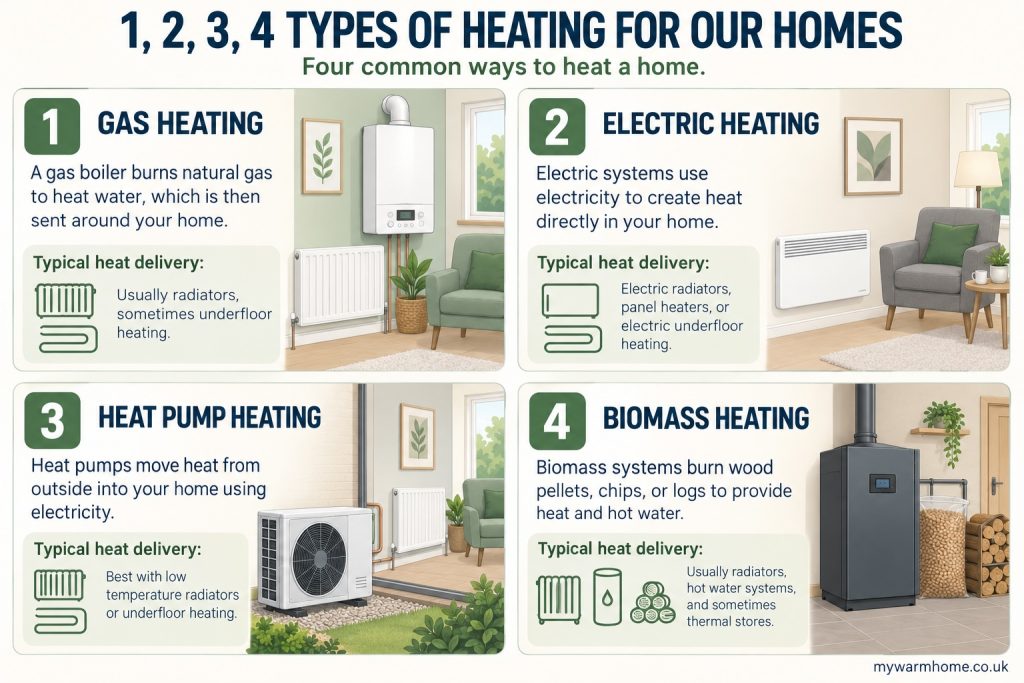
01
Gas
Gas boilers remain the most common heating system in UK homes. They provide fast, responsive heating and are generally cheaper to run than direct electric systems.
02
Electric
Storage heaters, panel heaters, infrared systems and electric boilers are relatively simple to install and can suit flats or homes without a gas connection.
03
Heat pumps
Air-source and ground-source heat pumps use electricity to move heat from the environment into the home.
04
Biomass
Biomass boilers burn wood pellets or logs to provide heat and can suit some rural or off-gas properties where fuel supply and storage are practical.
HEAT DELIVERY
How the heat reaches the room matters.
Radiators
Radiators remain the most common heat emitters in UK homes. Traditional systems were often designed for high boiler temperatures, while heat pumps may need larger radiators working at lower temperatures.
Underfloor heating
Underfloor heating provides even warmth and can work particularly well with heat pumps because it operates effectively at lower water temperatures.
Warm air
Warm-air systems distribute heat through ducts and vents. They are less common now in modern UK homes but can still be effective in the right property.
GAS VS ELECTRICITY
Cost is not just the tariff.
One of the biggest questions homeowners face is the cost difference between gas and electricity.
- Gas is currently cheaper per kWh than electricity.
- Electricity is cleaner at the point of use and increasingly supplied by renewable generation.
- Heat pumps can offset higher electricity prices by moving several units of heat for each unit of electricity consumed.
- Removing a gas meter entirely may also remove the gas standing charge.
The correct comparison depends on the whole system: heat demand, system efficiency, controls, tariffs, occupancy and how the home itself performs.
BEFORE YOU REPLACE THE HEATING
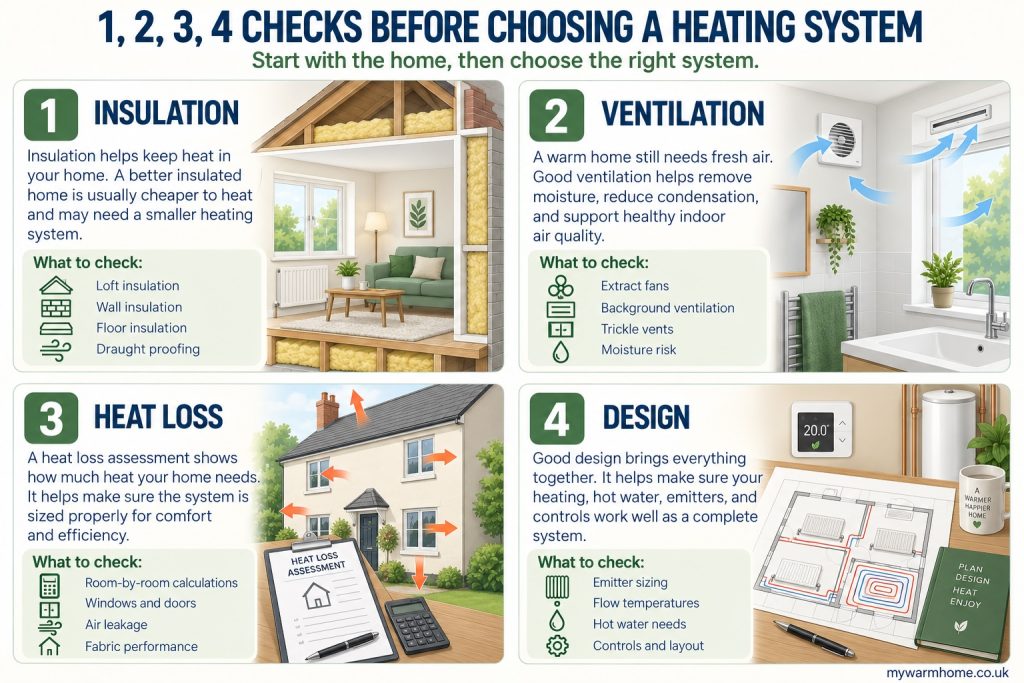
Four checks before choosing a new system.
01
Insulation
Reducing unnecessary heat loss can change the size and type of heating system the home needs.
02
Ventilation
A warmer, more airtight home still needs controlled ventilation to manage moisture and indoor air quality.
03
Heat loss
Room-by-room heat-loss calculations are essential when sizing radiators, heat pumps and other low-temperature systems.
04
System design
Emitter size, pipework, controls, hot-water demand and operating temperatures all need to work together.
COMMON MISTAKES
Changing the heat source without planning the home.
Higher running costs
A poorly selected or poorly controlled system can cost more to operate even when the technology itself is efficient.
Poor heating performance
Undersized emitters, inadequate flow rates or incorrect operating temperatures can leave rooms uncomfortable.
Incorrect sizing
Heating equipment should be sized from the building’s actual heat demand rather than assumptions or simple rules of thumb.
Compatibility problems
Insulation, ventilation, radiators, pipework, controls and the heat source should be considered as one system.
1
whole home — not a collection of unrelated products
MY WARM HOME VIEW
The heating system should suit the home.
Getting insulation, ventilation, heat loss and system design right helps any heating technology perform more efficiently and comfortably.
BEFORE YOU CHANGE THE HEATING