MyWarm
home.co.uk
A warmer home begins with the right choices.
Why Choose Passive and Stack Ventilation Instead of Mechanical Ventilation?
As UK homes become better insulated and more airtight through measures such as external wall insulation, loft insulation, and replacement windows, ventilation becomes increasingly important. Without adequate airflow, moisture can build up indoors, leading to condensation, damp, mould, and poor indoor air quality.
Many homeowners assume that mechanical ventilation systems are the only solution. However, passive and stack ventilation can often provide an effective, lower-cost alternative while avoiding some of the challenges associated with mechanical systems.
Understanding the Difference
Mechanical Ventilation
Mechanical ventilation systems use fans and ductwork to extract stale air and, in some cases, supply fresh filtered air.
Examples include:
- Intermittent extract fans in kitchens and bathrooms
- Continuous Mechanical Extract Ventilation (MEV)
- Mechanical Ventilation with Heat Recovery (MVHR)
These systems rely on electrical components and require ongoing maintenance to ensure they operate effectively.
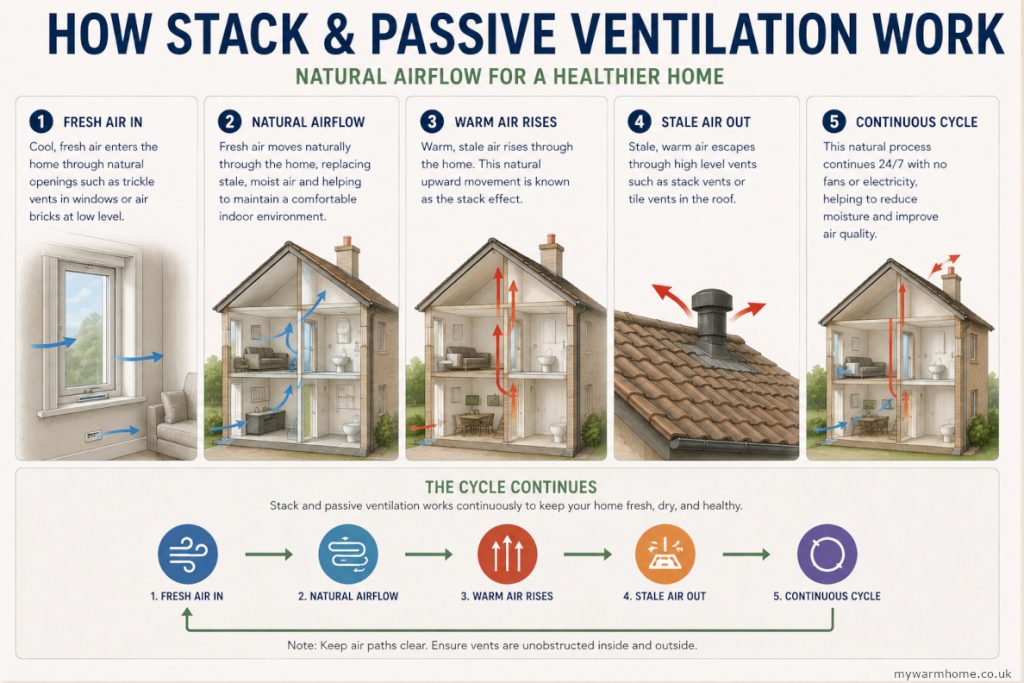
Passive and Stack Ventilation
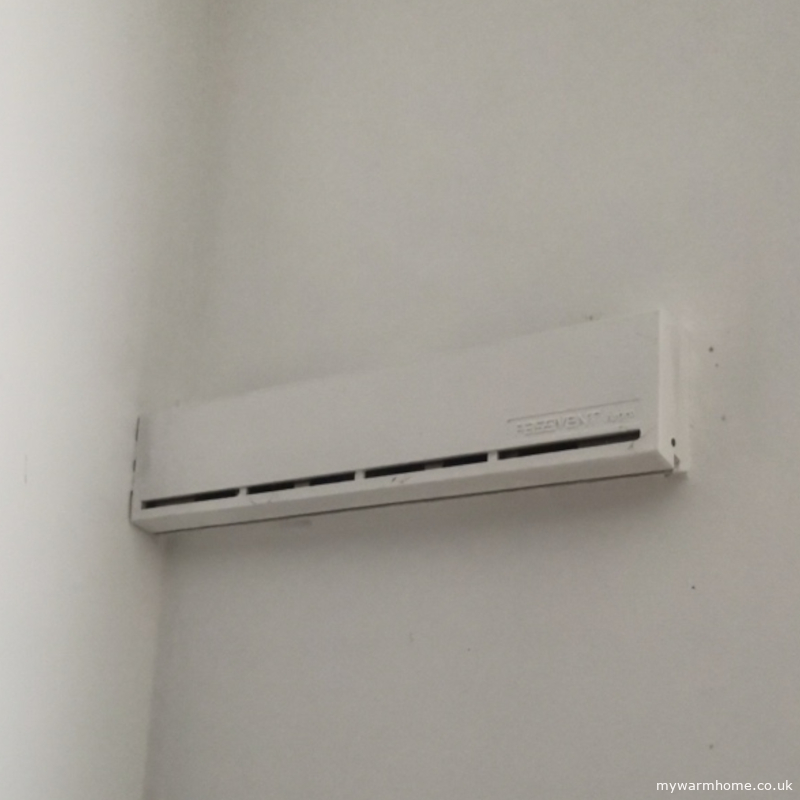
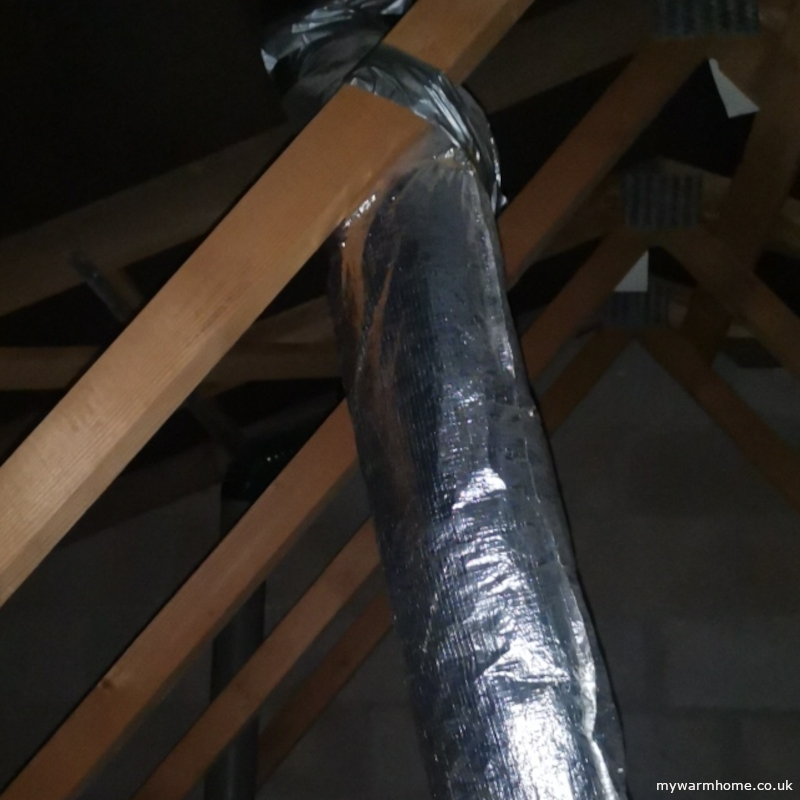
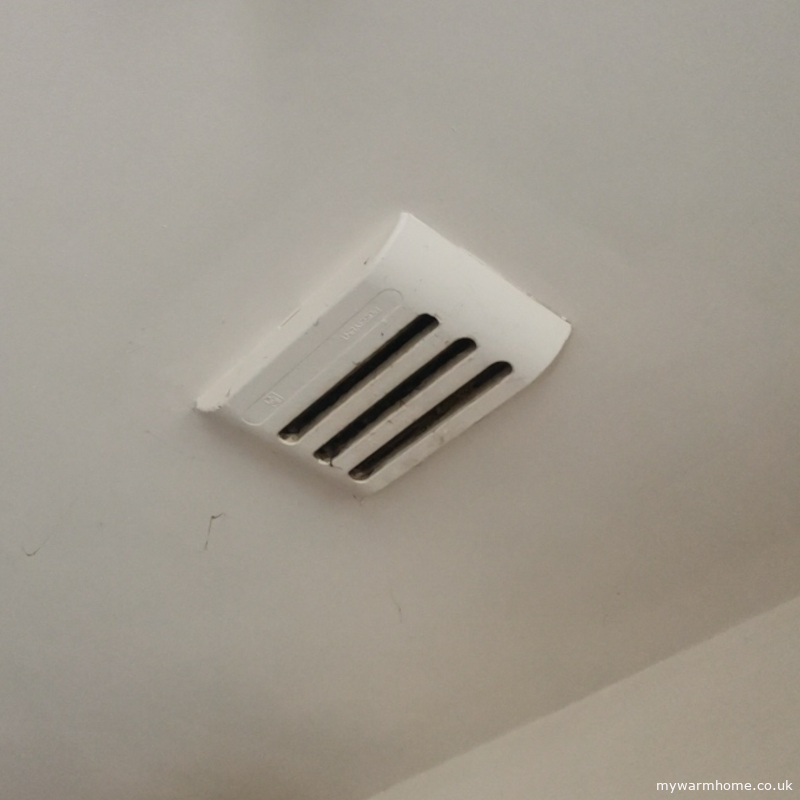
Passive ventilation uses natural forces such as wind pressure and temperature differences to move air through a building. Stack ventilation takes advantage of the fact that warm air rises, allowing stale air to exit through high-level vents while drawing fresh air in through lower-level openings.
These systems have been used successfully for centuries (chimmneys) and can be particularly effective when incorporated into a well-designed retrofit strategy.
The Benefits of Passive and Stack Ventilation
Lower Installation Costs
Mechanical systems often require extensive ductwork, electrical connections, controls, and commissioning. Retrofitting these systems into existing homes can be expensive and disruptive.
Passive and stack ventilation solutions are generally simpler to install and can often be incorporated during renovation works at a much lower cost.
Reduced Running Costs
Mechanical systems consume electricity 24 hours a day in many cases. While individual running costs may seem small, they continue year after year.
Passive systems rely on natural airflow and require no energy to operate, helping homeowners avoid additional energy costs.
Fewer Maintenance Requirements
Mechanical ventilation systems require regular maintenance, including:
- Cleaning or replacing filters
- Inspecting fans and controls
- Maintaining ductwork cleanliness
- Periodic performance checks
Poor maintenance can significantly reduce effectiveness.
Passive systems contain few or no moving parts, making them inherently more reliable and easier for homeowners to manage.
Improved Long-Term Reliability
A passive vent cannot break down due to motor failure, electrical faults, or control system issues.
For homeowners seeking a simple and durable solution, passive ventilation can provide peace of mind and consistent performance over many years.
Better Suitability for Some Existing Homes
Many UK properties were not designed with mechanical ventilation systems in mind. Installing ductwork can be challenging in:
- Solid wall properties
- Historic buildings
- Terraced houses
- Flats with limited service routes
Passive and stack ventilation strategies can often be implemented with less disruption while still providing effective moisture control.
The Importance of Good Design
Passive ventilation is not a “one size fits all” solution. It must be carefully considered alongside:
- Airtightness levels
- Insulation improvements
- Occupancy patterns
- Moisture generation
- Property layout
In some highly airtight homes, particularly those built or renovated to very high energy-efficiency standards, mechanical ventilation may still be the most appropriate option.
The key is to ensure that ventilation is designed as part of the whole-house approach rather than added as an afterthought.
Ventilation Should Never Be Ignored
Many energy efficiency measures reduce uncontrolled air leakage. While this improves comfort and lowers heating bills, it can also trap moisture indoors if ventilation is inadequate.
Whether using passive, stack, or mechanical ventilation, the objective remains the same:
- Remove excess moisture
- Maintain healthy indoor air quality
- Reduce the risk of mould and condensation
- Protect the building fabric
- Support occupant health and comfort
The MyWarmHome.Co.Uk View
We believe ventilation should be considered before, during, and after any energy efficiency upgrade. While mechanical ventilation has its place, passive and stack ventilation solutions can often deliver effective, low-maintenance performance at a lower cost and with less complexity.
The best solution is not always the most technical one. A well-designed passive ventilation strategy can often provide a simple, robust, and sustainable way to keep your home healthy and comfortable for years to come.
Without proper ventilation, homes may experience:
- Condensation on windows
- Damp patches or mould growth
- Poor indoor air quality
- Stale or stuffy air
- Increased risk of respiratory problems
As homes become more airtight, ventilation becomes more important, not less.