
VENTILATION / MY WARM HOME
Mechanical extract ventilation.
Continuous extraction works when the complete air path is designed to work together.
01
Understand
Continuous extract and the two common arrangements.
02
Follow the air
Fresh air in, transfer across, stale air out.
03
Weigh it up
Benefits, limitations and other approaches.
04
Design & check
Select, commission and maintain the whole system.
THE SHORT VERSION
A fan is only one part of the system.
Mechanical extract ventilation (MEV) continuously removes stale, moisture-laden air from wet rooms instead of waiting for someone to switch on a fan.
Background air inlets, door undercuts, ductwork, external terminals, controls and commissioning all matter.
Insulation, new windows and draught-proofing can reduce uncontrolled air leakage. That is not a reason to avoid energy-efficiency work: ventilation should be planned alongside it.
01 / CONTINUOUS EXTRACT
Two arrangements. One continuous principle.
MEV continuously extracts from kitchens, bathrooms, utility rooms, en-suites and WCs. Systems normally operate at a low background rate and increase to a boost rate when demand rises.
01
Centralised MEV
One central fan unit connects by ductwork to extract valves in several wet rooms and discharges the combined air outdoors.
02
Decentralised MEV
Individual continuous-running extract fans, often called dMEV, serve separate wet rooms and discharge outdoors.
03
Background air
The system relies on designed background ventilators and air transfer through the dwelling.
04
No heat recovery
MEV is extract-only. It does not mechanically supply fresh air or recover heat from the extracted air.
02 / FOLLOW THE AIR
How does an MEV system work?
Continuous extraction encourages outdoor air to enter, travel through the home and replace stale, moisture-laden air. A blocked part of this route can reduce the whole system’s performance.
01 / Air enters
Outdoor air enters habitable rooms through designed background ventilators.
02 / Air transfers
It moves across the home through circulation routes and internal transfer paths such as door undercuts.
03 / Pollutants collect
Moisture, odours and pollutants are drawn towards extract valves or fans in wet rooms.
04 / Air leaves
The fan continuously discharges the extracted air through a suitable outdoor terminal.
03 / CONSISTENT VENTILATION
Benefits of mechanical extract ventilation.
The system is working between showers and cooking events, not only during a short manual fan cycle.
Moisture control
Continuous extraction helps manage moisture between individual activities.
Indoor air quality
Humidity, odours and internally generated pollutants are removed from source rooms.
Low fan energy
Efficient motors can provide design airflow with relatively low electrical consumption when system resistance is controlled.
Less reliance on memory
Background ventilation continues without occupants having to switch on every extract point.
INSTALLATION IMAGES
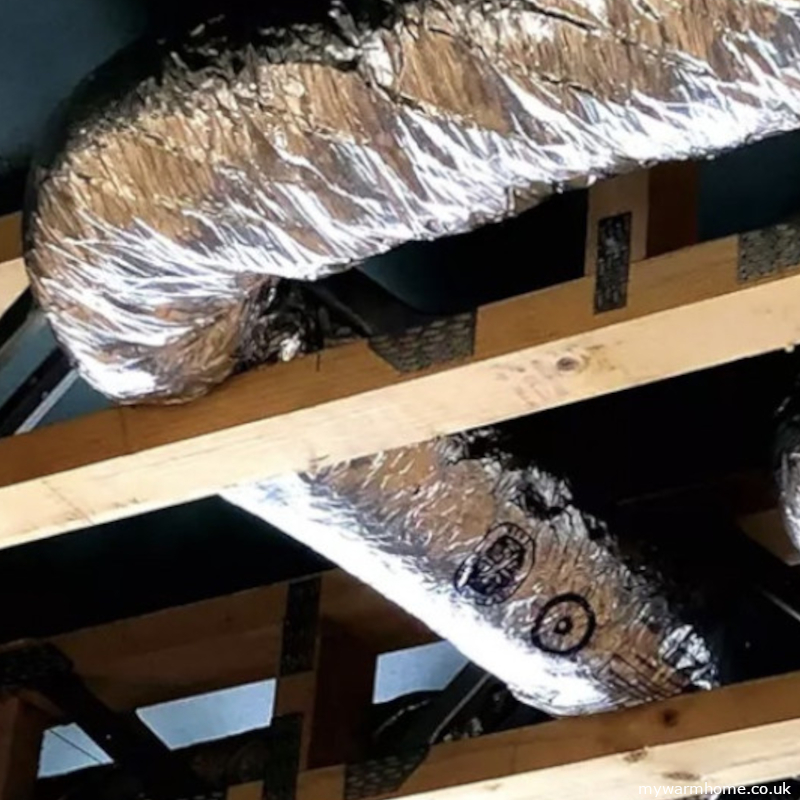
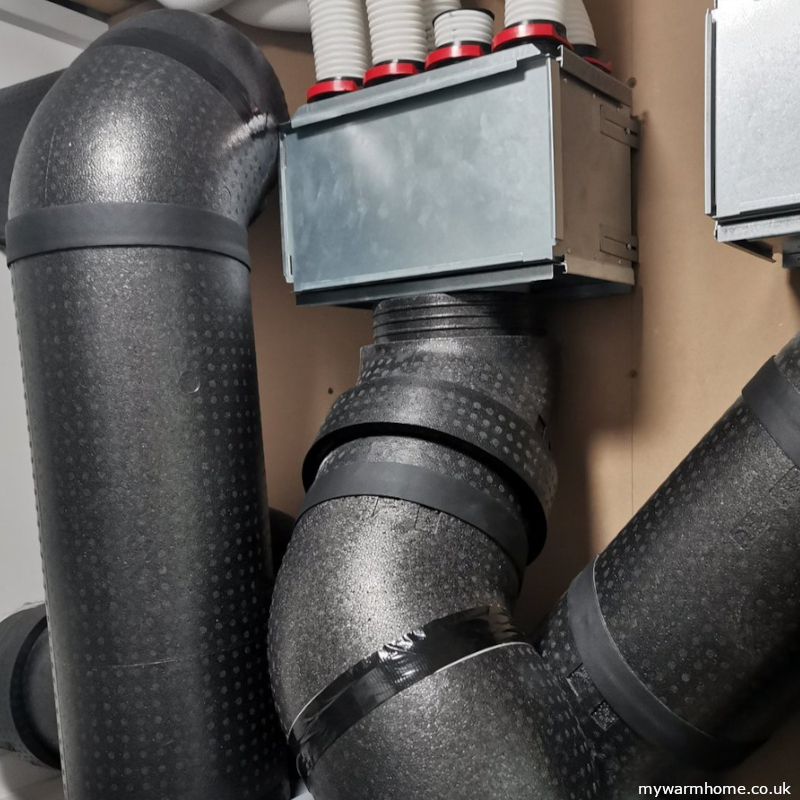
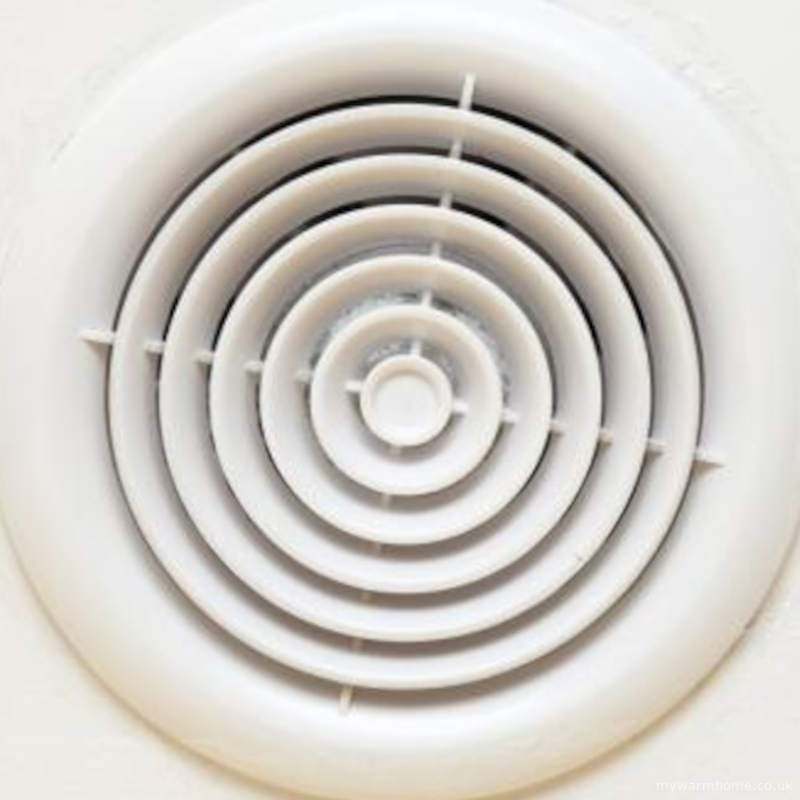
The duct route and access matter as much as the unit.
Ventilation reduces risk — it does not diagnose the building.
Condensation and mould can involve ventilation, heating, insulation, thermal bridges, water leaks or several factors together. Installing MEV without understanding the cause may leave the real problem unresolved.
03 / UNDERSTAND THE TRADE-OFFS
Potential drawbacks of MEV.
01
No heat recovery
Heated indoor air is discharged outdoors, so ventilation heat loss remains part of the home’s energy demand.
02
Space & disruption
Centralised MEV needs duct routes, unit space, an external discharge and access for maintenance.
03
Noise
High resistance, undersized ducts, unsuitable terminals or vibration can cause unwanted noise.
04
Inlet design
Background inlets must provide air without unacceptable draughts or encouraging occupants to close them.
Commissioning is essential. Insufficient extract may not control moisture, while excessive extract wastes heat and may create comfort or pressure problems. Dust and grease on grilles, valves, terminals or fans can reduce performance over time.
03 / COMPARE THE OPTIONS
MEV, natural ventilation or MVHR?
The appropriate strategy depends on the home, airtightness, occupancy, layout, available space and the wider retrofit plan.
Natural and intermittent ventilation
Natural forces and local fans provide air change through designed openings and fan operation. Performance can be affected by weather and occupant use.
Mechanical extract ventilation
MEV provides continuous mechanical extraction, with background ventilators supplying replacement air. Centralised systems need extract ductwork; dMEV uses local fans. There is no heat recovery.
Mechanical ventilation with heat recovery
MVHR mechanically supplies filtered air and extracts stale air through separate duct networks. A heat exchanger can recover heat from outgoing air when the system is correctly designed and balanced.
04 / DESIGN, COMMISSION, MAINTAIN
Eight checks for an effective MEV system.
01
Assess the whole dwelling
Record occupancy, moisture sources, existing ventilation, airtightness work and combustion appliances.
02
Plan the complete air path
Identify background inlets, transfer routes, wet-room extracts and outdoor discharge.
03
Keep duct resistance low
Use suitable duct sizes and fittings, practical routes and supported ductwork.
04
Control condensation
Insulate and detail ductwork in cold spaces where needed.
05
Manage noise and vibration
Select quiet equipment, isolate vibration and avoid restrictive terminals.
06
Use sensible boost controls
Set up humidity, switch or other boost controls in ways occupants can understand.
07
Commission the system
Measure and balance extract airflows, record results and demonstrate the controls.
08
Keep it serviceable
Provide access to fans, valves and terminals; clean as instructed and do not disturb commissioned settings.
BUILDING REGULATIONS & GUIDANCE
Check the requirements for the project.
Applicable guidance
Ventilation requirements vary across UK nations and can depend on when work was notified or started.
England — Approved Document F
This document gives guidance for dwellings, including installation, commissioning and information for the building owner.
Read the source
Explore further
IS MEV RIGHT FOR YOUR HOME?
Assess the property before choosing the fan.
MEV may be worth considering when a property needs predictable, continuous extraction, particularly alongside improvements that reduce uncontrolled air leakage.
Condensation or mould alone does not prove it is the correct solution. Review moisture sources, heating patterns, insulation continuity, building defects, existing ventilation and interaction with any open-flued combustion appliances.
A complete design should account for occupants, controls, commissioning and future maintenance.
1
whole dwelling — a continuous air path, not just a fan.
MY WARM HOME VIEW
A fan is not a ventilation strategy.
MEV can provide reliable ventilation, but success depends on the whole route through the property. It should be designed as part of the retrofit plan, commissioned after installation and explained to the people living with it.
BEFORE YOU MAKE THE HOME MORE AIRTIGHT
As airtightness improves, planned ventilation matters more — not less.
Think about insulation, heating and ventilation together, with a solution that suits the property and the people using it.