
VENTILATION / MY WARM HOME
Intermittent extract ventilation.
Removing moisture and pollutants at source — with the right fan, airflow, controls and replacement-air path.
01
Understand
Local extraction and how controls operate.
02
Follow the air
Moisture out and replacement air in.
03
Weigh it up
Benefits, limitations and system comparisons.
04
Design & check
Installed airflow, commissioning and maintenance.
THE SHORT VERSION
A fan is only one part of the system.
Intermittent extract ventilation (IEV) removes moisture and pollutants from kitchens, bathrooms and other wet rooms — but only while the fan is running.
Extract rate, duct route, controls, external terminal and replacement-air path must work together.
A bathroom or kitchen extractor switched on after showering or during cooking is an example of IEV. As insulation, new windows and draught-proofing reduce unintended air leakage, the planned ventilation strategy becomes more important.
01 / THE BASICS
What is intermittent extract ventilation?
IEV uses local extractor fans when moisture, odours or pollutants are produced. They are normally installed in wet rooms such as bathrooms, kitchens, utility rooms, en-suites and WCs.
01
Manual switching
A light switch, separate switch or pull cord starts the fan.
02
Overrun timer
A timer may keep extraction running after the switch is turned off.
03
Humidity sensor
A suitable automatic control can respond to increased indoor humidity.
04
Outdoor discharge
Extract air must discharge outdoors — never into a loft, roof void or other internal space.
Control selection depends on the room, its use and the applicable building guidance.
02 / FOLLOW THE AIR
How intermittent extraction works.
Every part of the air path matters. Closed background vents, obstructed internal transfer routes and restrictive ductwork can all reduce actual performance.
01 / Moisture is produced
Showering, cooking and drying clothes release water vapour and pollutants.
02 / The fan extracts
Air is drawn from the wet room through a wall or duct route.
03 / Air leaves outdoors
Moist air, odours and pollutants discharge at the external terminal.
04 / Replacement air enters
Background ventilators and suitable internal transfer paths help replace the extracted air.
05 / The fan stops
A switch, timer or sensor ends the extract period until it is needed again.
03 / WHERE IT HELPS
The benefits of intermittent extract.
01
Simple to retrofit
A suitable local fan may be easier to add during a kitchen, bathroom or utility-room refurbishment than a whole-house ducted system.
02
Source control
Extracting where moisture and pollutants are generated helps reduce their spread through the home.
03
Low fan energy
Modern efficient fans generally use little electricity during their operating periods.
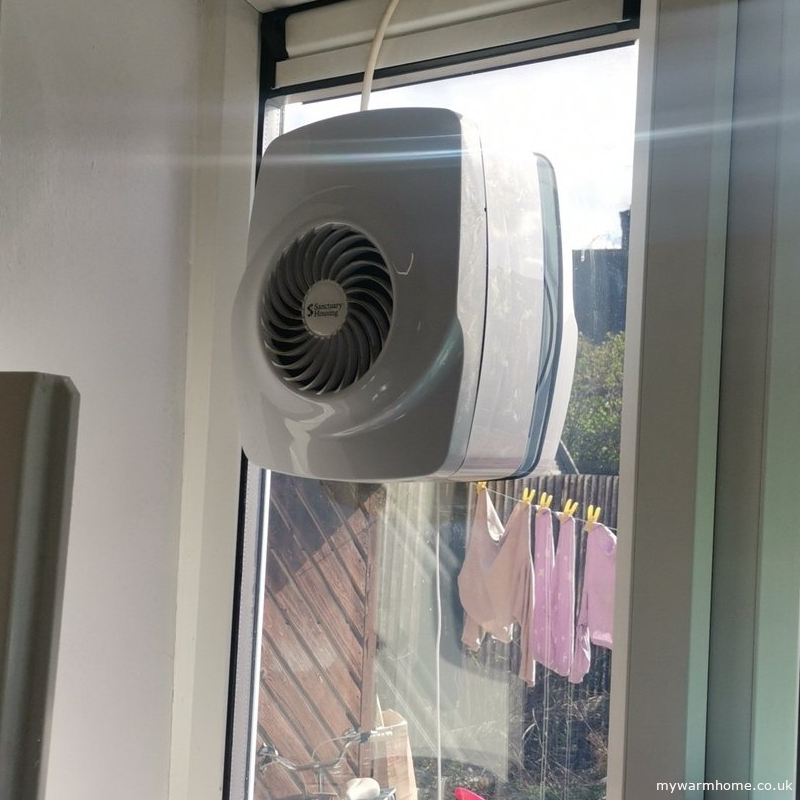
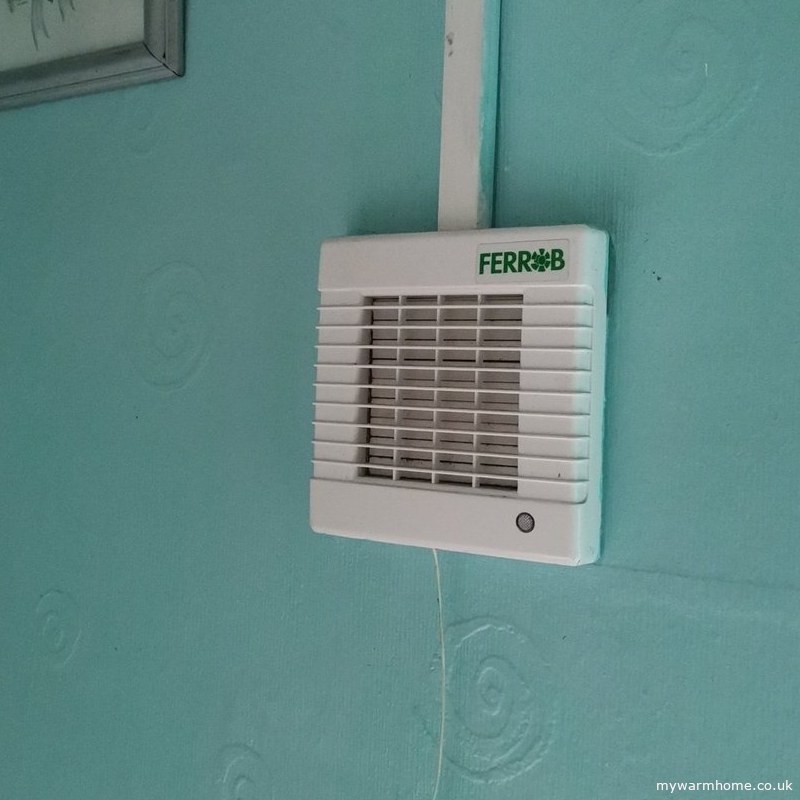
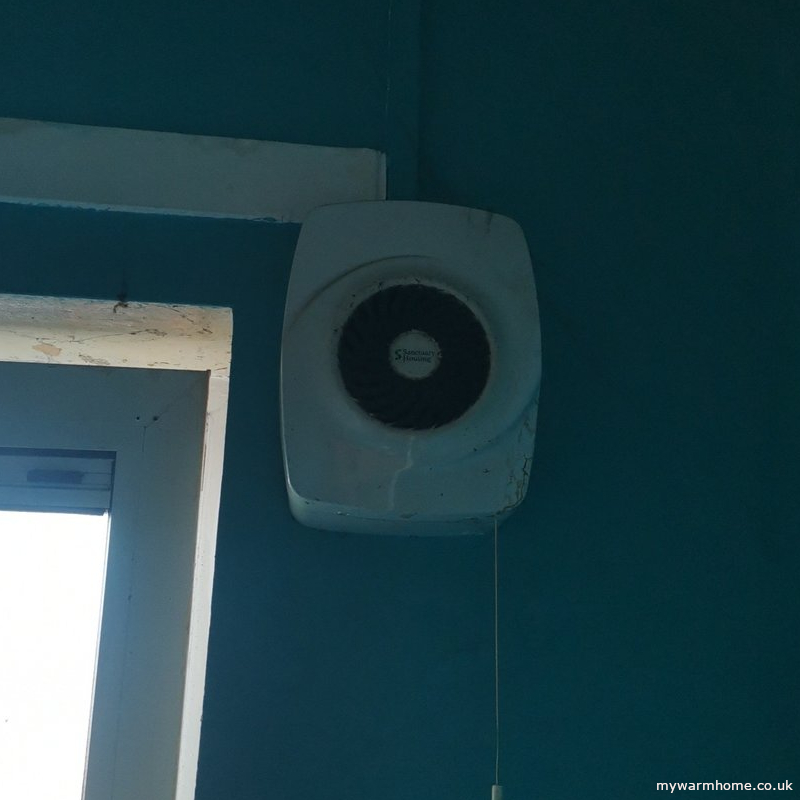
Ventilation helps manage moisture; it does not cure every damp problem.
Leaks, rising or penetrating damp, missing insulation, thermal bridges and inadequate heating need their own diagnosis. Mould should not automatically be blamed on occupant behaviour.
03 / KNOW THE LIMITS
The limitations of intermittent extract.
Works only while running
If the fan is not switched on, stops too early or is isolated because of noise, moisture can remain.
Installed airflow can fall
Long, crushed or restrictive ductwork and unsuitable external terminals can reduce delivered airflow.
Not automatically whole-house ventilation
Local wet-room extraction needs suitable background ventilation and internal air-transfer paths.
Depends on how it is used
Manual systems rely on occupants running the fans when needed and for long enough.
Noise and comfort matter
A noisy fan may be avoided even if its performance looks satisfactory on paper.
03 / CHOOSE THE STRATEGY
Intermittent or continuous ventilation?
Intermittent extract runs on demand or through automatic controls. Continuous MEV and MVHR generally operate at a low background rate, with boost when needed.
Installation and moisture control
IEV normally uses simpler local fans and shorter ducts, and is effective at source when used properly. Continuous systems provide ventilation more consistently over occupied periods, but require their own careful design and commissioning.
Supply air and heat recovery
IEV and MEV rely on designed background and transfer-air paths. MVHR mechanically supplies filtered air. IEV and MEV have no heat recovery; properly designed and balanced MVHR can recover heat.
The appropriate solution depends on the property, occupancy, airtightness, layout and retrofit plans — not one feature alone.
04 / MAKE IT WORK IN PRACTICE
Seven checks for a better installation.
01
Assess the whole home
Review existing extract, background ventilators, door undercuts, occupancy, moisture sources and planned airtightness work.
02
Select the required duty
The fan must achieve required airflow against the resistance of the installed duct and terminal, not just in free air.
03
Keep ductwork effective
Use the shortest practical route, limit bends, support ducts and avoid crushed flexible ducting.
04
Provide replacement air
Keep designed background ventilators and internal transfer paths available.
05
Use suitable controls
Timers, humidity sensors or other automatic controls can reduce reliance on memory when set correctly.
06
Commission and demonstrate
Measure airflow where required, explain the controls and give the homeowner relevant information.
07
Maintain performance
Clean grilles and terminals, remove grease and dust, and investigate changes in noise or extract performance.
BUILDING REGULATIONS & GUIDANCE
Check the rules that apply to your project.
Different UK nations
Ventilation requirements vary by nation and can depend on when the work was notified or started.
England: Approved Document F
This gives guidance for dwellings, including work to existing homes.
Official guidance
Explore related guidance
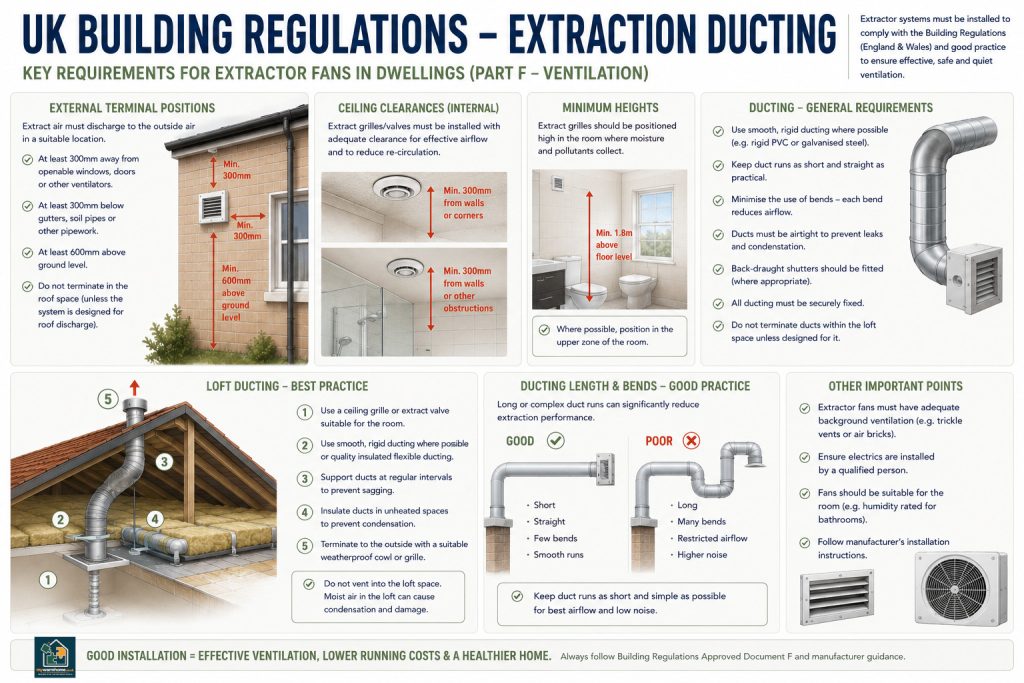
REGULATIONS ILLUSTRATED
Always check the guidance applicable to the project.
IS IEV RIGHT FOR YOUR HOME?
Ventilation belongs in the retrofit plan.
IEV may suit many existing homes where assessment confirms that local extraction, background ventilation and transfer paths can work together. It can be practical during kitchen, bathroom and utility-room refurbishment.
Following significant airtightness improvements, do not assume the previous ventilation arrangement remains adequate. Review the whole-house strategy before or alongside energy-efficiency work.
Intermittent extraction must be properly selected, installed, commissioned and used, with ventilation considered alongside insulation and heating.
1
whole home — heat, moisture and fresh air working together.
MY WARM HOME VIEW
A fan should be part of the ventilation plan.
A warm, energy-efficient home also needs to be dry, healthy and well ventilated.
BEFORE YOU INSULATE OR SEAL THE HOME
Plan ventilation before problems begin.
Consider the building, occupants, extract fans and replacement-air routes together.