
VENTILATION / MY WARM HOME
Positive Input Ventilation.
Fresh filtered air can help manage condensation — but the ventilation strategy must suit the building.
01
Understand
How filtered air enters and moves through the home.
02
Benefits
Where PIV may help moisture and indoor air quality.
03
Fabric risks
Why positive pressure needs care alongside IWI.
04
Check suitability
Assess airtightness, moisture and the whole air path.
THE SHORT VERSION
The building matters as much as the unit.
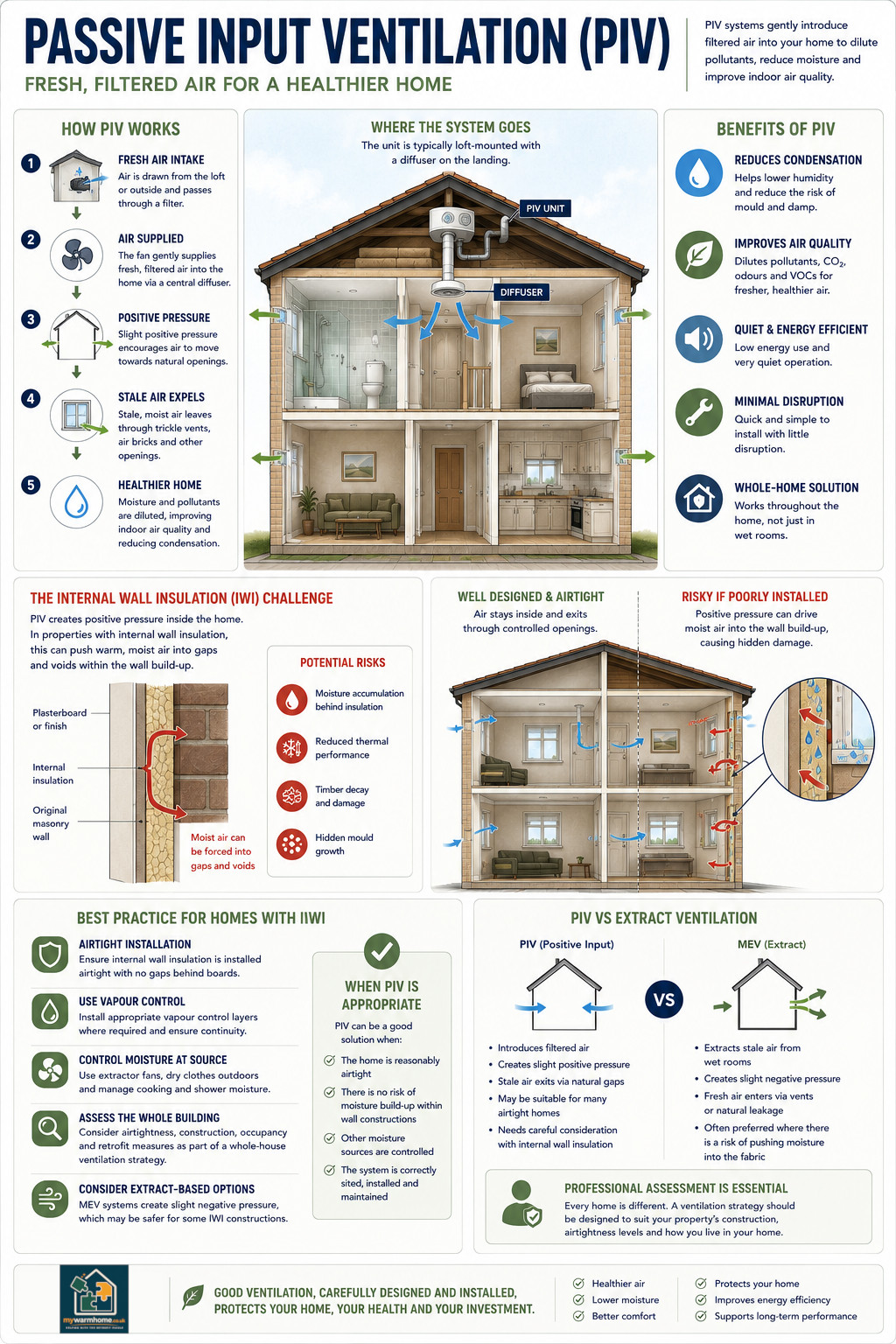
Positive Input Ventilation (PIV) introduces filtered air continuously, often from a loft-mounted unit through a central landing diffuser. It creates a small positive pressure in the dwelling.
It can help dilute pollutants, manage humidity and move air in a suitable property. The key question is whether its airflow and pressure are compatible with the insulation, construction and moisture behaviour of the home.
PIV should be assessed as part of the complete ventilation and retrofit strategy, not specified as a stand-alone response to condensation or mould.
01 / HOW PIV WORKS
Four stages of positive input ventilation.
01
Air enters
A loft- or wall-mounted unit draws air from the loft space or directly from outdoors.
02
Air is filtered
Filters help remove dust and airborne particles before the air enters the home.
03
Pressure rises slightly
A low-energy fan supplies air, creating a small positive pressure within the dwelling.
04
Stale air leaves
Moist or stale air is encouraged towards suitable trickle vents, leakage routes and other openings.
Many systems introduce air through a diffuser on the landing. Air routes through and out of the home need to be considered alongside the unit itself.
02 / WHY PEOPLE CHOOSE IT
Where PIV can help.
The benefits depend on the home, the routes for incoming and outgoing air, controls, installation and maintenance.
Less condensation
Introducing appropriately drier air and encouraging moisture-laden air to leave can help reduce internal humidity and surface condensation.
Better indoor air quality
Filtered incoming air can help dilute carbon dioxide, cooking odours, VOCs and other indoor pollutants.
Low-energy operation
Many PIV units use relatively little electricity and are designed to operate quietly in the background.
Simpler installation
Compared with a fully ducted whole-house ventilation system, installation can often involve less disruption.
PIV IN PRACTICE
Unit locations and air delivery.
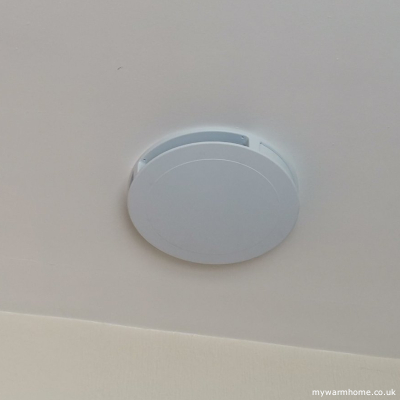
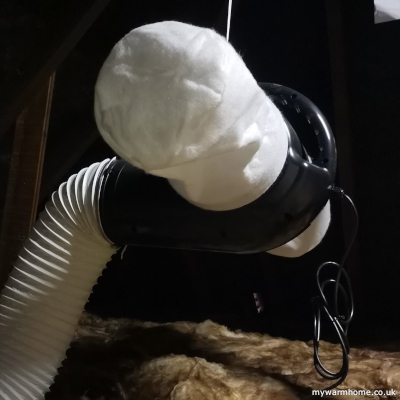
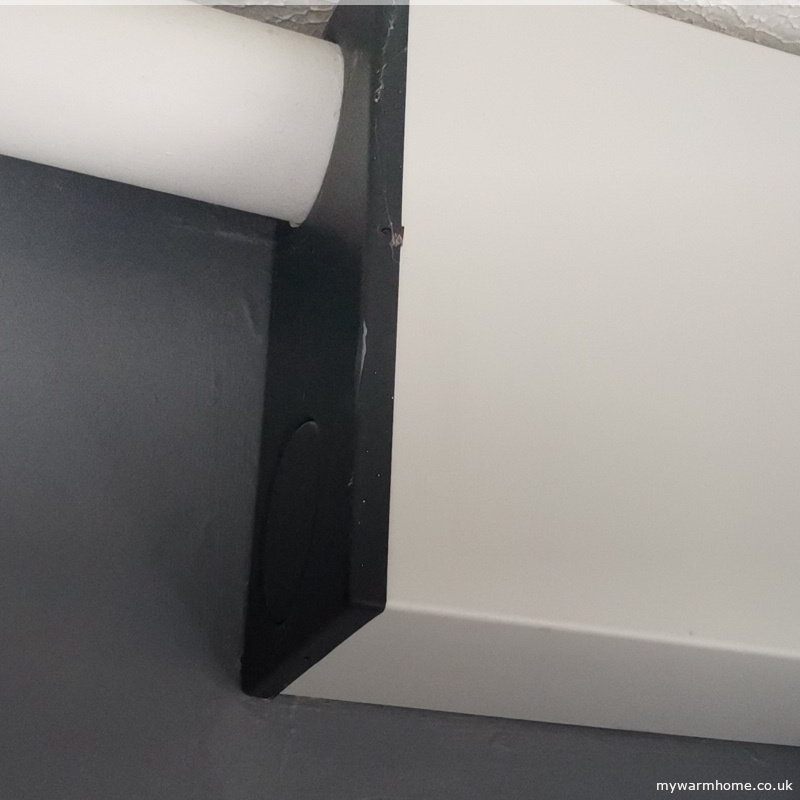
The installation and maintenance arrangements need to suit the chosen unit and the property.
03 / THE RETROFIT QUESTION
Insulation changes how air moves.
Energy-efficiency improvements can reduce heat loss, but they can also change the air paths previously available to the property.
Reduced leakage
New windows, draught-proofing, loft, floor and internal wall insulation can change unwanted air leakage and the way the dwelling ventilates.
Moisture has to leave
Without an appropriate ventilation strategy, moisture may accumulate and raise condensation and mould risk.
Look beyond the room
Ask where fresh air enters, moisture leaves and wet rooms extract — and whether air can enter hidden construction voids.
Check the whole strategy
Ventilation should be considered deliberately alongside the building fabric rather than left to chance.
03 / PIV + INTERNAL WALL INSULATION
This is where positive pressure needs more thought.
Internal wall insulation (IWI) changes the temperature and moisture conditions within a wall. Older solid-wall buildings may also absorb and release moisture through their original construction.
The key risk: air entering the construction
Because PIV slightly increases indoor pressure, warm moisture-laden air can be encouraged towards gaps or leakage paths. In poorly detailed IWI, these may be around boards, service penetrations, floor/wall junctions or voids behind the insulation.
Hidden interstitial condensation
If moisture-laden air reaches colder parts of the construction, it may condense within the fabric. Unlike surface condensation, this may not be visible. The risk depends on the actual wall system and installation details; it is not an automatic outcome of every PIV/IWI installation.
03 / UNDERSTAND THE RISK
What can go wrong if moisture reaches hidden areas?
01
Moisture accumulation
Moist air entering gaps or voids can condense against colder surfaces behind insulation.
02
Lower thermal performance
Moisture-affected insulation may perform less effectively than insulation that remains dry.
03
Timber decay
Where timber is present, prolonged moisture exposure can increase deterioration and rot risk.
04
Hidden mould
Mould may develop behind plasterboard or insulation without a clear surface warning.
Does that mean PIV must be avoided?
Not necessarily. It can be effective in many homes. Assess whether the ventilation strategy is compatible with the construction, insulation system and available airflow paths before choosing it.
04 / SPECIFYING PIV WITH IWI
Five checks before installation.
The aim is to manage air movement and moisture safely through the home and its building fabric.
01 / Airtight detailing
Gaps and voids behind IWI may become routes for warm, moist air. Installation quality matters.
02 / Vapour control
Where the chosen system requires a vapour-control layer, it needs to be continuous and correctly detailed.
03 / Moisture sources
Indoor clothes drying, ineffective wet-room extraction and high occupancy can increase moisture loads.
04 / Whole-home airflow
Consider PIV within the dwelling’s full ventilation strategy, not as an isolated product fitted to treat one symptom.
05 / Alternative strategies
Some homes may warrant considering extract-based ventilation such as MEV, which creates a small negative pressure instead.
IS PIV RIGHT FOR YOUR HOME?
The system needs to suit the building.
Wall construction, existing moisture levels, airtightness, occupancy and previous retrofit measures all affect whether PIV is appropriate. A unit that works well in one property may not be suitable in another.
Review existing damp or leaks, insulation and airtightness detailing, wet-room extract, incoming and outgoing air routes and access for servicing.
PIV and internal wall insulation should be considered together when assessing potential moisture pathways within the construction.
1
whole home — airflow, moisture and building fabric working together.
MY WARM HOME VIEW
Ventilation and insulation should be designed together.
PIV may improve air quality and reduce condensation, but positive pressure needs to be understood in the context of the building fabric — especially where IWI has been installed in older solid-wall homes.
BEFORE YOU CHOOSE A PIV UNIT
Manage moisture safely and protect the home.
A warm, energy-efficient home also needs to be dry, healthy and properly ventilated.