Homeowner Guide: Understanding and Running Your Heat Pump.
This guide is for homeowners who are considering a heat pump or who already have one installed. It explains how heat pumps work, how to run them correctly, and what good installation practice looks like.
Whether your system is air source, ground source, or water source, the principles are the same. The only difference is where the heat comes from and how it’s delivered into our homes.
One System, Different Heat Sources
All heat pumps work by moving heat, not creating it.
- Air source: collects heat from outside air.
- Ground source: collects heat from the ground via buried pipes.
- Water source: collects heat from rivers, lakes, or groundwater.
Once the heat is collected, everything inside your home works in the same way.
- Heat is upgraded using electricity.
- Heat is delivered to radiators, underfloor heating, blower unit or to heat water.
- The system runs slowly and efficiently.
How a Heat Pump Should Be Run.
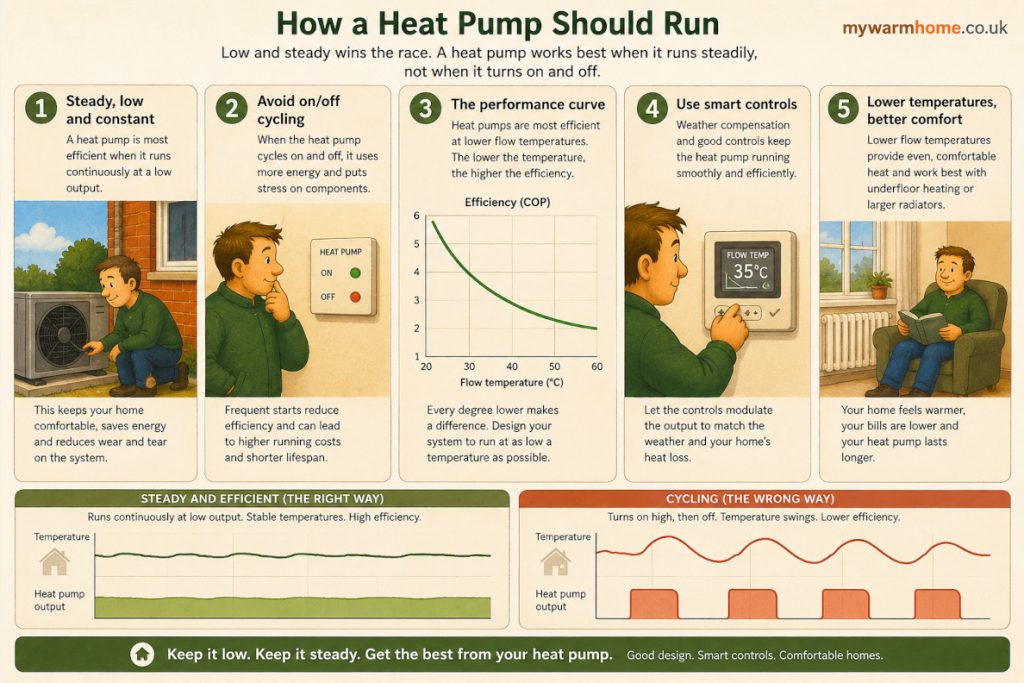
Heat pumps are designed to provide steady background warmth, not short bursts of high heat.
Best practice.
- Leave the system running continuously during cold weather.
- Use lower flow temperatures than a boiler.
- Avoid frequent on/off cycling.
- Let the controls do the work.
If your home feels warm, but the radiators are only warm to the touch, that’s normal and correct.
1. Run Low and Steady.
A heat pump works best when it runs continuously at a low output rather than blasting heat in short bursts. Unlike traditional boilers, heat pumps are designed to maintain a stable indoor temperature over time. Steady operation improves comfort, reduces energy use, and puts less strain on the system.
2. Avoid Constant On/Off Cycling.
Frequent stopping and starting reduces efficiency and increases wear on components. A well-designed heat pump should modulate its output to match the home’s heat loss instead of repeatedly switching on and off. Longer run times at lower power are healthier for the system and cheaper to run.
3. Lower Flow Temperatures Improve Efficiency.
Heat pumps become more efficient at lower flow temperatures. Running your system at 35–45°C instead of “high boiler” style temperatures allows the heat pump to operate at its best performance. Larger radiators or underfloor heating help deliver comfortable warmth even at these lower temperatures.
4. Let the Controls Do the Work.
Smart controls and weather compensation are key to efficient heat pump operation. The system should automatically adjust its output based on outdoor conditions and the home’s heating demand. Constantly turning thermostats up and down can actually reduce efficiency and comfort.
5. Comfort Comes from Consistency.
A properly designed heat pump system delivers an even, gentle warmth throughout the home. Instead of dramatic temperature swings, you get stable comfort, lower running costs, quieter operation, and a system that lasts longer. The goal is not fast heat, it’s efficient, balanced comfort all day long.
Heating Curve (Flow Temperature Settings)
The heating curve controls how hot the water is that flows to your heating system, based on outdoor temperature. You will find your heating curve on the heat pump control panel or external monitoring devices if installed. Always discuss with installers and ask to be shown how to use/control.
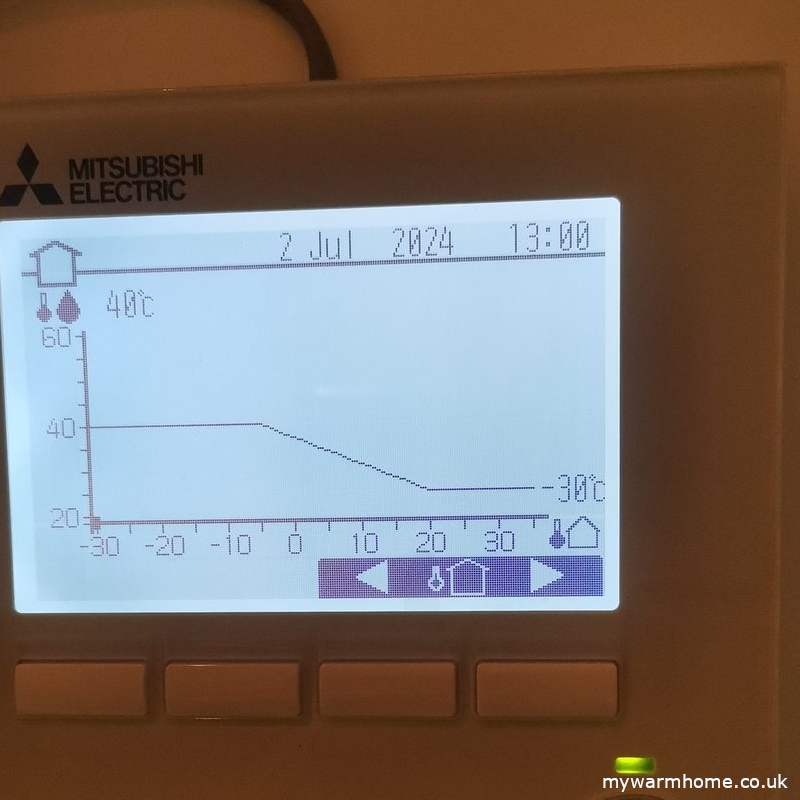
- Colder outside = slightly hotter water
- Milder outside = cooler water
Why this matters.
- Lower temperatures = higher efficiency
- Higher temperatures = higher running costs
A well-set heating curve.
- Keeps rooms comfortable
- Avoids overheating
- Maximises efficiency
This is usually set during commissioning and may need fine-tuning once you’ve lived with the system.
Weather Compensation
Weather compensation is what allows a heat pump to think ahead. An outdoor sensor monitors temperature and automatically adjusts the heating curve.
Most modern air source heat pumps come with built-in sensors on the outdoor unit to monitor ambient temperature for efficient operation, such as managing defrost cycles. While these built-in sensors measure conditions at the unit, they are often affected by the machine’s own heat, making external, wall-mounted sensors more accurate for weather compensation.
- More stable indoor temperatures
- No sudden hot or cold swings
- Better comfort and lower running costs
If weather compensation is disabled, the system may behave more like a boiler, which reduces efficiency.
What this means in practice.
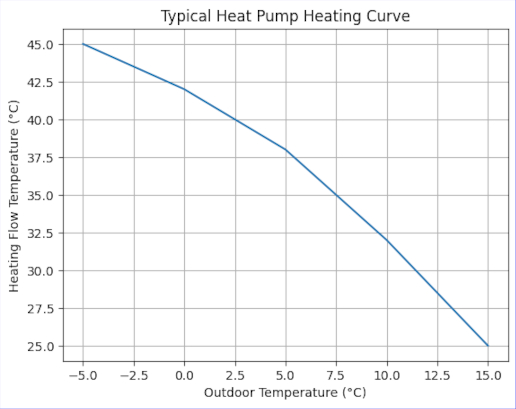
On a cold day (around –5°C), the system might send water out at ~45°C.
On a mild day (around 15°C), it may only need ~25°C.
The system adjusts continuously, not in jumps.
Outdoor Unit Location (Avoiding Recirculation)
For air source heat pumps, correct positioning is critical.
The unit must.
- Have clear airflow in front and behind.
- Be away from walls, corners, or enclosed spaces.
- Avoid recycling its cold exhaust air.
Poor positioning can cause recirculation, where cold air is pulled back into the unit, reducing performance and increasing noise and running costs.
Pipework: Type and Lagging
Heat pump pipework should be.
- Correctly sized for low-temperature heating.
- Designed to minimise pressure loss.
- Installed with gentle bends, not tight elbows.
Pipe Lagging (Insulation)
External pipework must be.
- Fully insulated end-to-end.
- UV-resistant.
- Weatherproof and sealed at joints.
- Fully sealed as it basses through property.
Poor or missing lagging leads to.
- Heat loss.
- Freezing risk.
- Reduced system efficiency.
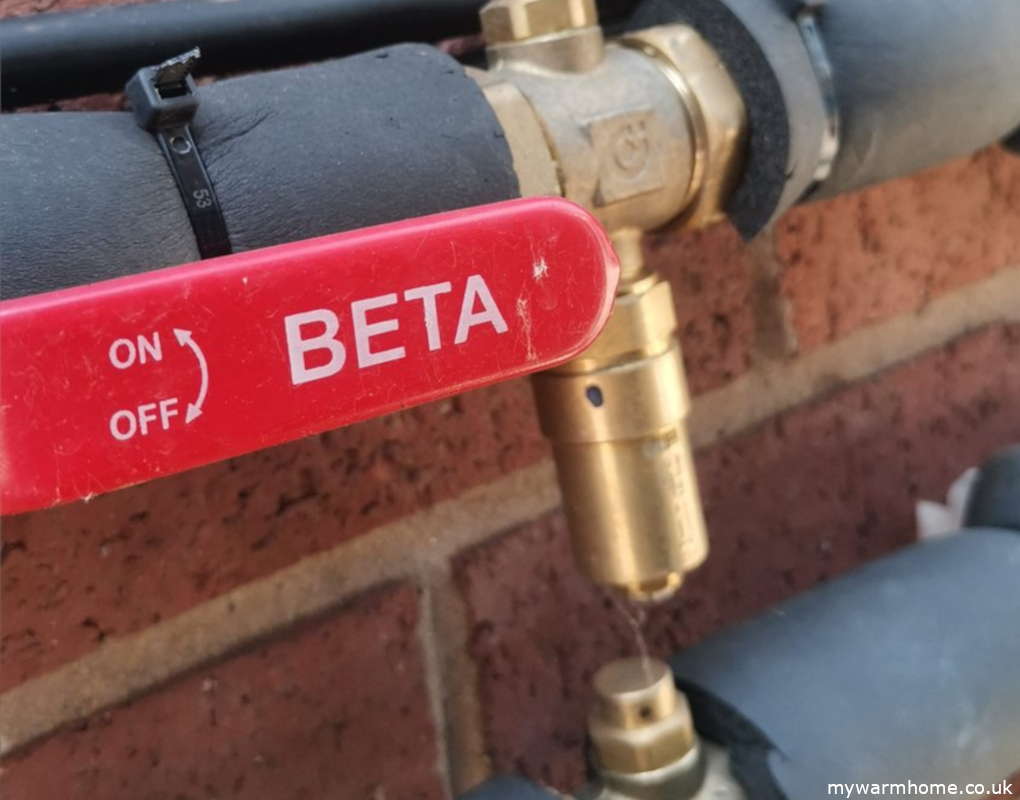
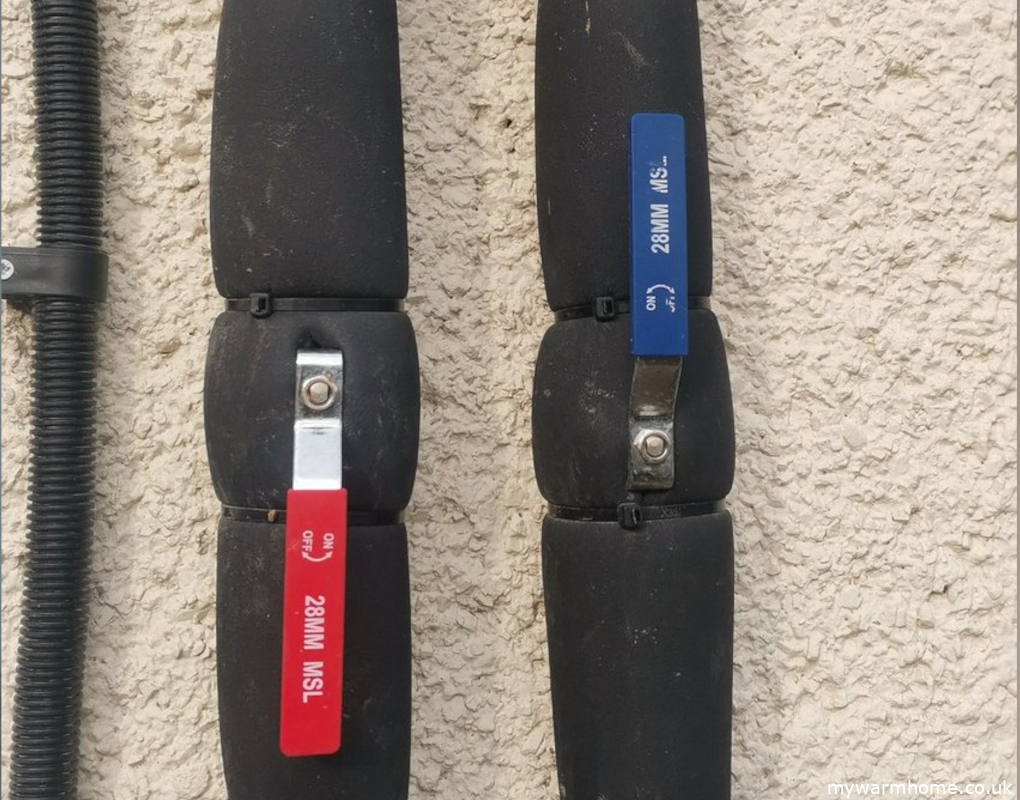
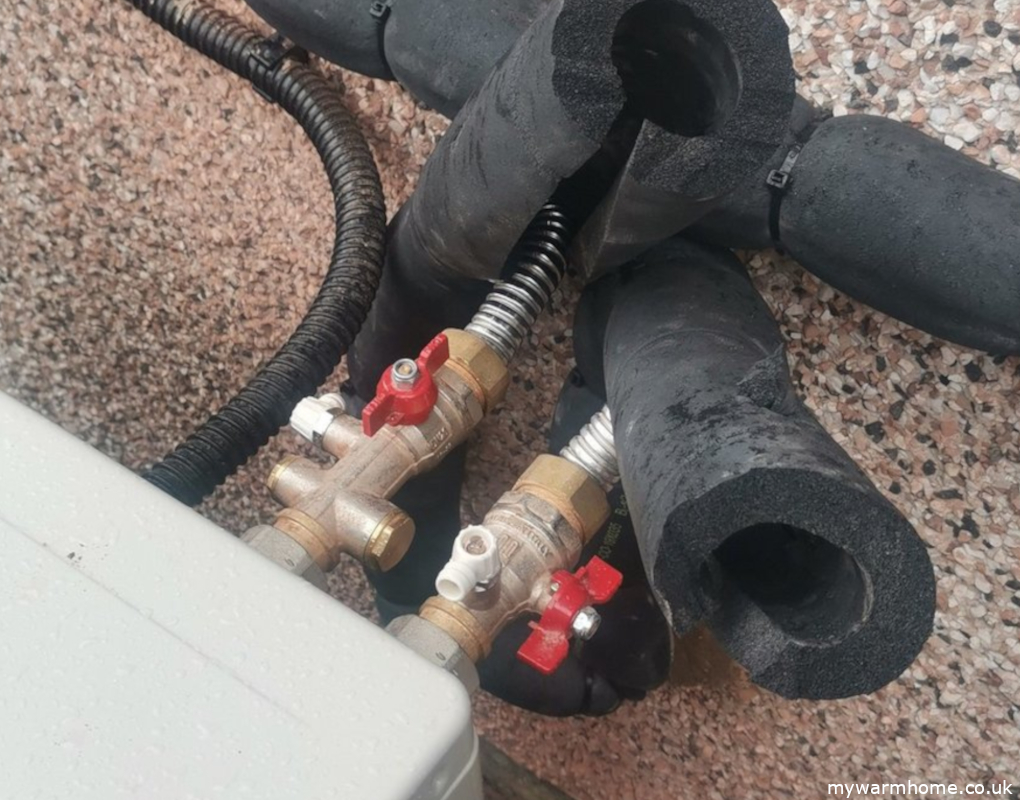
Shut-Off Valves (Isolation Valves).
Isolation valves are essential for maintenance and safety.
You should have:
- Valves on flow and return pipes.
- Valves near the heat pump.
- Valves near key components (buffer, cylinder).
These allow:
- Easier servicing.
- Fault isolation.
- Reduced disruption if work is needed.
Missing or inaccessible valves are a common quality issue.
MCS Standards , What Homeowners Should Expect.
In the UK, heat pumps installed under grants (BUS, ECO4) must meet MCS standards.
This includes:
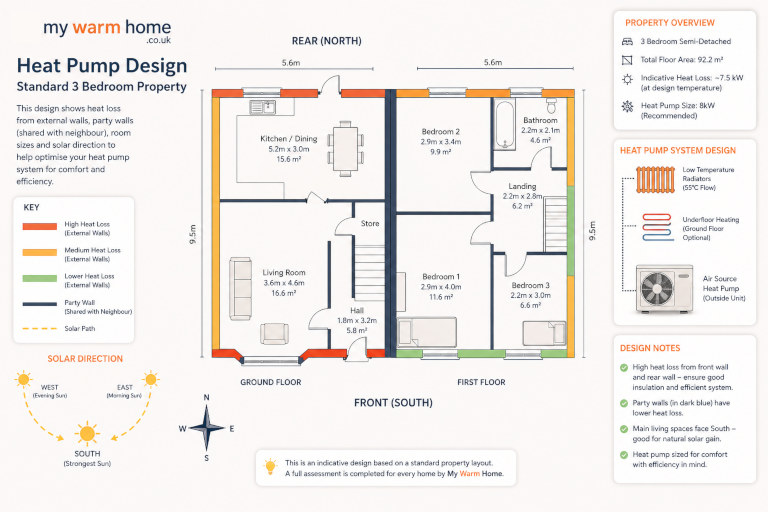
- Proper system design and heat loss calculations.
- Correct heat pump sizing.
- Suitable radiator or underfloor heating upgrades.
- Weather compensation enabled.
- Commissioning and handover documentation.
You should receive:
- MCS certificate
- User controls explanation
- System settings at handover
Microgeneration Certification Scheme (MCS) is a UK-based “stamp of approval” for small-scale renewable energy technology. It acts as a quality mark, confirming that products (like solar panels or heat pumps) and installers meet strict standards for safety, performance, and reliability. The MCS stamp is certifying the installers, just like Gas Safe would certify a gas engineer.
The Big Picture
Heat pumps are not just a new appliance, they are a different way of heating a home.
They work best when:
- Insulation is good
- Ventilation is considered
- Controls are understood
- The system is allowed to run steadily
Once set up properly, all heat pumps, air, ground, or water deliver the same result:
Efficient, low-carbon, comfortable heating for modern homes.