Mywarm
home.co.uk
The efficiency of a boiler can save £££.
Heating systems make warmth.
Insulation keeps it.
Controls decide how wisely it’s used.
Clear, independent advice for a efficient home.
Heating systems are becoming smarter. Regulations are tightening. Energy-saving technology is evolving rapidly.
Boilers have provided reliable heating and hot water in the UK for many years, some run on natural gas and some on oil but in principle they all perform the same besides hot water delivery.
Combination (combi) boilers are the most common.
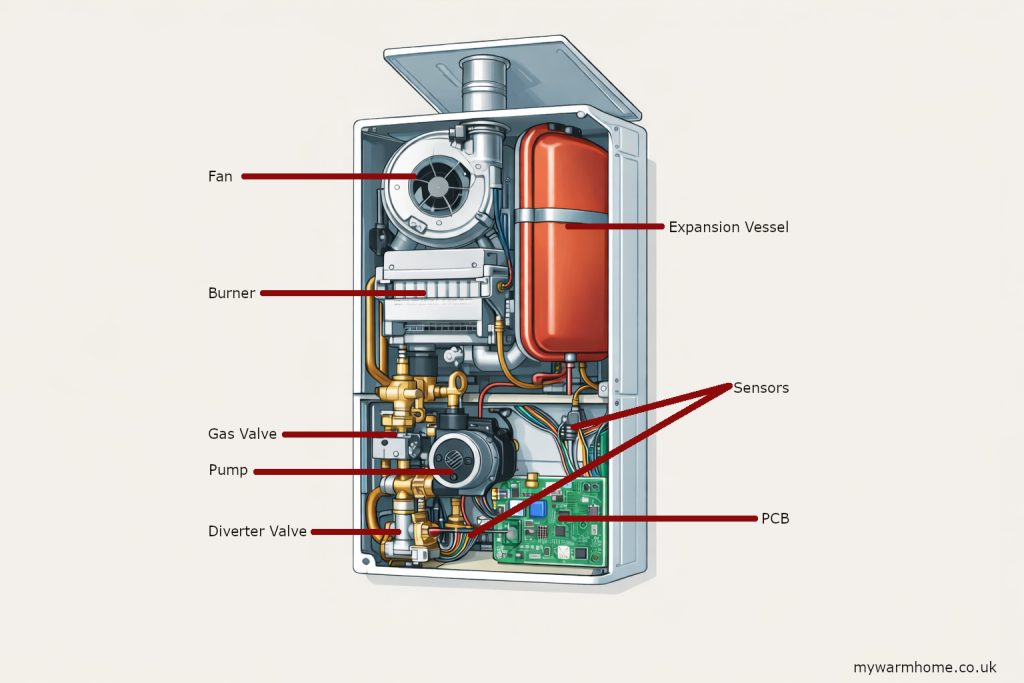
Components of a gas boiler.
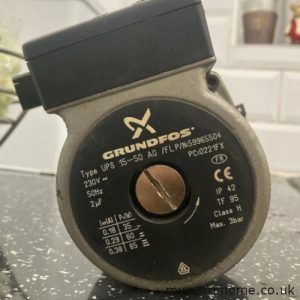
Pump, Pumps water around the system..
Diverter valves. Diverts the water to either hot water taps, radiators or stored hot water.
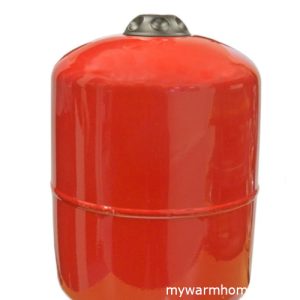
Expansion vessels. Hot water expands so the hotter the system gets the more pressure builds up. Expansion vessells allow that expansion, just like blowing up a baloon. Older conventional systems use small tanks in the loft. Modern systems have dedicated vessels built in or external.
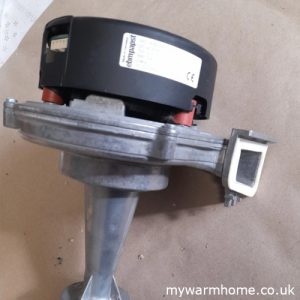
Fan. Creates airflow at set values to mix with the gas creating a safe mixture for the burner to operate.
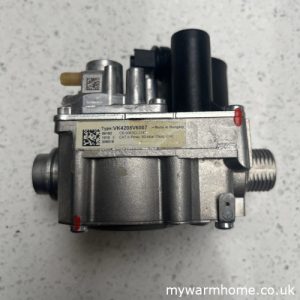
Gas Valve. The intake mechanisim to make sure the correct amount of gas is supplies to the burner.
Heat exchanger. This is what makes our heating and hotwater. We have a primary heat exchanger which makes our radiators get warm and with a combi we usually have a plate heat exchanger which uses the central heating water to heat our hotwater but they never mix.
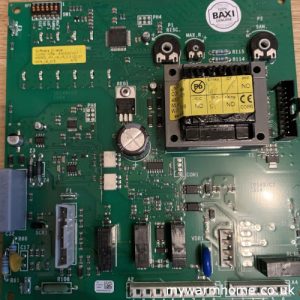
PCB. The brain, this controlls all the signals from thermostats, gas valves, dials, sensors, apps etc.
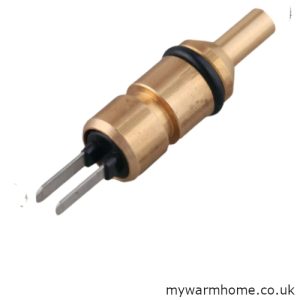
Sensors. Lots of different ones dotted around the boiler. These sense air flow, temperature on different pipes to name a few.
Hot water storage. Can be basic copper tank that water is supplied via seperate water tanks (vented) or modern sealed unit that works under pressure (unvented)
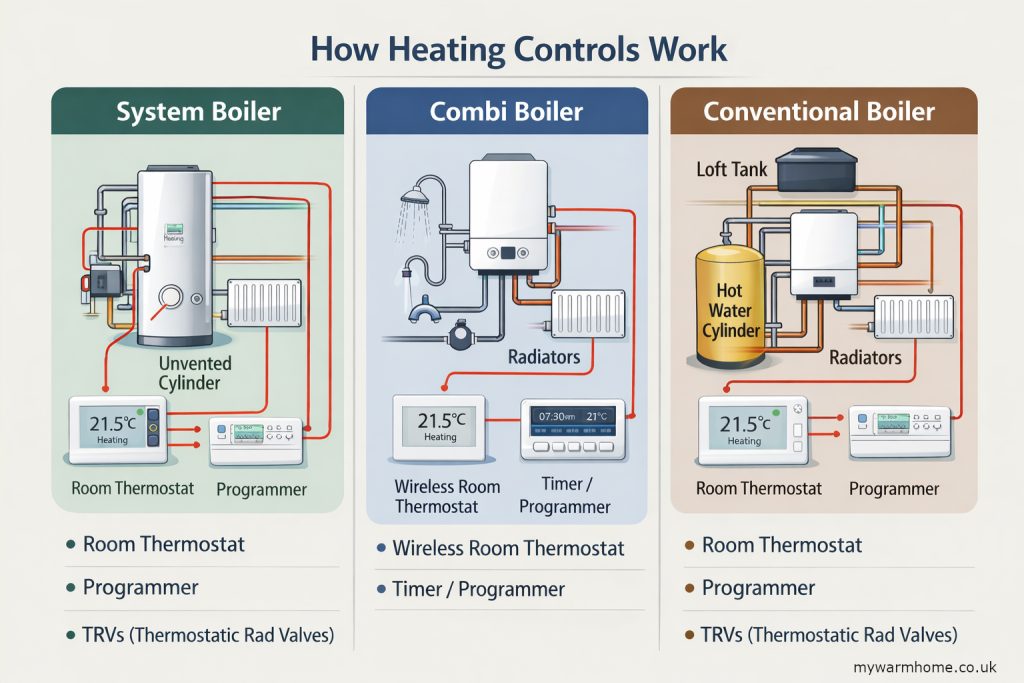
Programmers/Thermostats/Controls. From hard wired to wireless and phone/tablet app connected. Some are all in one and some stand alone. (tado, nest etc). They tell our radiators, hotwater and our boilers when to come on and off, what temperature to heat up to , some modern controls can fault find!
Zone Valves. Can control the heating in different zones, ie upstairs and downstairs.
Remember only a gas competent engineer can work on gas appliances. Always check qualifications.
Boiler Types.
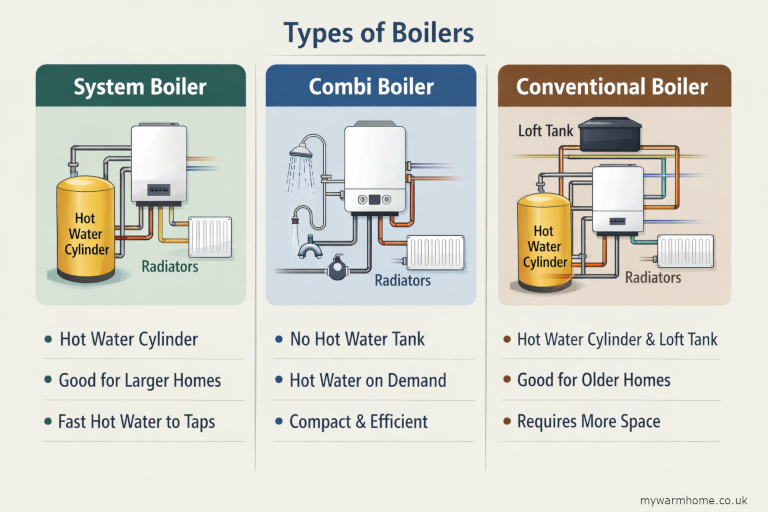
All boilers provide heating the same way.
Water is pumped around our radiators or underfloor heating.
The hotwater demand is delivered different for each of the common UK boiler types.
- Combi. Delivers heating and hot water from one unit. Pumps etc inside the main unit.
- System. Will have seperate hotwater storage but pumps etc inside the main unit
- Regular (conventinal). Will have seperate hotwater storage, pumps, valves and controllers are external from main unit.
A Combination (Combi) Boiler can delivers both central heating and hot water directly from the mains, working much like a high-powered, on demand kettle.
It heats water almost instantly whenever a tap is opened, removing the need for a separate hot water cylinder or cold-water storage tank.
Pros.
- Saves space
- Easier to install than regular or system
- All components within one unit
- Huge amount of manufactures and options
Cons.
- Hot water delivery can be slow due to system and property design
- They need good mains pressure
- They don’t have an immersion heater as backup
- They don’t usually work with power or older type showers
- They don’t usually let you use multiple showers or taps at the same time.*
Operation. Combi boilers work by the use of demand switches and valves (typically flow switches or diverters) for the hot water, so when a hot outlet is opened (tap, shower) a sensor recognises a flow and puts the boiler into hot water operation.
The heating side is controlled either by external room thermostats, individual radiator thermostats or built in controls.
Many people assume combi boilers provide “instant” hot water, but that’s not truly the case.
Heat loss, water wastage due to long pipe runs, and pre-heat settings can all affect performance and perceived efficiency.
A System Boiler can deliver both heating and hot water but the hot water side of the system is seperate.
It heats water via a stored hotwater tank, the main components like the pump, diverter valves etc, are within the boiler unit.
Pros.
- Excellent for homes with multiple bathrooms and high hot water needs.
- No need for a cold water tank in the loft.
- An electric immersion heater can be installed in the tank, providing hot water even if the boiler breaks down.
- Some models can work with solar thermal.
- Easier to install than regular boiler.
- All main components within one unit.
Cons.
- Requires a dedicated space for the hot water tank.
- Hot water can run out if the cylinder is emptied, requiring a 20-30 min reheat time.
- Higher installation cost compared to combi boilers.
- Less suitable for homes with limited space
Operation. System boilers work by the using valves, sensors and switches to recognise flow, so when a hot water setting is chosen the boiler begins to heat up the stored hot water. The hot water can take a bit of time to get up to temperature if the household has high demands. The heating is controlled via thermostats/programmers externally or built into the unit.
A Regular Boiler can heat external stored water and will have same components but may not be pressurised.
It will have external componants like pumps, diverter valves and expansion vessels.
It heats water via a stored hotwater tank, the main components like the pump, diverter valves etc external of the boiler unit.
Pros.
- Supplies hot water to multiple taps or showers simultaneously without significant pressure drops.
- Works well in areas with low mains water pressure.
- Excellent for older properties with existing traditional heating systems.
- An electric immersion heater can be installed in the tank, providing hot water even if the boiler breaks down.
- Easily integrated with solar thermal energy systems
Cons.
- Needs space for a hot water cylinder (usually airing cupboard) and a cold-water storage tank in the loft.
- Hot water is limited to the capacity of the cylinder; if it runs out, you must wait for it to reheat.
- Hot water stored in the cylinder can lose heat if not properly insulated, can lead to higher energy bills.
- Takes time to reheat water after the cylinder empties.
- More complex and costly to install due to additional tanks and pipework.
Operation.
Regular boilers work by the use of external diverter valves (2 port or 3 port depending on design), so when a hot water setting is chosen the boiler begins to heat up the stored water. Depending on household demands, design is a major factor of having enough stored hot water to satisfy needs*.
The heating is controlled via external thermostats/programmers or built into the unit.
*Whenever stored hotwater is part of the system then a real life design has to be taken into account, this will look at factors like occupation, showering and bathing habits, work patterns and demand. With modern systems an anti bactarial function is incorperated into the design.
*As with any heating system, real efficiency depends on the quality of the design and installation.
Takehome info..
Combi boiler:
The flow rate determines how much hot water the system can deliver. If you expect to use more than one hot water outlet at the same time (for example, two showers), choose a boiler with a higher flow rate (measured in litres per minute).
The KW rating of a combi boiler is primarily determined by hot water demand.
It’s not always about the size of the house—if you have more than one bathroom, you may need greater hot water output.
As a general rule of thumb in the trade, each radiator is estimated at around 1.5kW. So, a home with 10 radiators would require a boiler with a minimum output of around 15kw.
Boiler size is usually on its description!
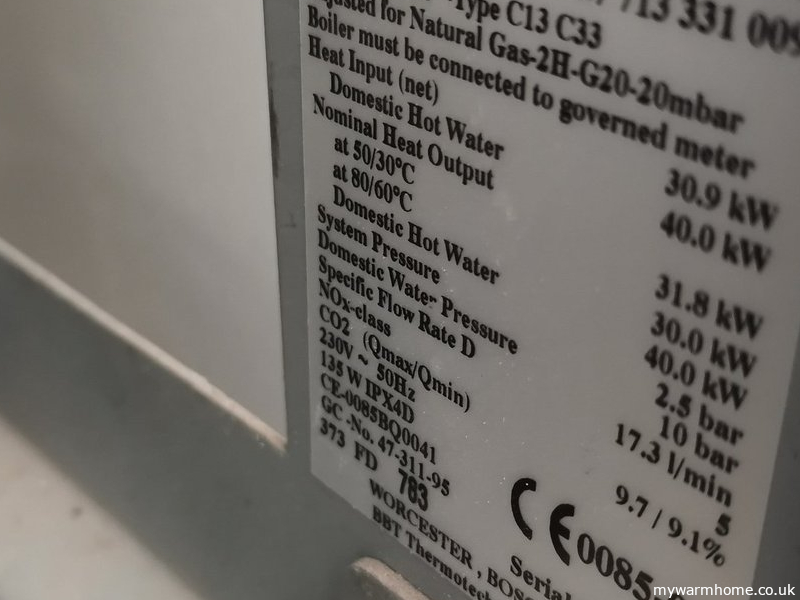
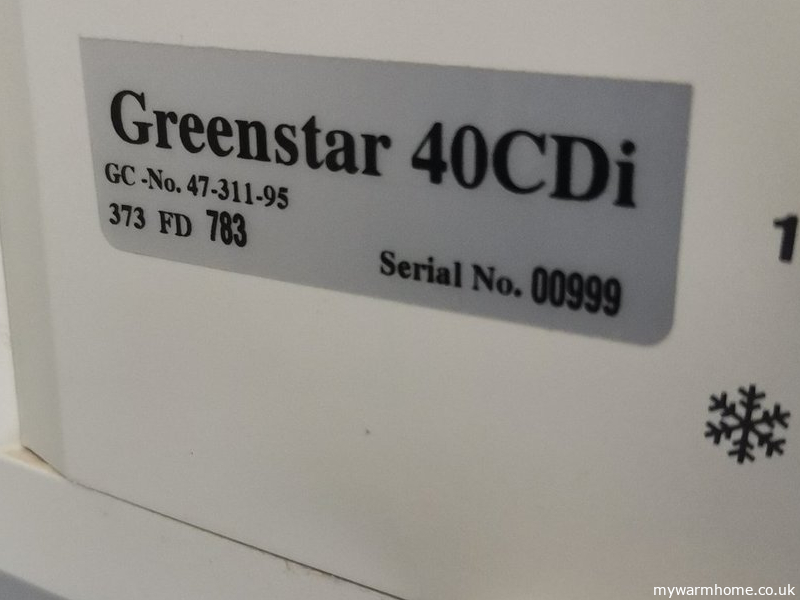
When you see a boiler name and model the kw is usually in its name. A Worcester 40cdi is usually 40kw. A Baxi 624 is usually 24kw and so on.
Hot water on a combi takes precedence over heating.
A diverter valve is usually present that fully switches when a tap or shower is used, meaning the heating is in off mode.
Combi boilers are pressurised, so think pressure cooker! It has a safety pipe (fed by a safety valve) that comes out of the back to the outside (usually a little copper pipe externally behind the boiler location) or into a tundish. This will let off excess pressure if a build up happens, just like a pressure cooker does, remember hot water expands and boilers are sized to handle a general expansion, this may need to be upgraded on the system depending on number and size of radiators.