

HEAT PUMPS · TECHNICAL GUIDE
Heat Pumps.
The Technical Side.
The science, the refrigerant cycle, system design and installation details — explained for real homes.
FOUR FUNDAMENTALS
01
Collect
Energy from air, ground or water.
02
Compress
Lift refrigerant pressure and temperature.
03
Deliver
Transfer heat into the heating circuit.
04
Repeat
Expand refrigerant and begin again.
THE SIMPLE IDEA
A heat mover, not a heat maker.
Even cold outdoor air contains thermal energy. A heat pump uses electricity to move that energy to a higher temperature so it can warm your home. It does not turn electricity directly into heat in the same way as a resistance heater.
This technical guide explains the physics, system choices, radiator ratings, efficiency figures and practical checks that make the difference between a well-designed installation and one that underperforms.
BASIC PHYSICS
Why cold air can still provide heat.
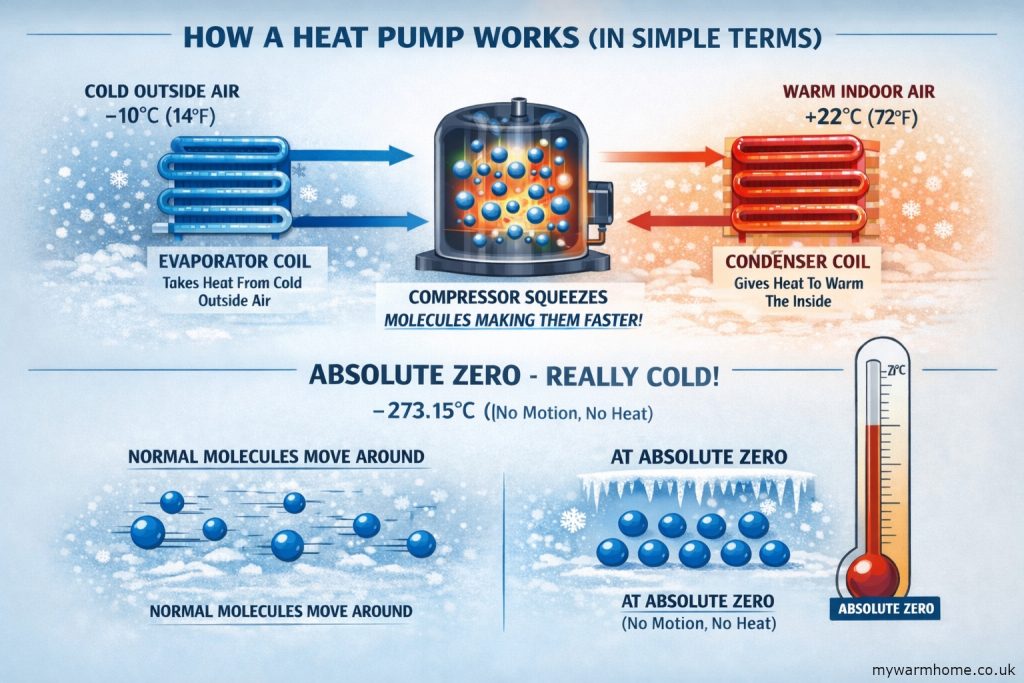
Temperature measures thermal state, not whether usable energy exists. Absolute zero is 0 kelvin (−273.15°C); outdoor temperatures are far above that, so the surroundings still contain energy that a refrigerant circuit can collect.
At normal atmospheric pressure, pure water freezes at approximately 0°C. Refrigerants are selected because they can evaporate at much lower temperatures at the pressures used inside a heat pump.
Important distinction: the source transfers heat to the refrigerant in the evaporator. The compressor then raises the refrigerant pressure and temperature, allowing useful heat to be released inside the building.
THE REFRIGERATION CYCLE
Four components doing different jobs.
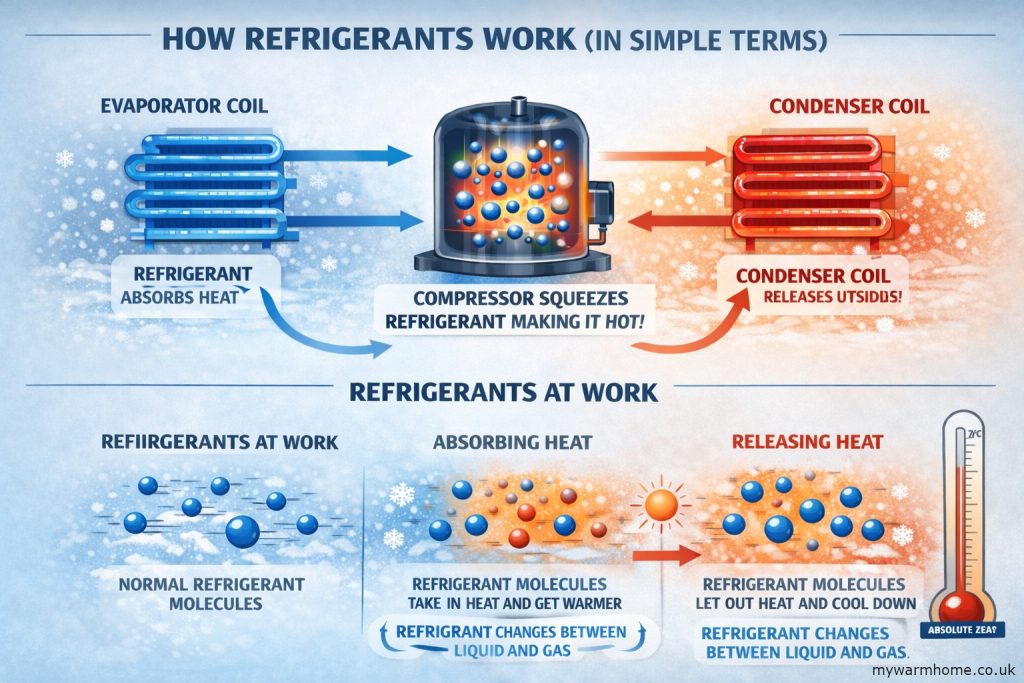
- Evaporator: low-pressure refrigerant absorbs heat from the source and evaporates.
- Compressor: electrical input compresses the vapour, lifting pressure and temperature.
- Condenser: heat passes to the heating water or indoor air, and the refrigerant condenses.
- Expansion device: pressure falls before the refrigerant returns to the evaporator.
On many air-to-water systems, refrigerant stays inside the outdoor unit (monobloc) or circulates between matched indoor and outdoor equipment (split). Heating water is a separate circuit and should not be confused with refrigerant.
THREE HEAT SOURCES
Air. Water. Ground.
The heat source and collector differ; the basic refrigeration cycle is shared.
Air source (ASHP)
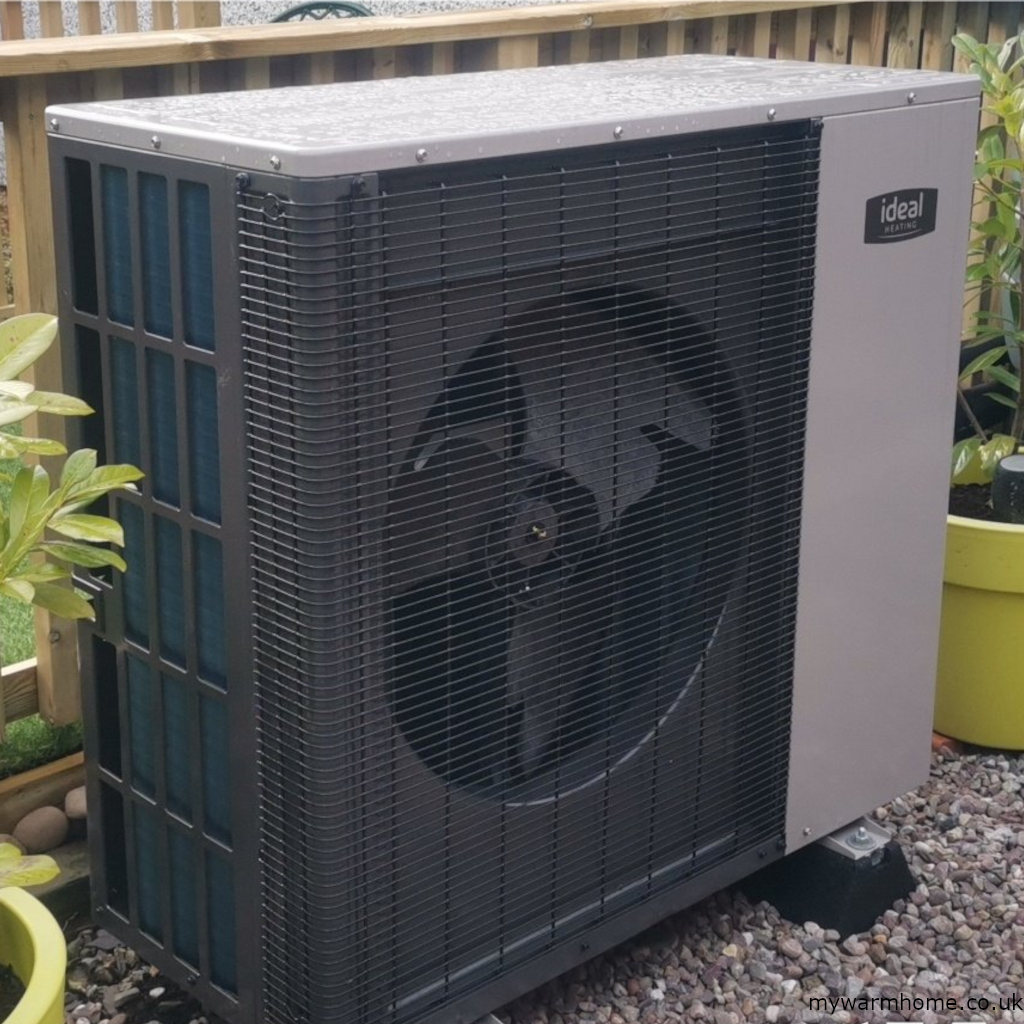
An outdoor fan and heat exchanger collect energy from the air. Space, airflow, noise and defrost drainage must be considered.
Water source (WSHP)
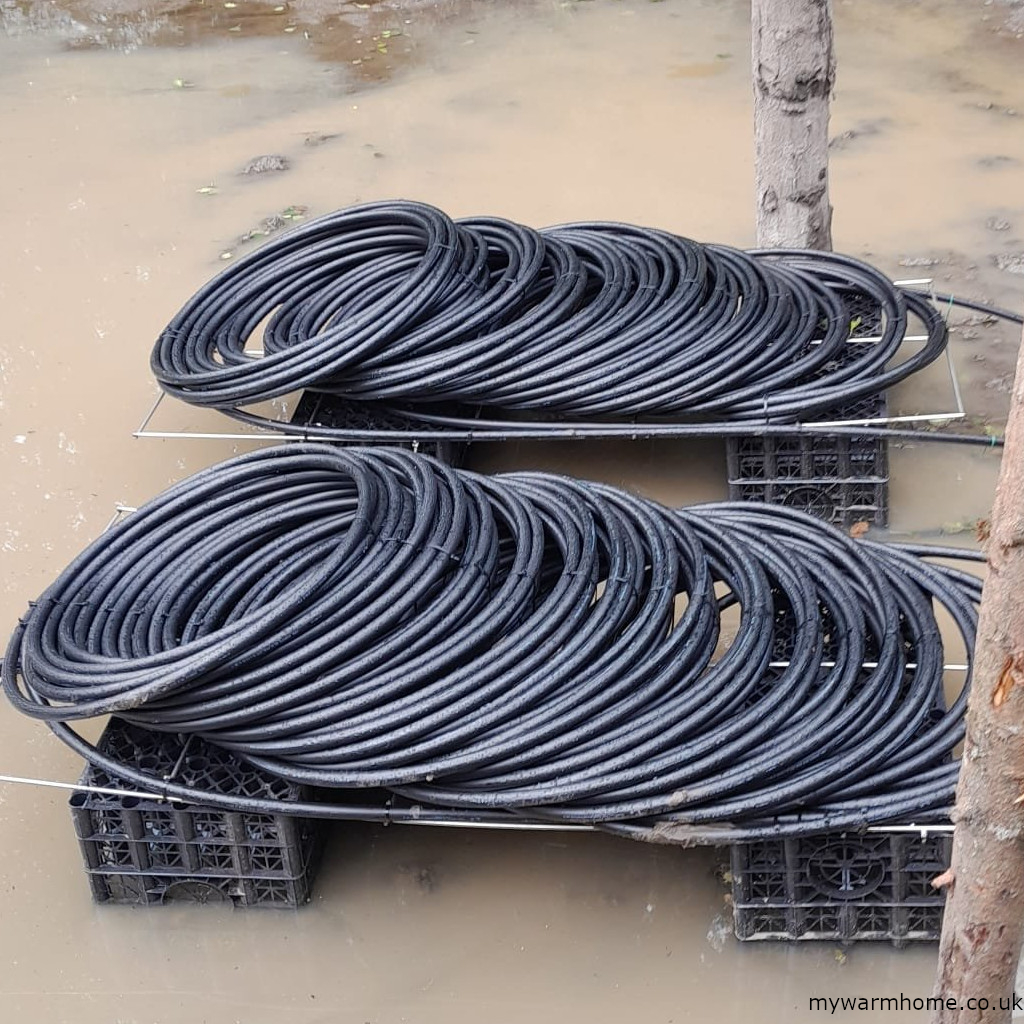
A suitable water body or water loop supplies low-grade heat, with environmental permissions and collector design assessed for the site.
Ground source (GSHP)
Buried horizontal loops or vertical boreholes collect ground energy. Depths, spacing and ground conditions are project-specific.

HEAT LOSS & EMITTERS
Design the home before selecting the appliance.
A room-by-room heat-loss calculation, appropriate to BS EN 12831, identifies the design load. Emitter outputs must be checked at the intended supply and return temperatures. Existing radiators are not automatically unsuitable, but their outputs reduce as water temperature falls.
Pipe sizes, flow rates, pump head, controls and domestic hot-water arrangements all require checks. Underfloor heating can suit lower flow temperatures, but correctly sized radiators can also perform well.
Understanding radiator ΔT
Radiator ΔT is the difference between the mean radiator water temperature and the room temperature. For example: 75°C flow, 65°C return and 20°C room gives a mean water temperature of 70°C, so ΔT50. At 45°C flow, 40°C return and 20°C room, ΔT is just 22.5K — radiator output will be considerably lower.

For more detail see the Stelrad guide to radiator Delta T and MCS guidance on correct heat pump sizing.
EFFICIENCY
COP, SCOP and what “400%” means.
COP (coefficient of performance) is the ratio of useful heat output to electricity input under defined operating conditions. A COP of 4 means approximately 4 kWh of heat delivered for 1 kWh of electricity used. That heat includes energy collected from the environment.
SCOP (seasonal coefficient of performance) is a seasonal performance measure using a specified test methodology and climate profile. It helps comparison but is not a guarantee of actual annual bills. Actual system performance depends on weather, flow temperature, controls, domestic hot-water demand and installation quality.
Useful heat delivered ÷ electricity consumed
For real running costs, an independently measured whole-system seasonal performance factor and your actual electricity tariff can be more useful than a product-only quoted COP.
CONTROLS
Weather compensation makes a big difference.
Outdoor temperature sensing and a correctly commissioned heating curve help match heating-water temperature to the home’s changing heat loss. Lower flow temperatures generally improve heat-pump efficiency, provided they still meet comfort requirements.
Avoid repeatedly demanding rapid temperature increases as if the system were a high-temperature boiler. Setbacks can still have a place, depending on occupancy, system response and tariff.
Read our Weather Compensation guide and Heating Controls guide.
INSTALLATION CHECKS
The details that matter on site.
Position and noise
Allow manufacturer-required clearances, airflow and maintenance access. Assess nearby windows, bedrooms, boundaries and applicable planning/noise requirements.
Defrost water and drainage
Air-source units can generate significant water during defrost. Prevent standing water and ice on paths; follow manufacturer drainage instructions.
Pipework and insulation
Size distribution pipes for design flow rates and insulate exposed and external water pipework with suitable weather- and UV-resistant products.
Fabric and ventilation
Reducing heat loss can improve running costs and emitter suitability. Any insulation upgrades should also consider ventilation and moisture risks.
Hot water and hygiene
Cylinder selection, recovery performance, safe hot-water delivery and appropriate Legionella risk controls all matter; use manufacturer and applicable safety guidance.
Service and handover
Confirm access, maintenance schedule, controls instructions, commissioning results, warranties and owner documentation.
COST & ENERGY
Running costs and solar PV.
Heat-pump operating cost depends on the heat demand, achieved seasonal efficiency and electricity price. Compare like-for-like system assumptions rather than relying on a single advertised percentage.
Solar PV can offset some heat-pump electricity, but generation is often highest in summer when space-heating demand is lowest. Use realistic seasonal estimates and consider tariff arrangements and hot-water scheduling.
COMPLIANCE & QUALITY
Privately funded or grant-funded: quality still matters.
A proper design should include room-by-room heat-loss figures, equipment and emitter schedules, electrical and hydraulic checks, commissioning records and a clear handover. Observe manufacturer instructions, relevant Building Regulations, electrical safety obligations and any applicable planning conditions.
For installations relying on grant eligibility or certification, verify the current scheme requirements and relevant MCS standards. Where fabric upgrades are included, check the applicable retrofit and funding framework rather than assuming one PAS standard applies to every job.
A useful starting point is the government heat-pump suitability service and the MCS domestic heat-pump best-practice guidance. See our Funding page for scheme information.
THE BIGGER PICTURE
The right system starts with the right information.
Start with the building: heat loss, insulation, ventilation, radiators and hot-water demand. Then specify and commission the heating system around those facts — not the other way round.
MyWarmHome: independent assessments, heat-loss calculations, system advice and quality inspections.