
SOLAR / TECHNICAL HOMEOWNER GUIDE
Solar in depth.
Understand the technology, grid connection, system components, storage and the checks that matter after installation.
01
Understand
Solar PV, solar thermal and main components.
02
Connect
DNO, G98/G99, export and metering.
03
Inspect
Equipment, wiring, labels and handover.
04
Store & protect
Batteries, diverters and safe aftercare.
THE SHORT VERSION
There is more to solar than the panels.
Solar PV produces electricity; solar thermal collects heat for water. Both rely on matching the technology to the home, understanding the installation and keeping clear records.
This is the technical companion to the first Solar homeowner guide. It covers the equipment behind the panels, grid-connection paperwork, safe installation details, export payments, batteries and diverters.
Good solar performance involves roof suitability, product compatibility, electrical protection, access for maintenance, the electricity network and an informed homeowner. The installation should be understood as one complete system.
01 / KNOW THE TECHNOLOGY
Solar PV and solar thermal do different jobs.
They both use energy from sunlight, but produce different outputs. It is important to distinguish an electrical solar PV array from a solar thermal collector before comparing specifications.
01
Solar PV
Photovoltaic cells, typically using silicon semiconductors, turn light into direct-current (DC) electricity.
02
Inverter
The inverter converts DC electricity to alternating-current (AC) electricity suitable for household circuits.
03
Solar thermal
Collectors absorb solar energy as heat to support a domestic hot-water system, using a purpose-designed circuit.
04
The complete system
Mounting, cabling, controls, protection, metering and ongoing maintenance all matter alongside the roof equipment.
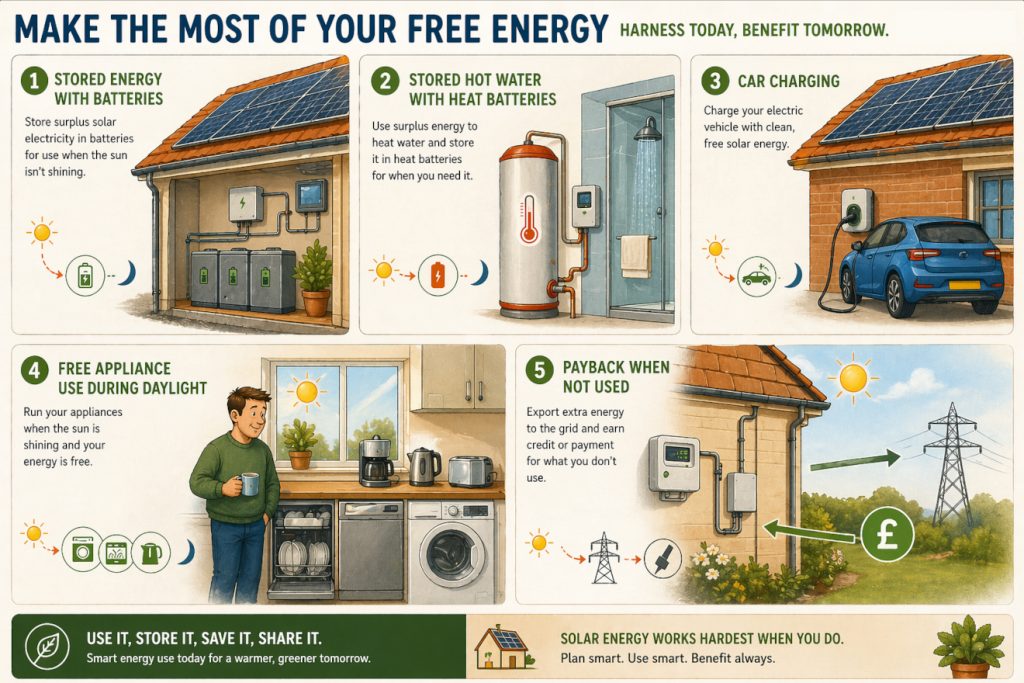
Solar PV in a little more detail
PV cells absorb light, produce DC electricity and feed an inverter. The home uses available generation; depending on the design, any surplus may charge a battery or be exported.
Solar thermal in a little more detail
Domestic systems commonly use flat-plate collectors or evacuated tubes to transfer collected heat into a hot-water store. Collector and system behaviour depends on seasonal conditions and suitable over-temperature protection.
01 / RECOGNISE THE EQUIPMENT
Panels, collectors and inverters.
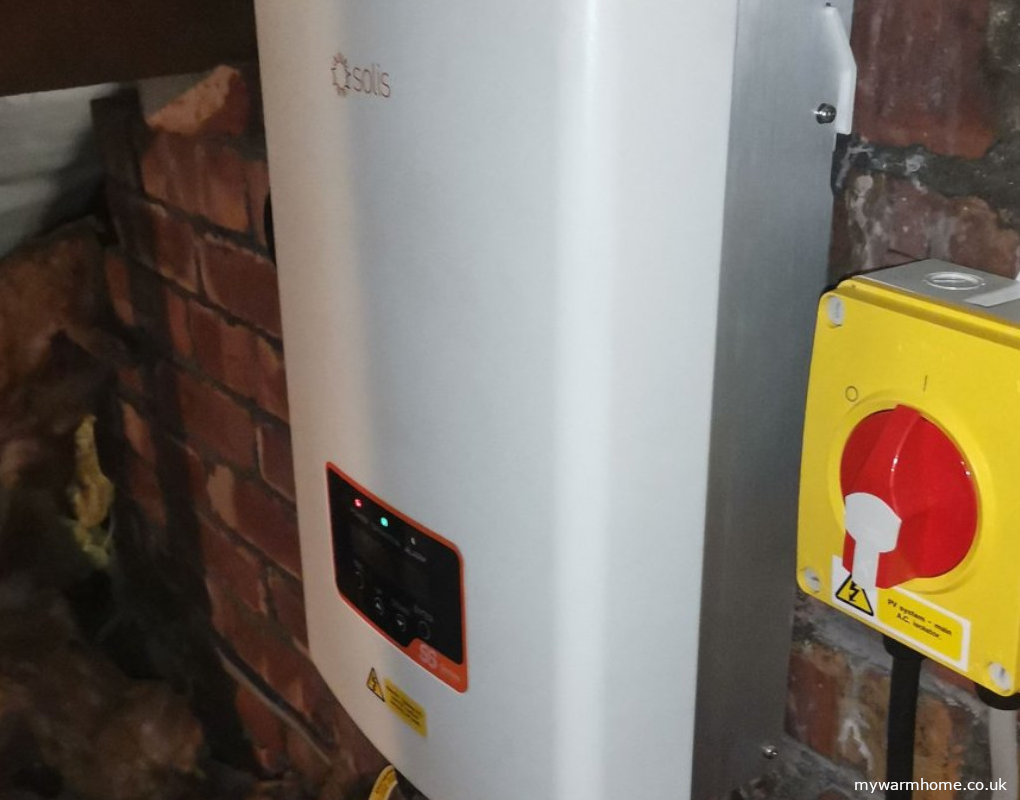
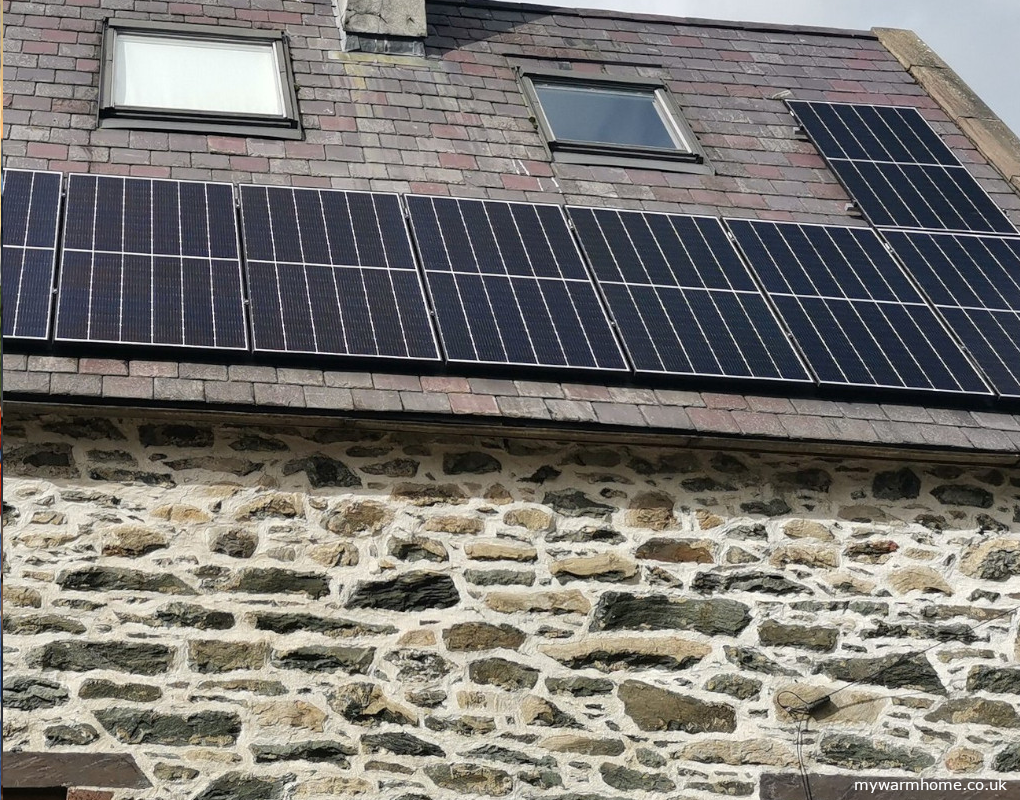
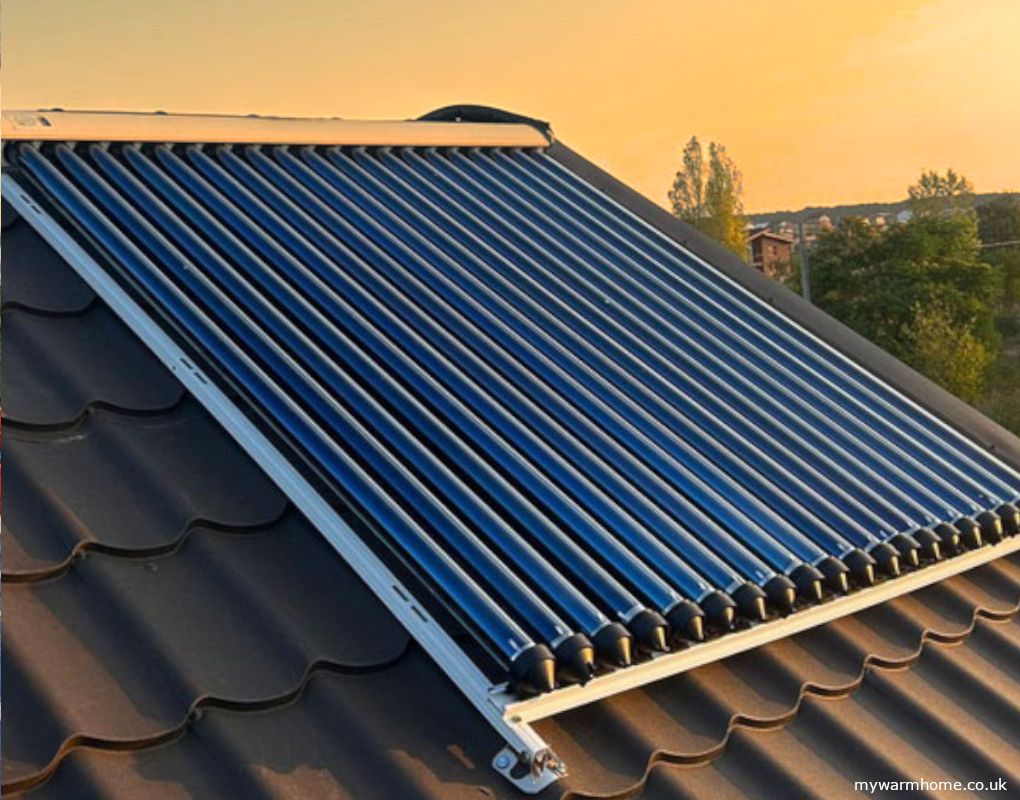
PV and solar thermal are not interchangeable. Check what has actually been specified, which parts are within the installer’s scope, and what performance has been estimated for your property.
QUALITY / BEST PRACTICE
Choose the installation route before work begins.
Whether the project is privately funded or supported by a scheme, an installer should explain the standards, certification, safety checks and responsibilities applying to that installation.
Competence & certification
Ask for appropriate electrical and renewable-system competence and evidence of installer certification where required for your chosen scheme or tariff.
MCS & system standards
MCS-certified work is assessed against the relevant scheme requirements; confirm the applicable standard edition with the installer.
Roof & electrical design
Mounting, weatherproofing, cable routing, circuit protection, earthing and manufacturer instructions must be coordinated.
The paperwork
Ask who is responsible for the DNO process, handover documents, warranties and any grant or export-tariff application.
02 / BEFORE YOU CONNECT
The network operator needs to know what is being connected.
Your Distribution Network Operator (DNO) manages the local electricity network. Grid-connected generation needs the appropriate connection process so that the network can assess the installation.
G98: small-scale connection and notification
The usual G98 route covers type-tested small-scale generation at or below 16 A per phase — approximately 3.68 kW AC on a single-phase supply. The required notification is normally made following installation and commissioning.
G99: an application before connection
Larger or other qualifying installations need a G99 application and DNO approval in advance of the relevant connection or commissioning work. The installer must account for the complete proposed generation and storage arrangement.
This threshold relates to the relevant AC connection characteristics, not simply the number of panels or their combined DC nameplate rating. Ask the installer to confirm the correct route for your project.
Find your network operator and see the government guidance on registering energy devices.
02 / THE CONNECTION PAPERWORK
Keep the DNO documents with the installation records.
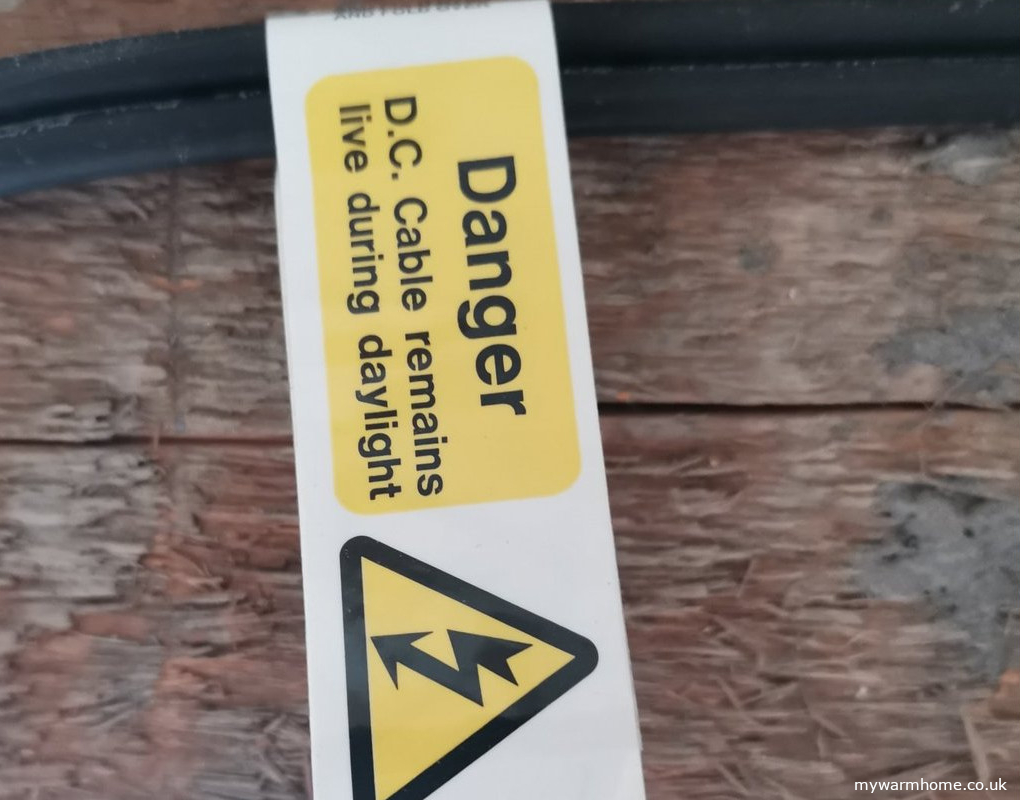
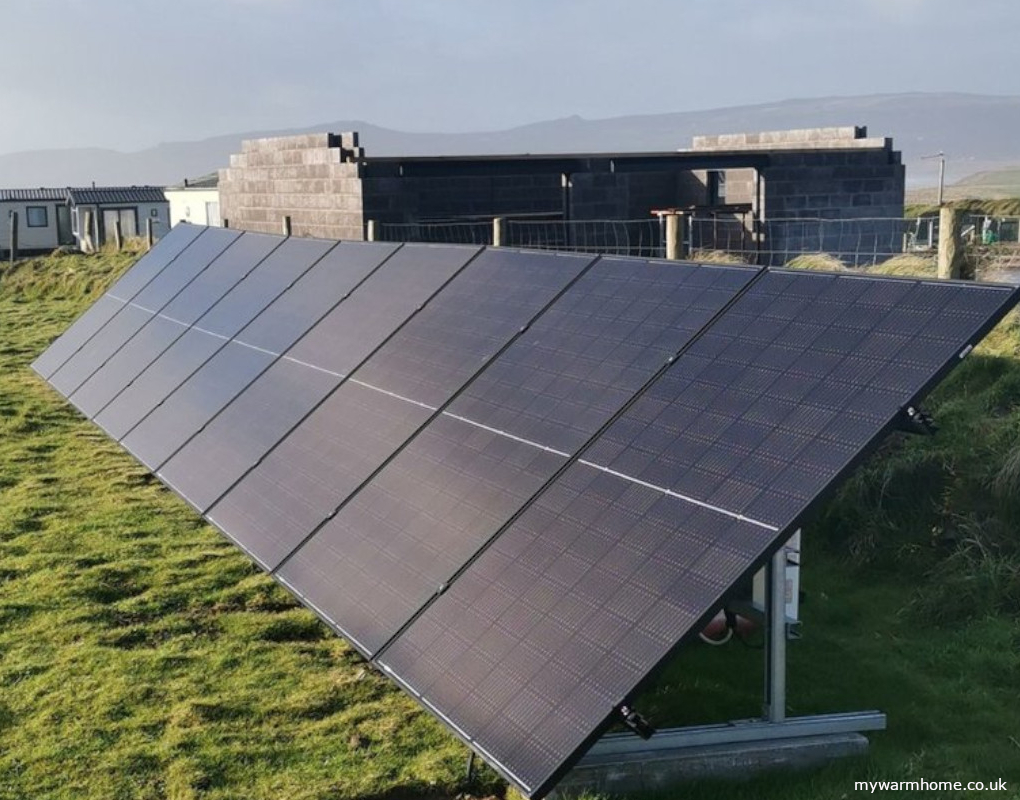
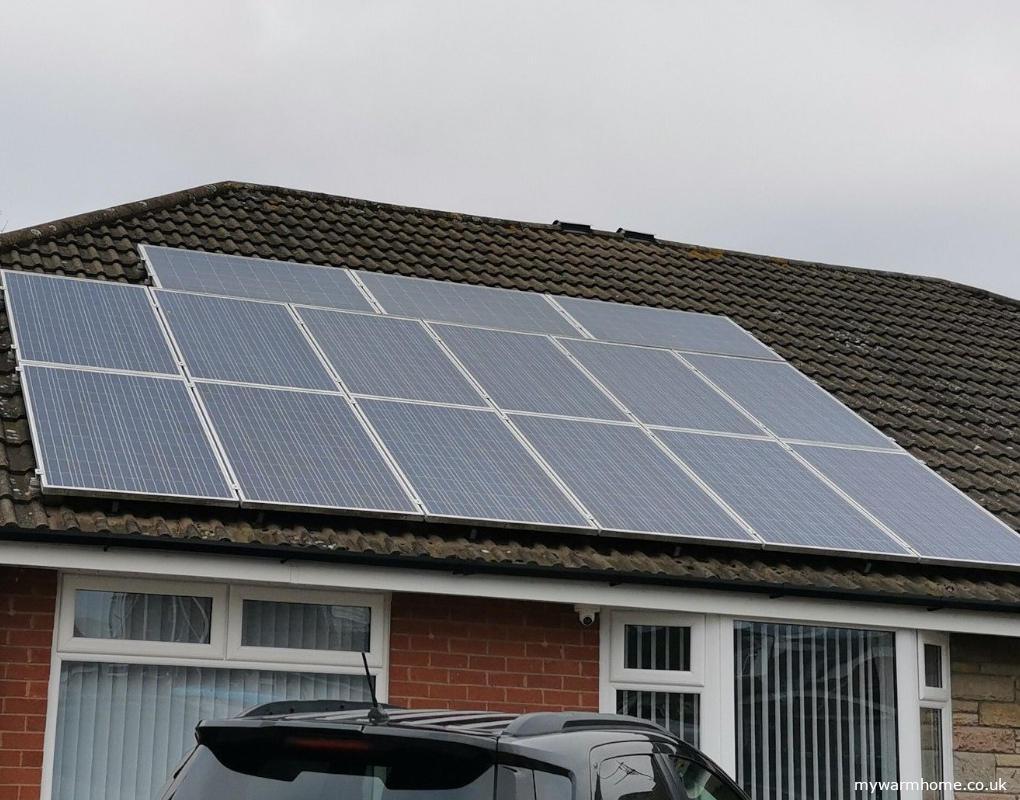
Ask your installer to give you the relevant DNO submission, notification or approval, alongside the inverter and protection details. If the system includes a battery, any export limitation or other generation, make sure the DNO paperwork describes the actual connection rather than PV alone.
02 / EXPORT & METERING
Getting paid for exported electricity.
Inform the supplier after installation, retain the installation date and documents, and make sure the export arrangement is fully set up rather than assuming that exported electricity automatically earns a payment.
Smart Export Guarantee
A participating supplier may pay eligible generators for metered electricity exported under its SEG tariff.
Export MPAN
An export MPAN identifies the export metering point separately from the import account. The supplier and DNO can guide you through the allocation process.
Evidence
The supplier may require acceptable installation certification, DNO documents and a meter capable of recording qualifying export data.
Check the tariff
Export rates, terms and evidence requirements depend on the chosen supplier. Ask when the tariff starts and what readings will be used.
02 / A USEFUL DISTINCTION
Import and export are different metering records.
The electricity you buy from the grid and the electricity your solar system sends back are different flows. Import and export MPANs identify the associated metering points for industry administration.
Export payments depend on a suitable metering arrangement, tariff eligibility and application. Your ordinary import bill or the presence of an inverter alone is not enough.
More detail: MyWarmHome MPAN and DNO guide and Ofgem’s Smart Export Guarantee information.
03 / AFTER INSTALLATION
What should the homeowner be shown?
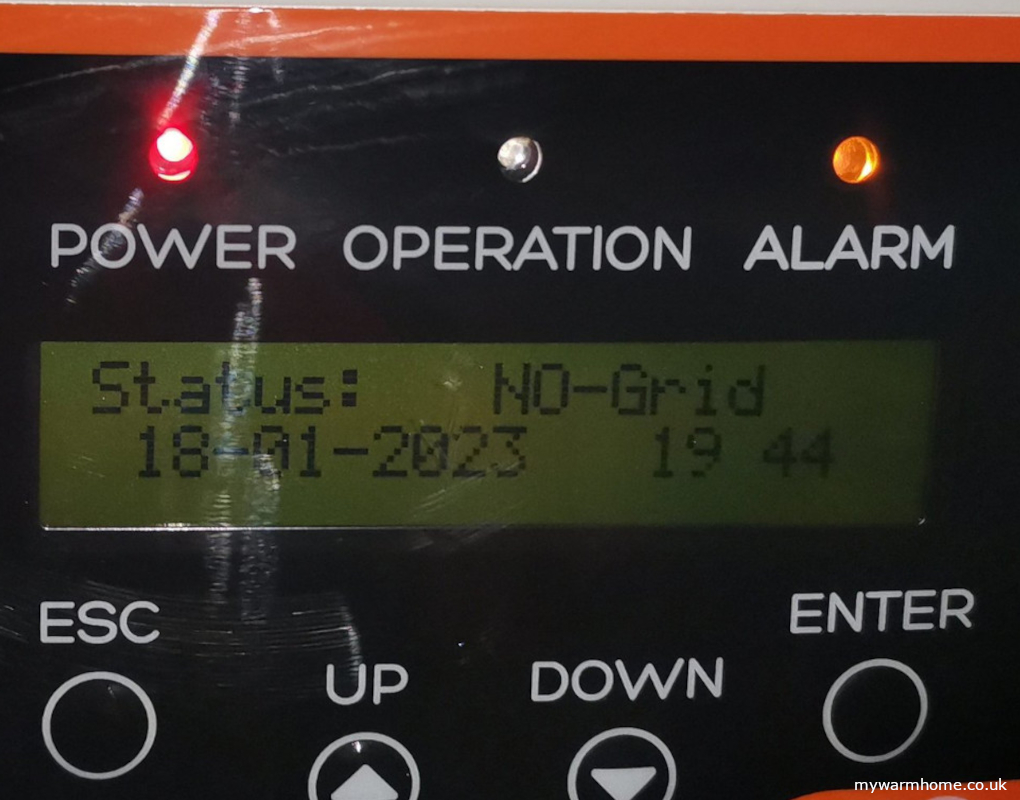
A suitable handover makes the installation understandable and serviceable. The installer should demonstrate the monitoring system, identify the isolation arrangements and explain what to do if a fault appears.
01
Labels & isolation
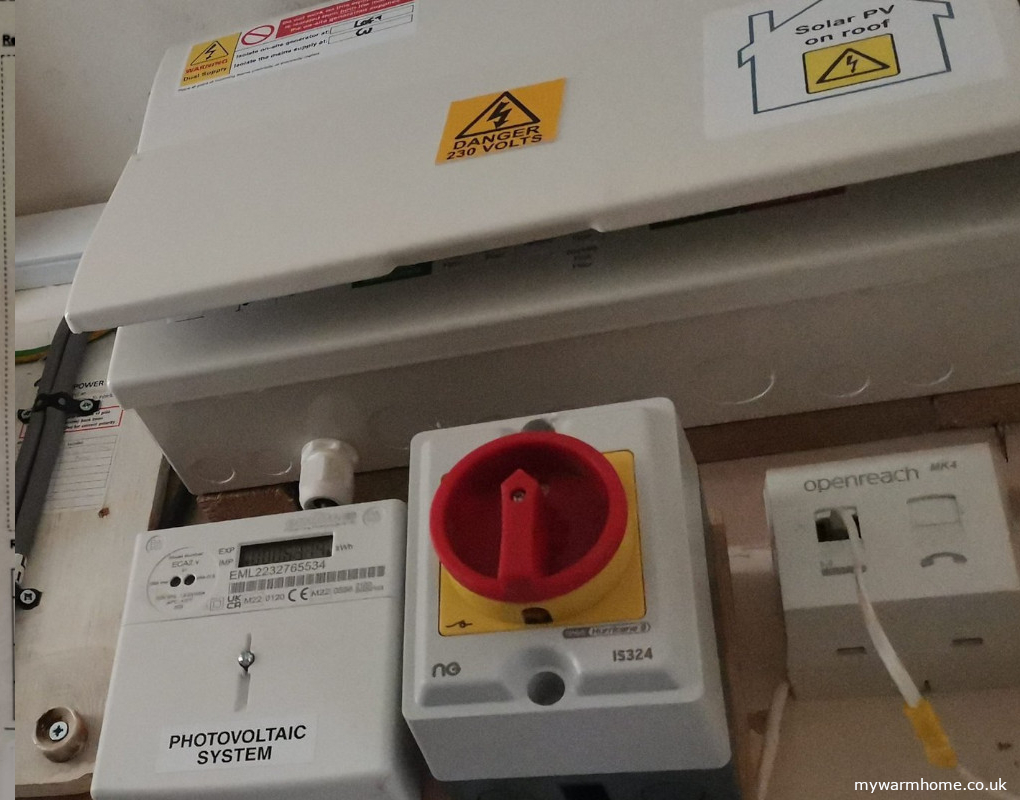
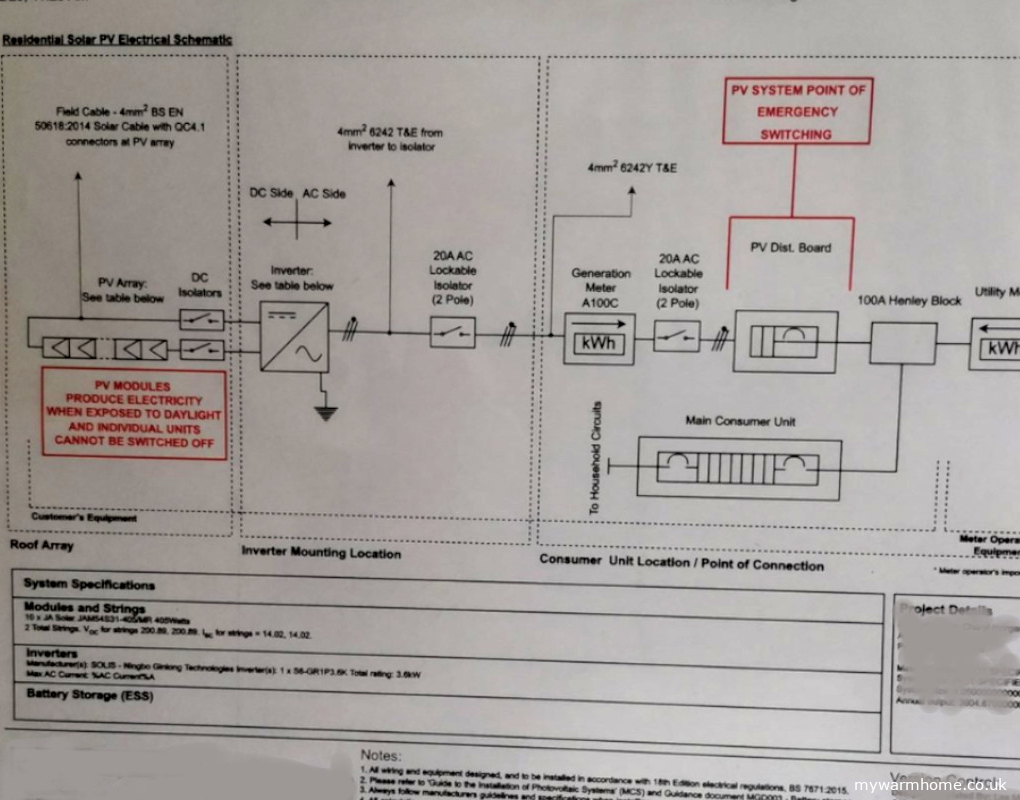
Solar PV warnings, DC and AC circuit identification, accessible isolation and the relevant diagrams should be provided.
02
Cable management
PV leads should be supported and protected from abrasion, snagging, debris and damaging contact with roofing materials.
03
Inverter & protection
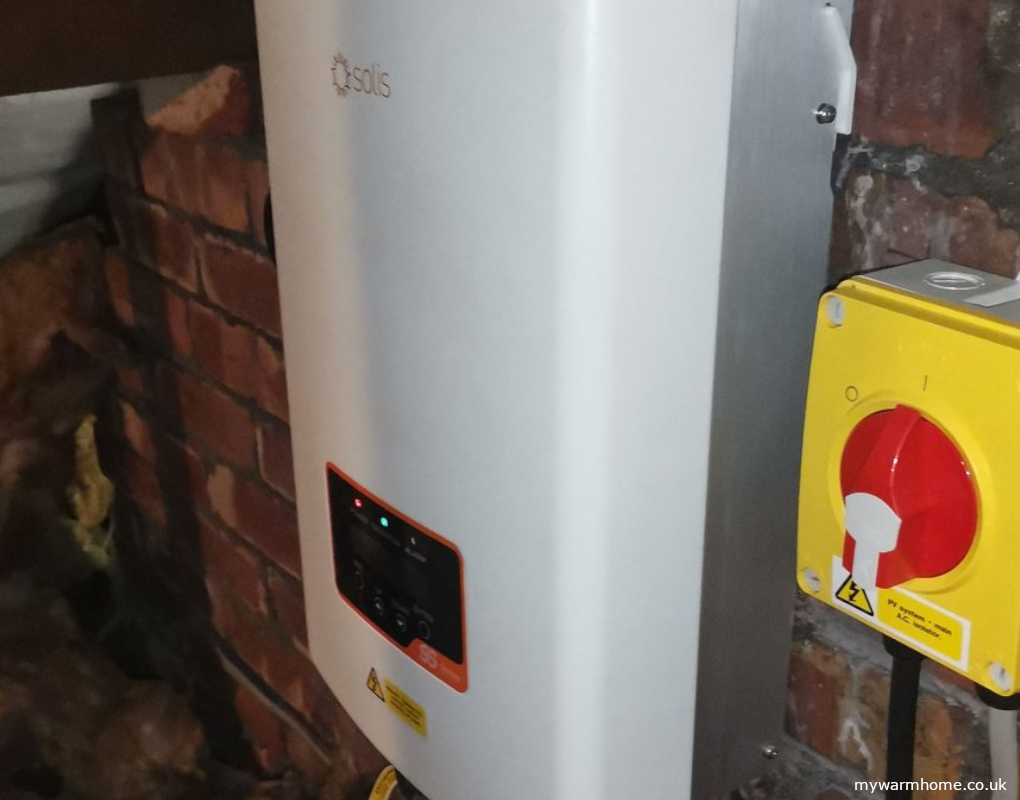
The inverter and protection equipment need suitable siting, fixing, access and manufacturer-specified clearances.
04
Monitoring & documents
Keep the generation/monitoring information, test certificates, specifications, warranties and emergency instructions together.
03 / CHECKING PHYSICAL DETAILS
Look at the roof and the electrical installation — safely.
Mounting and cabling should be checked by competent installers. A homeowner can understand the evidence, review photographs and make visual observations from safe locations without climbing onto the roof or opening electrical enclosures.
Roof and array
Panel layout, secure mounting, roof weatherproofing, setbacks, shading, safe access and wind actions should match the project design and relevant product/system instructions. There is no single roof-edge dimension or pitch that applies to every installation.
Cables and protective devices
DC leads need safe support and suitable connectors. Isolation, protection, earthing and bonding should be designed, installed and tested for the particular electrical installation.
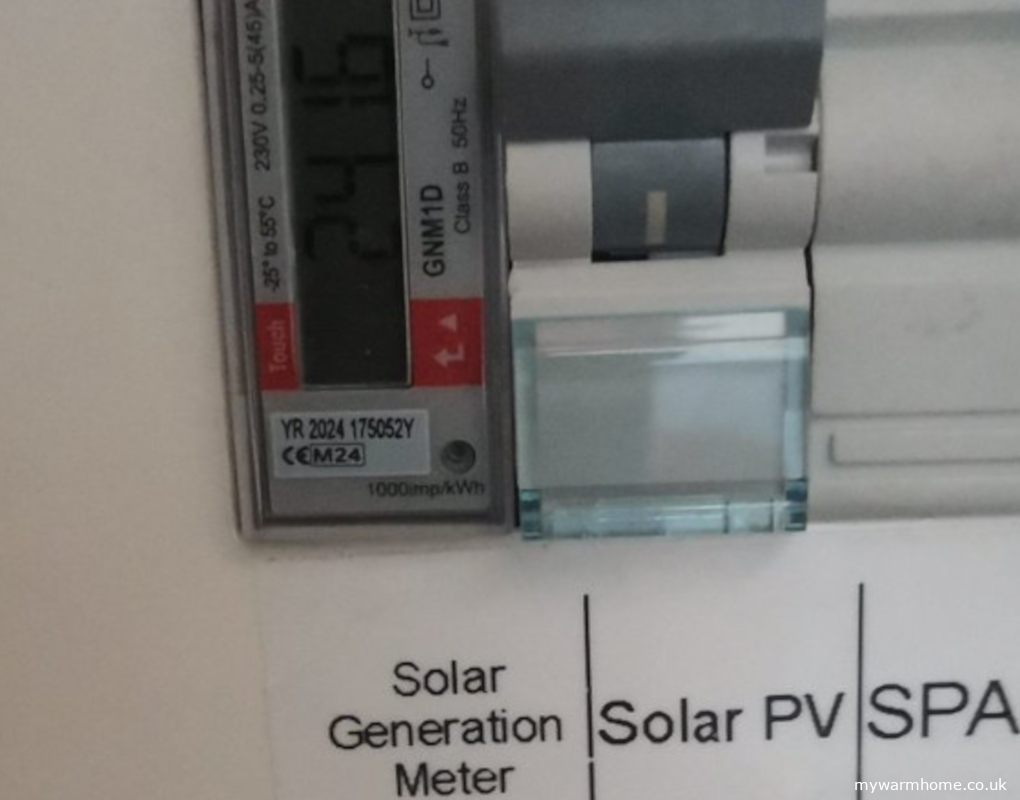
Generation monitoring
Make sure you know how to review the inverter or app, locate any generation meter and contact the installer if a persistent warning or unexplained drop in output appears.
Report signs of water ingress, visibly damaged components or unusual sounds or smells; do not investigate live electrical components yourself.
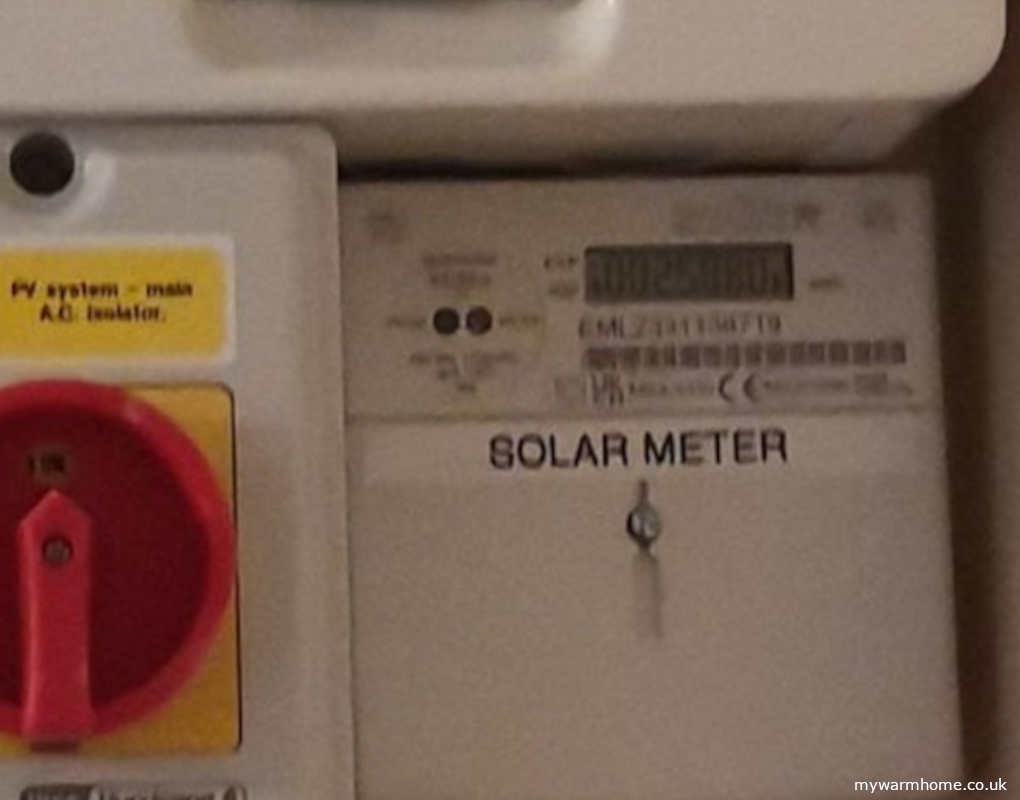
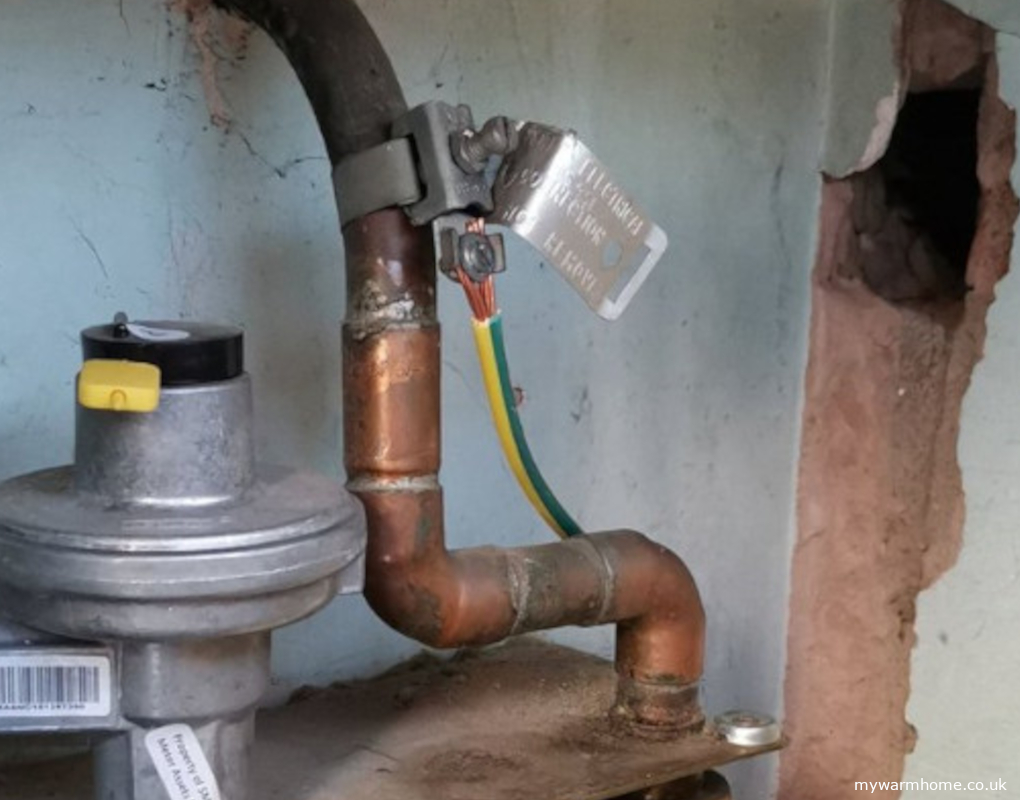
03 / EXAMPLES FROM THE ORIGINAL GUIDE
Array arrangement, metering and protective conductors.
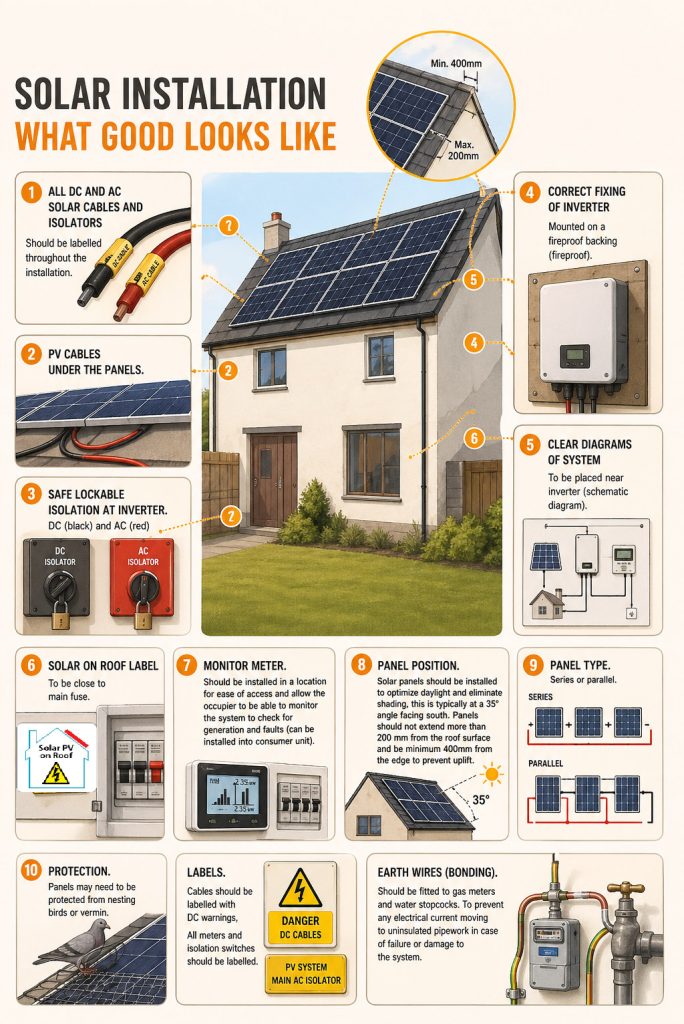
The original technical illustration is retained for reference.
Keep the installed design on file
Ask for the final schematic, inverter and panel details, protection and isolation information, and any network-operator confirmation.
Inspect, do not interfere
The roof and electrical equipment are specialist work areas. Photographs, clear labels and a proper handover are more useful than homeowner adjustments.
03 / PANELS & CIRCUITS
Series, parallel and inverter choices.
The installer should explain the chosen topology, shading assumptions and any optimisers or other equipment. Neither connection arrangement should be selected solely on a generic promise of better production.
Series strings
Modules connected in series raise string voltage while the same string current flows through them. Shade and panel mismatch can affect output.
Parallel strings
Parallel branches increase the combined current at a broadly common voltage; cables and protection must suit the resulting arrangement.
String inverter
One inverter processes the output of one or more designed DC strings. Its specifications and maximum-power-point tracking must suit the proposed array.
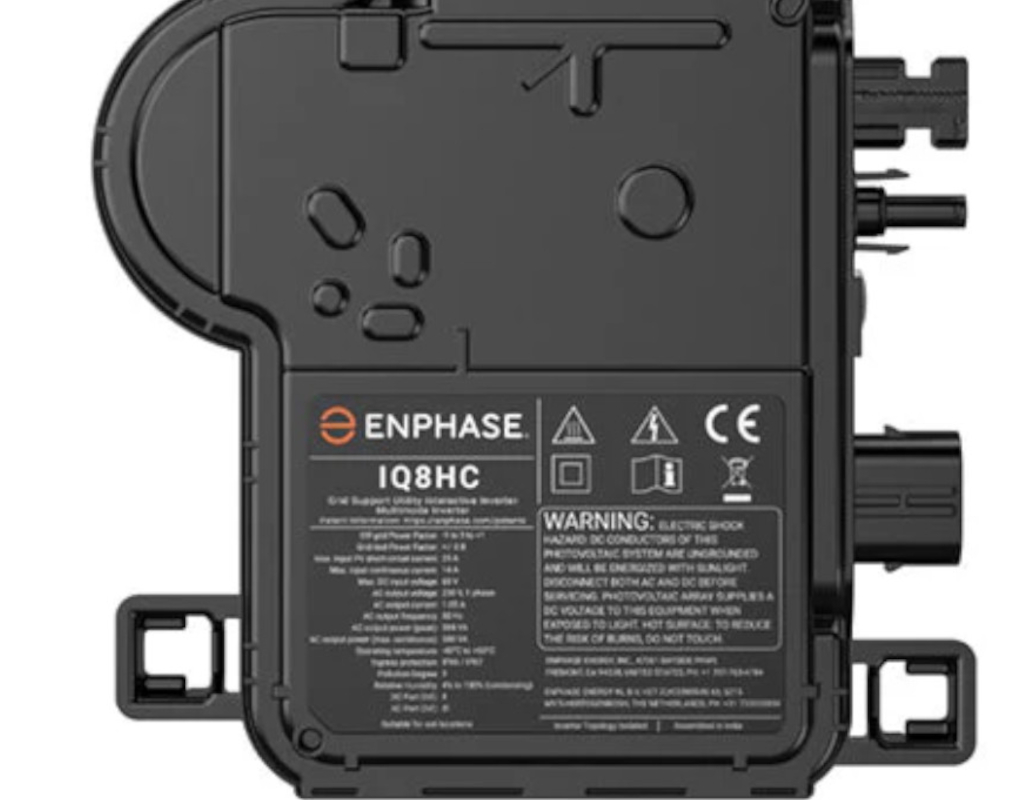
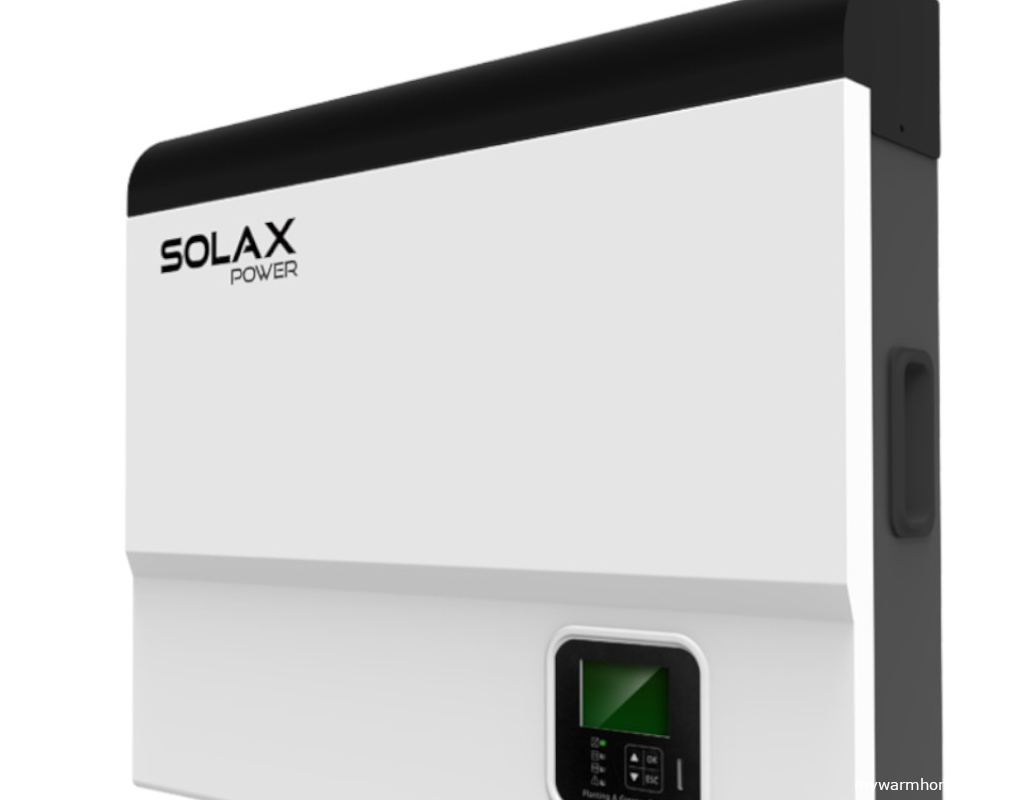
Microinverters & hybrid systems
Microinverters convert power at individual modules; a hybrid inverter can be designed to manage compatible solar and storage equipment.
INVERTERS / THE ORIGINAL IMAGES
Three equipment arrangements to recognise.
04 / ELECTRICAL STORAGE
What can a battery add to a solar system?
A domestic battery can store some electricity generated during the day for later use. Its value depends on household demand, tariffs, usable capacity, round-trip losses, installation costs and how the controls operate.
Check the usable storage and system design
Battery chemistries and product designs vary. Lithium-ion families are widely used in domestic systems; select equipment as part of a fully specified compatible installation rather than by nominal capacity alone.
Do not assume backup is automatic
Some battery systems offer a backup supply during a power cut, but only when the relevant equipment, isolation and circuits have been designed for that function.
Ask about future servicing
Check warranty conditions, monitoring, maintenance, emergency procedures and what happens at end of life.
04 / STORAGE AND DIVERSION
Battery, hybrid inverter or hot-water diverter?
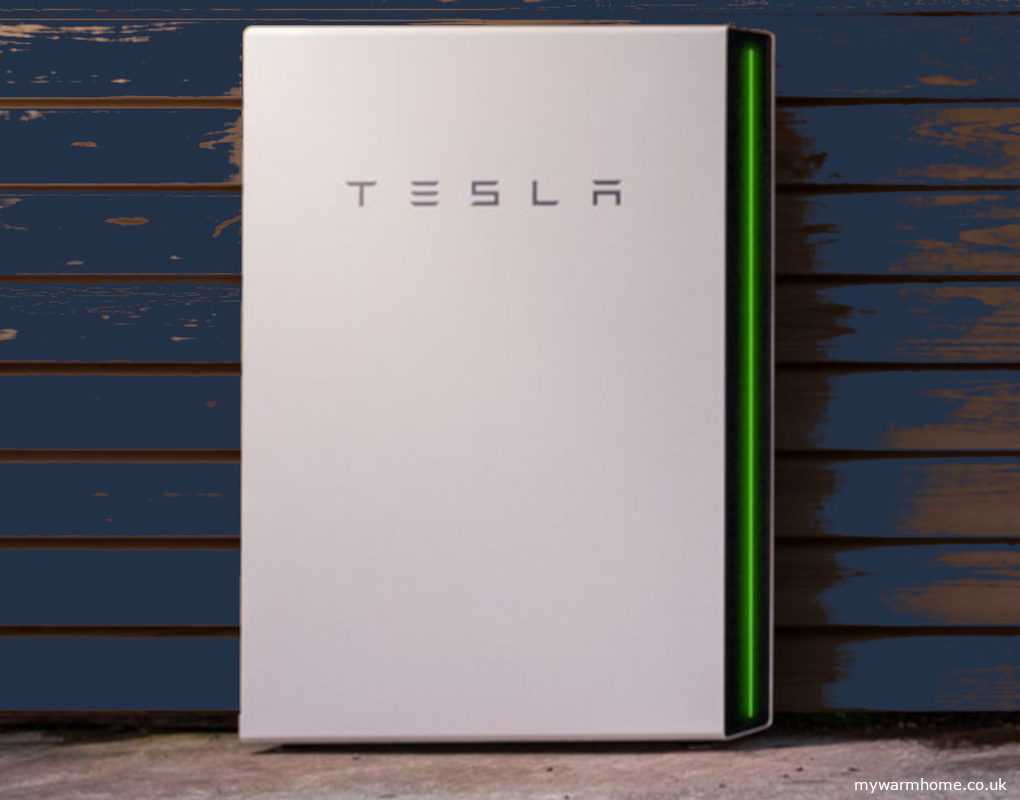
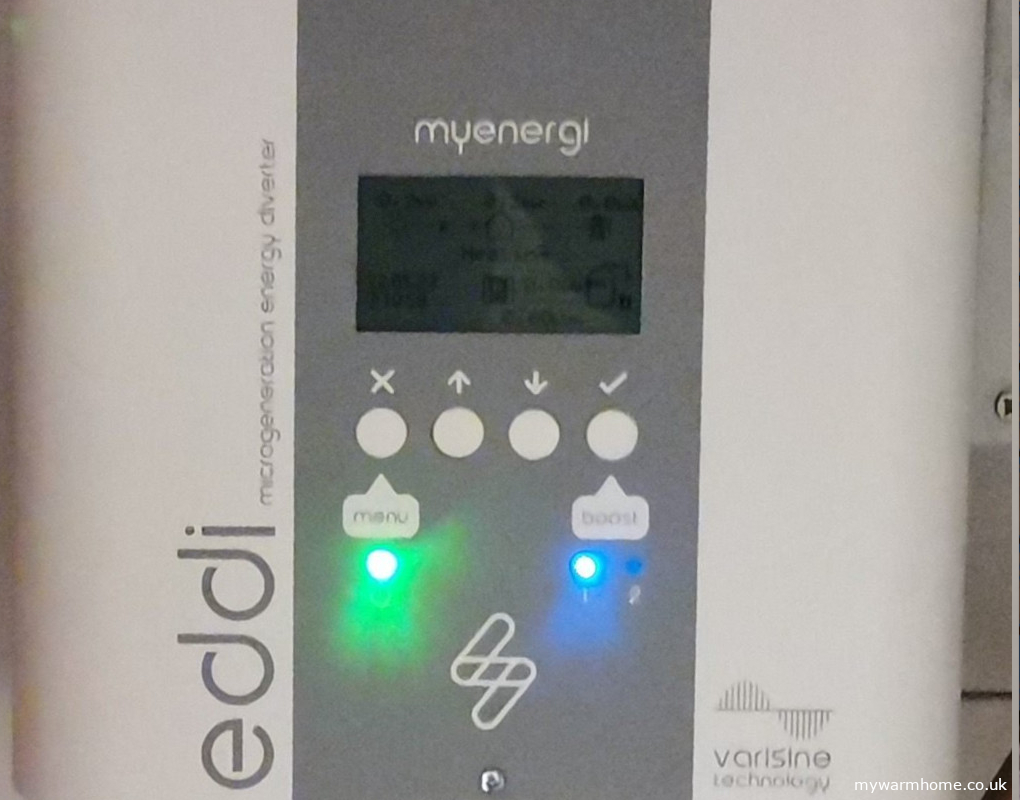
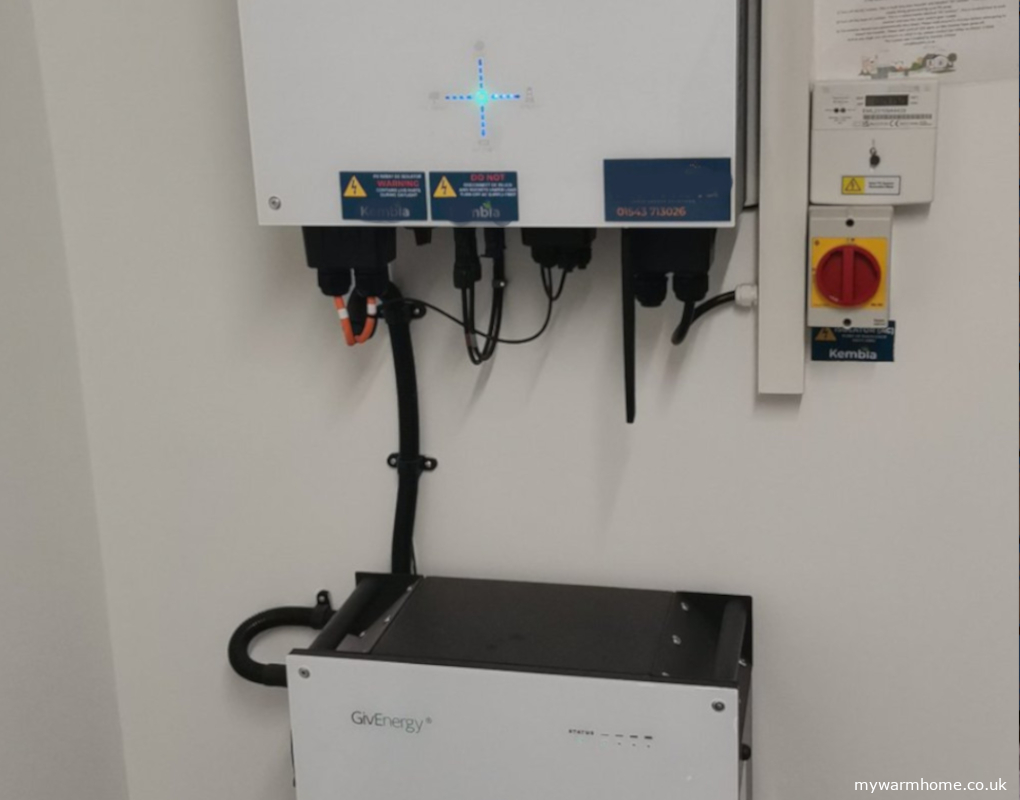
Battery storage retains electricity for later use. A surplus-power diverter redirects available electricity to a compatible load, often a hot-water immersion heater. They perform different tasks and can be considered separately or together where the design supports this.
04 / BATTERY LOCATION
Fire safety should be designed in from the start.
Battery capacity, design, environmental conditions and building layout should inform the location. Do not choose a spare cupboard or loft simply because it is convenient. BSI — PAS 63100:2024.
PAS 63100:2024
This specification addresses fire safety for domestic electrical battery energy-storage systems, including location, equipment and protective measures within its scope.
Suitable location
Outdoor siting is preferred where practicable under the PAS. Indoor locations need assessment against its specific restrictions, separation and ventilation requirements.
Routes & neighbouring spaces
Bedrooms, escape routes, lofts/roof voids and proximity to openings or stored flammable materials all need careful consideration against the applicable requirements.
Emergency information
Ask the installer about warning notices, any detection arrangements, safe isolation and emergency instructions for the final location.
04 / USE THE EXCESS
What is a solar power diverter?
A power diverter detects surplus solar electricity and redirects it to a specified load, commonly an immersion heater, instead of exporting it immediately.
This may help use more generation at home, but it should be compared with the export tariff, hot-water demand, existing heating arrangements and any battery already installed.
Ensure the diverter, electrical circuit, immersion heater and any hot-water safety controls are compatible and correctly installed.
04 / CERTIFICATES & SAFETY
Keep evidence of the work and the checks.
Different electrical jobs can require different certification. Your electrician should identify the correct certificate for the work actually carried out.
01
Installation certificate
An Electrical Installation Certificate is typically used for new circuits or other work requiring that form of certification.
02
Minor works
A Minor Electrical Installation Works Certificate may apply to certain additions or alterations to an existing circuit.
03
System handover
Keep commissioning results, system drawings, manuals, warranties and any applicable MCS certificate.
04
Network & export
Keep the DNO documents, metering information and any supplier export-tariff confirmation.
Do not confuse product warranty documentation with electrical safety certification or network permission.
HEALTH, SAFETY & ACCESS
Protect the people, roof and services.
Working at height, roof condition, hidden materials and external services should be considered before the team starts. Contractors should explain access arrangements, site safety and any special hazards.
- Nesting wildlife: birds, bats and other protected species may need specialist advice and appropriate timing or protection.
- Asbestos and other hazardous materials: do not disturb suspect roof products, soffits or other materials without competent assessment.
- Safe access: scaffolding, ladders, edge protection and pedestrian arrangements need to suit the job.
- Services and ventilation: flues, roof vents, drainage, electrical cables and gas appliances must not be obstructed or compromised.
- Neighbours: plan any shared access, boundary considerations or necessary permissions before work.
Further information: HSE asbestos advice and MyWarmHome regulations guide.
CURRENT REFERENCE POINTS
Guidance worth checking before publication or installation.
- MCS — applicable scheme and solar installation standards.
- Energy Networks Association — find the relevant DNO.
- GOV.UK — registration of small energy devices.
- Ofgem — Smart Export Guarantee for generators.
- BSI — PAS 63100:2024 battery fire-safety specification.
- HSE — asbestos information.
Standards and regulatory requirements are revised. The applicable edition, project dates, location and scheme conditions should be checked for each installation.
THE MY WARM HOME VIEW
A solar installation is a complete electrical project.
Understand the technology and the design, confirm the network connection and export arrangements, and check that the installation is safe, documented and easy to monitor.
Solar panels, inverters, meters, batteries and power diverters can support different goals. Their suitability depends on how the house actually uses energy, not a single headline claim.
Start with the Solar homeowner guide if you are comparing initial proposals, then use this technical page to ask informed questions about the final design and handover.
1
complete system: generation, connection, protection, records and aftercare.
MY WARM HOME / SOLAR IN DEPTH
Understand the full installation, not just the panels.
Ask for a clear design, correct network paperwork, safe routing and protection, commissioning evidence and a proper handover.
BEFORE YOU ACCEPT THE HANDOVER
Make sure the system can be understood, maintained and verified.
Keep the electrical certificates, drawings, manuals, installer details, monitoring instructions and the DNO/export documents together.