
MyWarm
home.co.uk
Heat pumps do not generate heat, they move it.
What Is a Heating Curve?
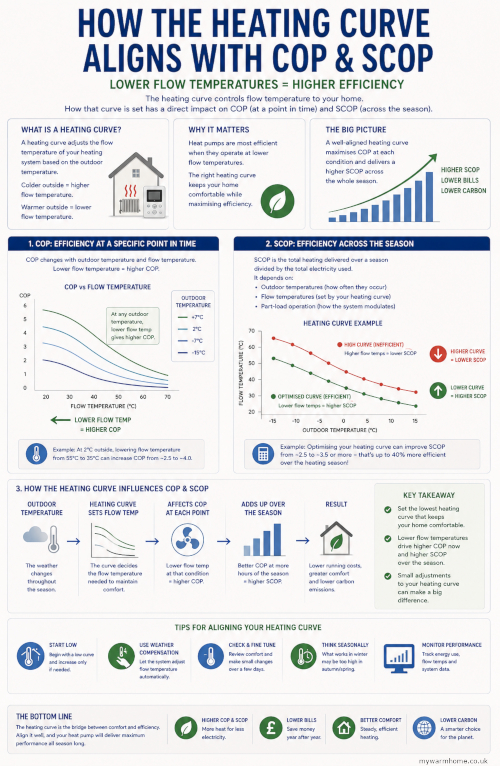
A heating curve tells a heat pump what flow temperature to produce based on the outdoor temperature.
When it’s colder outside, the system increases the flow temperature sent to your radiators or underfloor heating. When it’s milder outside, the flow temperature is reduced.
The aim is simple: provide just enough heat to keep the home comfortable without producing unnecessarily high water temperatures.
Think of the curve as the heat pump’s automatic weather compensation system.
Where the Heating Curve Fits In
The heating curve directly influences the flow temperature your heat pump produces. A curve set too high may keep the home warm, but it forces the heat pump to operate at higher temperatures than necessary.
This results in:
- Lower COP
- Higher electricity consumption
- Lower seasonal efficiency
- Increased running costs
A well-optimised heating curve does the opposite.
By keeping flow temperatures as low as possible for as much of the heating season as possible, the heat pump can achieve better efficiency throughout the year.
How Better COP Creates Better SCOP
The connection is straightforward.
Every day your heat pump operates with a higher COP contributes to a higher SCOP.
For example:
If a heat pump runs at a COP of 4 during mild weather rather than a COP of 3, it uses less electricity to produce the same amount of heat.
When this improved performance is repeated over hundreds or thousands of operating hours throughout the year, the overall seasonal efficiency increases significantly.
This is why heating curve optimisation is often one of the quickest ways to improve heat pump performance without replacing any equipment.
Why Lower Flow Temperatures Matter
Heat pumps are most efficient when the temperature difference between the heat source and the heating system is small.
For example:
- Outside temperature: 7°C
- Flow temperature: 35°C
The heat pump can operate very efficiently.
Compare that with:
- Outside temperature: 7°C
- Flow temperature: 55°C
The compressor must work much harder, reducing efficiency and increasing running costs.
This is why modern heat pump systems are often designed around:
- Larger radiators
- Underfloor heating
- Good insulation
- Effective weather compensation
These measures allow homes to stay warm while using lower flow temperatures.
Signs Your Heating Curve May Need Adjustment
A heating curve set too high can often be identified by:
- Rooms overheating during mild weather
- Frequent cycling on and off
- Higher than expected electricity usage
- Elevated flow temperatures for long periods
A curve set too low may result in:
- Rooms struggling to reach target temperatures
- Reduced comfort during colder weather
The goal is finding the balance between comfort and efficiency.
Practical Tips for Homeowners
If your heat pump uses weather compensation, consider the following:
Start Low
Begin with the lowest heating curve that maintains comfort and only increase it if necessary.
Make Small Changes
Adjustments should be gradual. Small changes can have a significant impact on performance.
Monitor Performance
Track:
- Room temperatures
- Flow temperatures
- Energy consumption
- Heat pump efficiency data
Consider the Whole System
The heating curve works alongside:
- Radiator sizing
- Insulation levels
- Thermostat settings
- System controls
Optimising all of these together delivers the best results.
The Bottom Line
The heating curve is the link between comfort and efficiency.
A well-set heating curve keeps flow temperatures as low as possible while still maintaining a comfortable home. Lower flow temperatures improve COP, and consistently higher COP values throughout the heating season lead to a higher SCOP.
The result is simple:
- Lower running costs
- Reduced carbon emissions
- Improved heat pump efficiency
- Better long-term performance