
MyWarm
home.co.uk
Heat pumps do not generate heat, they move it.
ASHP (Air Sourse Heat Pumps)
If you’re considering replacing your current heating and/or hot water system with a renewable alternative, it’s essential to be aware that this can be a significant investment. In many cases, it involves a partial or complete system upgrade, as heat emitters and pipework often (though not always) need to be updated to achieve optimal flow rates.
While an air source heat pump may look like a simple box sitting outside your home, it contains several components that work together to capture heat from the air and transfer it into your heating system.
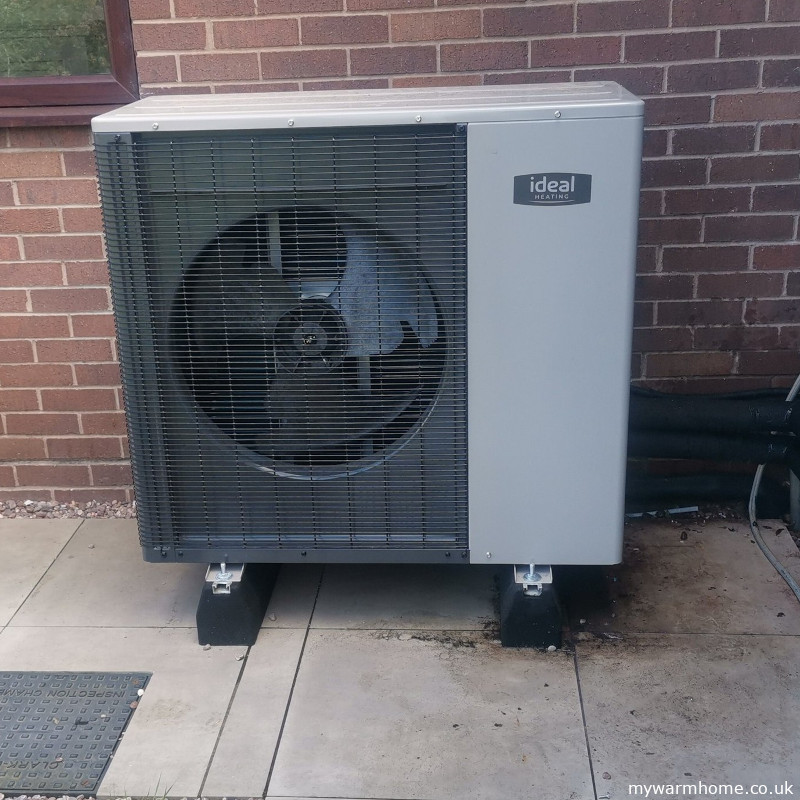
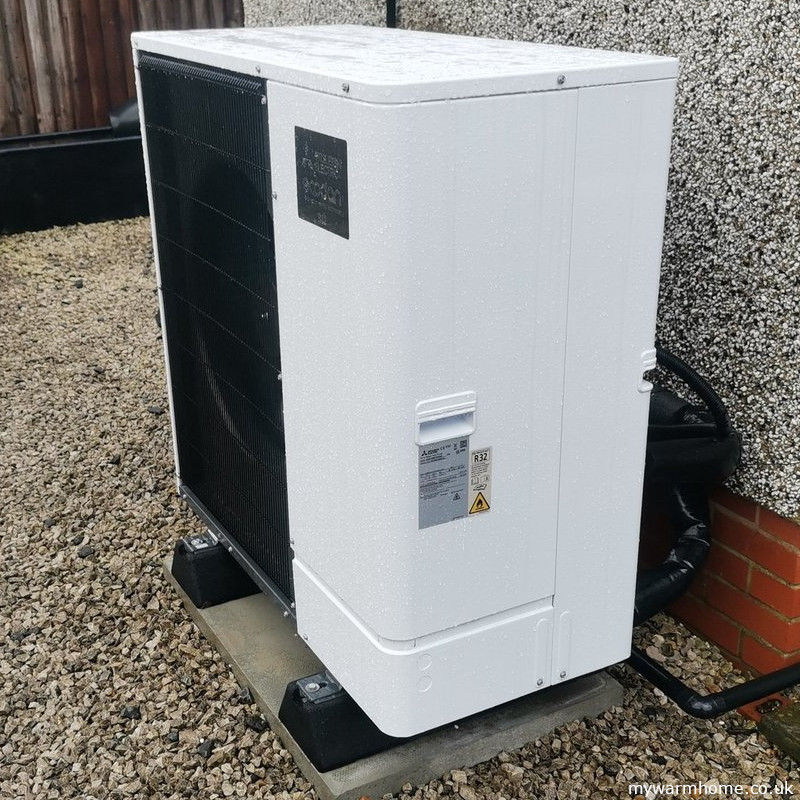
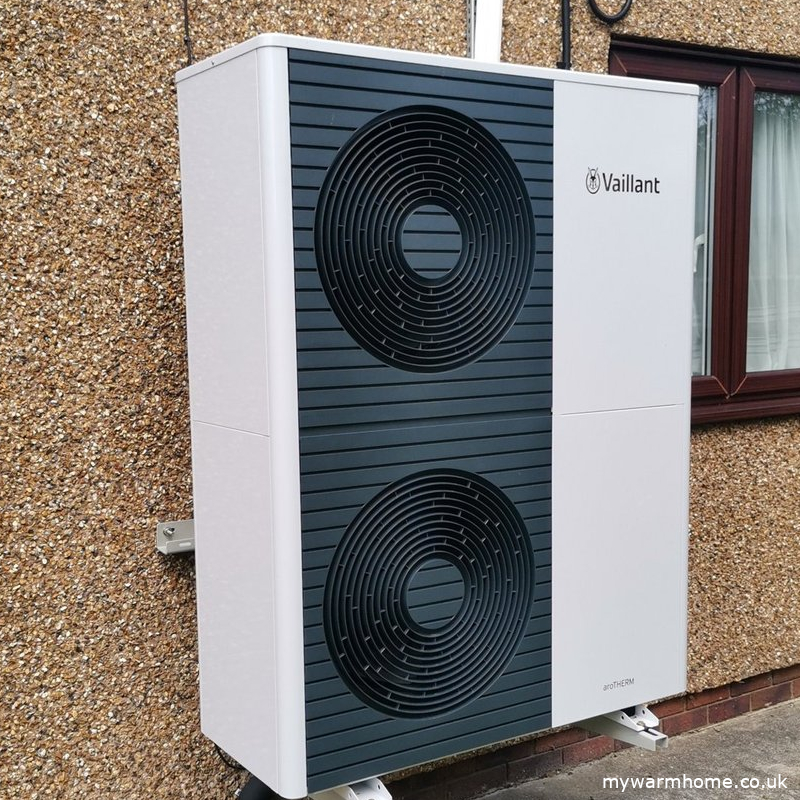
There are two main types of air source heat pump available in the UK:
- Monobloc heat pumps (one unit)
- Split (sometimes called twin-unit) heat pumps (one unit externeal and another internal)
Both operate using the same principles, but the arrangement of their components differs.
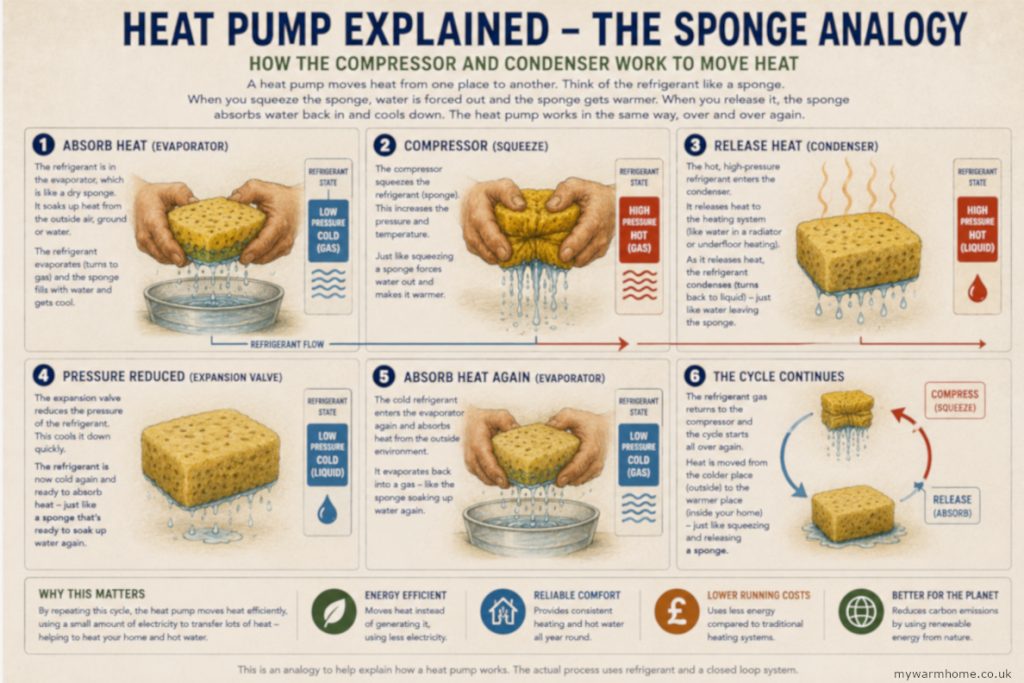
Before the parts are listed its worth understanding the order of the cylcle and a bit about refrigiration.
- Air generation
- Collect heat (through cold refrigirant getting warm)
- Sueeze to make hotter (gas when condensed gets hot)
- Transfer to usable heat for our homes ( when the hot gas condenses we can exchange that heat to the heating system in our homes)
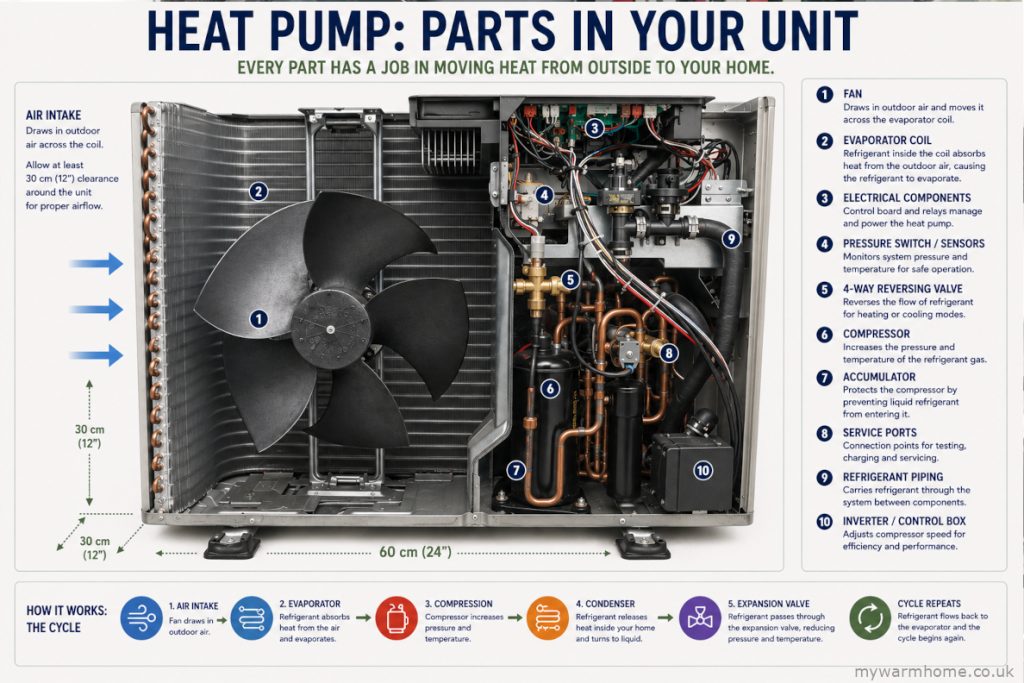
The Main Components of Air Source Heat Pump
Regardless of whether the system is monobloc or split, most heat pumps systems contain the following key components in the order or operation.
Fan. (Evapoprator Fan)
The large, visible fan in your outdoor unit is known as the evaporator fan (*when in heating mode). The motor that drives it is typically called the evaporator fan motor.
*Heat pumps can be designed to offer cooling too!
Heat exchanger (Evaporator)
As air passes over the evaporator, which is a very large coil but tightly packed, a refrigerant absorbs heat from the outside air. Even when temperatures are low, there is still thermal energy available for the refrigerant to collect.
Modern heat pumps typically use refrigerants such as R32 or R290 (propane), which have lower environmental impacts than older refrigerants.
Compressor (the heart of the heat pump)
The compressor increases the pressure of the refrigerant.
A compressor works much like squeezing a sponge.
Because gases are compressible, a compressor can force a large volume of gas into a much smaller space thus making it hot.
Condenser
The condenser is another heat exchanger where heat is transferred from the refrigerant into the home’s heating system.
Think about that sponge being let go, it will expand rapidly and that large volume of gas will be rapidly released
This is where that useful heat is delivered to your radiators, underfloor heating, or hot water cylinder.
Expansion Valve
After releasing its heat, the refrigerant passes through an expansion valve.This reduces the pressure and temperature of the refrigerant before it returns to the evaporator to begin the cycle again.
Like the sponge has released the water its time to dip in again and get full.
Controls and Sensors
Modern heat pumps contain numerous sensors and controls that monitor:
- Outdoor temperature
- Flow temperature
- Return temperature
- Hot water demand
- Defrost cycles
- System efficiency
- Pump speed
These controls continuously adjust operation to maximise efficiency and comfort.
Monobloc Heat Pumps
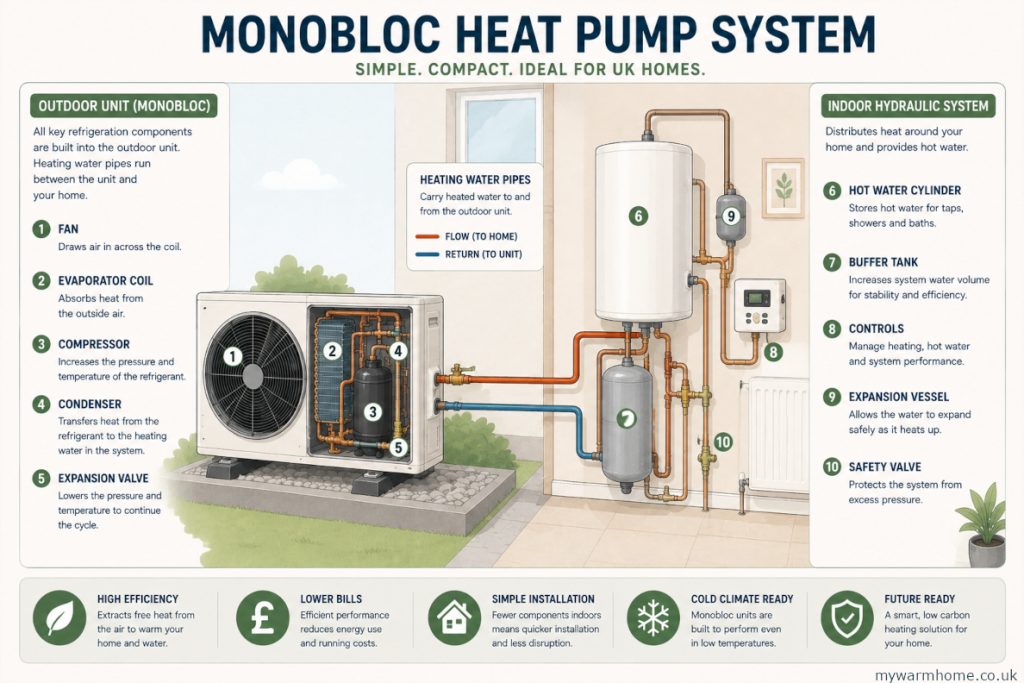
A monobloc heat pump contains the entire refrigeration circuit within a single outdoor unit, these units are the most popular in the UK.
How It Works
The evaporator, compressor, condenser and expansion valve are all housed outside.
The heat pump heats water within the outdoor unit, and insulated water pipes carry this heated water into the property.
Typical Monobloc Components
Outdoor Unit:
- Fan
- Evaporator
- Compressor
- Condenser
- Expansion valve
- Refrigerant circuit
- Control electronics
Inside the Home:
- Heating pipework
- Hot water cylinder (if fitted)
- Buffer vessel (if required)
- Circulation pump
- Controls and thermostats
Advantages of Monobloc Systems
- Simpler installation
- Factory-sealed refrigerant circuit
- No refrigerant pipework inside the home
- Often lower installation costs
- Easier compliance with refrigerant regulations
Considerations
Because water travels between the outdoor unit and the property:
- Pipework must be well insulated.
- Freeze protection measures are required.
- Pipe runs should be kept as short as practical.
Split (Twin-Unit) Heat Pumps
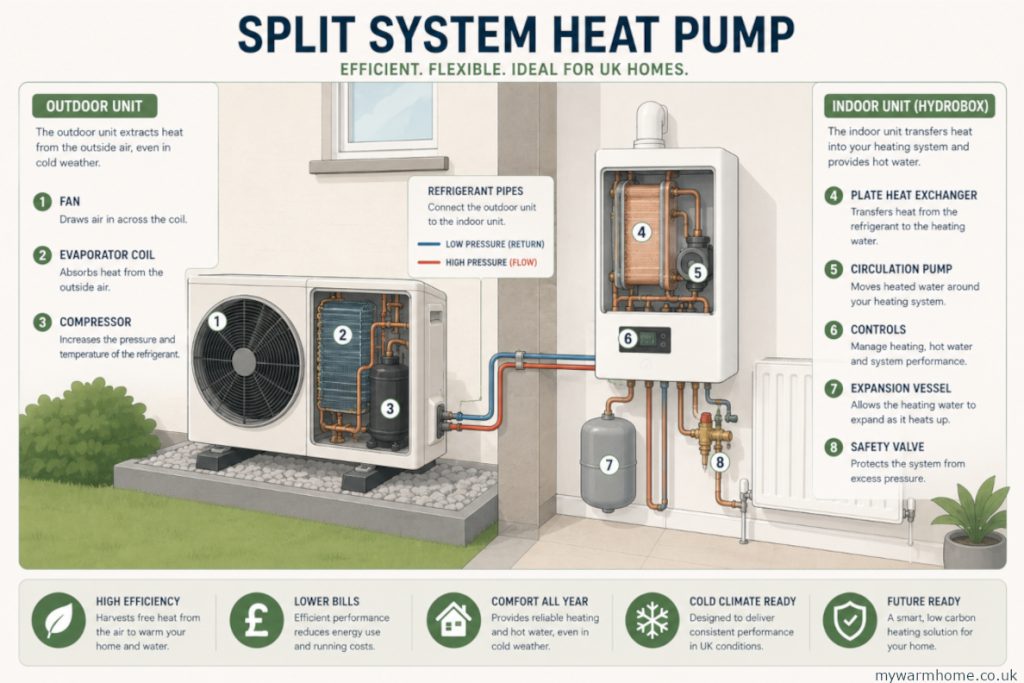
A split heat pump separates the system into two units.
The outdoor unit contains the components that collect heat from the air, while an indoor unit contains the components that transfer that heat into the home’s heating system. The two units are connected by refrigerant pipework.
How It Works
The outdoor unit absorbs heat and transfers it via refrigerant lines to the indoor unit. The condenser is often located within the indoor hydrobox, where heat is transferred into the heating water.
Typical Split System Components
Outdoor Unit:
- Fan
- Evaporator
- Compressor
- Expansion valve
Indoor Hydrobox:
- Condenser
- Circulation pump
- Controls
- Safety devices
- Hydraulic components
Additional Components:
- Refrigerant pipework
- Hot water cylinder
- Heating controls
Advantages of Split Systems
- No water pipework exposed externally
- Reduced freezing risk
- Often suitable for longer pipe runs
- Compact indoor hydraulic arrangements
Considerations
Split systems require:
- Refrigerant pipework installation
- Refrigerant charging and testing
- Engineers qualified to work with refrigerants (FGAS)
- Additional commissioning procedures
What Is a Hydrobox?
Many split systems include a component called a hydrobox.
The hydrobox acts as the interface between the refrigerant circuit and the home’s heating system.
It commonly contains:
- Plate heat exchanger
- Circulation pump
- Expansion vessel
- Safety valves
- Control systems
Think of the hydrobox as the indoor plant room of the heat pump system. (basicaly a gas boiler without the gas)
Which Type Is Better?
Neither system is automatically better than the other.
The best option depends on:
- Property layout
- Available installation space
- Pipework routes
- Manufacturer requirements
- Installer preference and experience
A well-designed monobloc system will usually outperform a poorly designed split system, and vice versa.
The most important factor is not whether the heat pump is monobloc or split, but whether it has been correctly assessed, sized and installed for the property.
For homeowners, the focus should always be on good design, accurate heat loss calculations and a competent installer rather than the specific type of heat pump being proposed..
Position.
Away from sleeping and noise-sensitive areas. (newer ASHPs are very quiet).
Making sure the area around the heat pump is to manufacturers guidance to allow optimum airflow and service needs. Do not cover as this will restrict the free air around the unit that allows it to efficiently work.
Condensation removal.
Water will come from the unit and can pool. It’s not the same as gas boiler condensate, which can be acidic, so just basic removal to soak away or drain, depending on the manufacturer’s instructions.
Radiator sizes and pipework.
Heat pumps work at lower temperatures, so a bigger surface area, ideally underfloor heating, is beneficial. (see delta T in technical area)
Insulation of property.
The better the wall and loft (or room in roof) insulation, the less heat loss. (see insulation)
Uninsulated pipework.
Storaed hot water supplies and central heating pipework at the plant should all be insulated. All external pipework should be insulated with a class 0 UV protected insulation.
Maintenance requirements.
Refer to manufacturers literature regarding serviceing. As a rule of thumb the unit should be checked yearly and basic cleaning of internal fins and casing should be performed. A clear pathway and area surrounding unit should always be available.
Running costs. What is the average yearly cost to run the heat pump! This can be really important, and research and information from your installer is a must.
Solar matching.
As heat pumps operate differently through the seasons, the same goes for solar. If you are having solar PV installed and thinking the panels will run the heat pump, then think again. You could try to match the solar generation to the heat pumps output, which could help with running costs.
Privately installed or funded?
For any renewable heating project, whether funded privately or through a UK funded scheme, the current best practices, manufacturer’s instructions and relevant building regulations should be strictly adhered to.
If installed on a UK funded scheme then a quality assurance program that certifies small-scale renewable energy systems and installers need to be followed, currently this is called MCS if insulation is being carried out at the same time and as part of the funding then it must meet the current PAS.
Have a look at the funding area of the site for more information especially the changes to the ECO scheme.
Installation Guide.
The manufacturer’s instructions will highlight any regulations that are required. Currently, all electrical regulations need to be followed and documented, as is the MCS checklists if installed on government scheme. Requirements are that properties are well insulated prior to the installation (fabric first approach) and full heat loss calculations are carried out to provide information to install the system to best practice.
If hot water is being heated in storage tanks by the heat pump then steps need to be taken to protect from bacterial growth. Stored hot water systems connected to heat pumps have cycles to heat the water at given times and a given temperature to stop the growth of Legionella bacteria.
Electrical certificates.
The two types of electrical certificates you will come across as a customer who is having any electrical work as part of installing EEM’s (energy efficient measures)
- Electrical Installation.
- Minor Works Certificate.
Electrical Installation Certificate.
An electrical installation certificate is the type of certificate a customer receives after an electrician has installed one or more new circuits. Other examples include a complete rewire, a replacement consumer unit or an additional consumer unit. Generally, any time electrical work is done at the consumer unit, a new installation certificate will be issued.
Minor Works Certificate.
A minor works certificate is issued after an electrician has made an alteration to an existing circuit. Minor works certificates are often used to certify work such as adding additional sockets to an existing circuit or increasing the number of light fittings in a room. It can also be where a fused spur has been installed for an appliance or boiler connection.
Some Major Heat Pump Manufacturers.
UK
- Vaillant – https://www.vaillant.co.uk
- Worcester Bosch – https://www.worcester-bosch.co.uk
- Ideal Heating – https://idealheating.com
- Grant UK – https://www.grantuk.com
- Calorex – https://www.calorex.com
- Aira – https://www.airahome.com
- Kensa-https://www.kensa.co.uk
European manufacturers
- Viessmann – https://www.viessmann.co.uk
- Stiebel Eltron – https://www.stiebel-eltron.co.uk
- NIBE – https://www.nibe.eu
- Bosch Thermotechnology – https://www.bosch-thermotechnology.com
- Vaillant Group – https://www.vaillant-group.com
- Kronoterm – https://www.kronoterm.com
- Ochsner – https://www.ochsner.com
- Hoval – https://www.hoval.com
- Dimplex – https://www.dimplex.co.uk
- MasterTherm – https://www.mastertherm.com
Asian manufacturers
- Mitsubishi Electric – https://les.mitsubishielectric.co.uk
- Daikin – https://www.daikin.co.uk
- Panasonic – https://www.aircon.panasonic.eu/GB_en
- Hitachi – https://www.hitachiaircon.com
- Samsung – https://www.samsung.com/uk/business/climate
- LG – https://www.lg.com/uk/business/air-solution
Emerging manufacturers
- Carrier – https://www.carrier.com
- Trane – https://www.trane.com
- Gree – https://www.gree.com
- Midea – https://www.midea.com
- Toshiba – https://www.toshiba-aircon.co.uk
- Fujitsu General – https://www.fujitsu-general.com