While heat naturally rises, a large amount is also lost through poorly insulated external walls,
External wall insulation plays a crucial role in reducing how quickly heat escapes from our homes. While heat naturally rises, a large amount is also lost through poorly insulated external walls, especially in older properties. In fact, without adequate wall insulation, a significant proportion of a home’s heat can be lost through the building fabric itself, making it harder and more expensive to keep warm.
By installing external wall insulation (EWI), we effectively wrap the home in a thermal layer, helping to retain heat inside for longer. When designed and installed correctly, this can dramatically improve energy efficiency, enhance comfort, and reduce heating bills.
Standards and materials have evolved considerably over the years. Back in the mid-1980s, minimal insulation levels were common, with basic materials considered sufficient at the time. Today, expectations are much higher.
Modern external wall insulation systems use advanced, more environmentally conscious materials and are installed to far more demanding performance standards, ensuring homes are better protected against heat loss while also supporting long-term sustainability
Have a look at the installer page for some handy questions to ask.
Health and safety.
You may need specialist advice from trades people and professionals regarding things like,
High amperage cables. Solar installations, overground electrical supplies to property.
Nesting. Bees, wasps, bats.
Vermin. Rats, mice, squirrels
Asbestos. Vermiculite, flues, drainage, roofing.
Your installers should pick up most of the above items on the initial pre-installation survey.
As a general rule, high-amperage cables should always be positioned outside the insulation, rather than beneath it. Special care must be taken if there are any nesting bats, as well as bees or wasp nests.
If vermin around or under property, installing insulation can create a warm environment that attracts them. Making sure any vermin problem is erradicated will allow the insulation to remain sealed.
EWI insulation.
Correct background ventilation. *All rooms with the installation of trickle vents or wall vents if required
Correct door undercuts. *Undercuts to internal doors allow the free movement of air around the property.
*Testing of the background ventilation pre-installation may allow the installed measure(s) to move forward without the need for door undercuts or trickle vents installed.
Correct extract ventilation in wet rooms. Kitchens, bathrooms,
WC’s, and utility rooms are all classed as wet rooms.
If extraction exists, then checks need to be carried out by referencing the manufacture’s data or performing an anemometer (testing apparatus) test to confirm extraction rates are being met.
Mitigation of cold spots/thermal bridges.
External wall insulation also helps deal with cold spots, often referred to as thermal bridges. These are areas where heat can escape more easily, typically around features like window reveals, door frames, corners, and where different building elements meet.
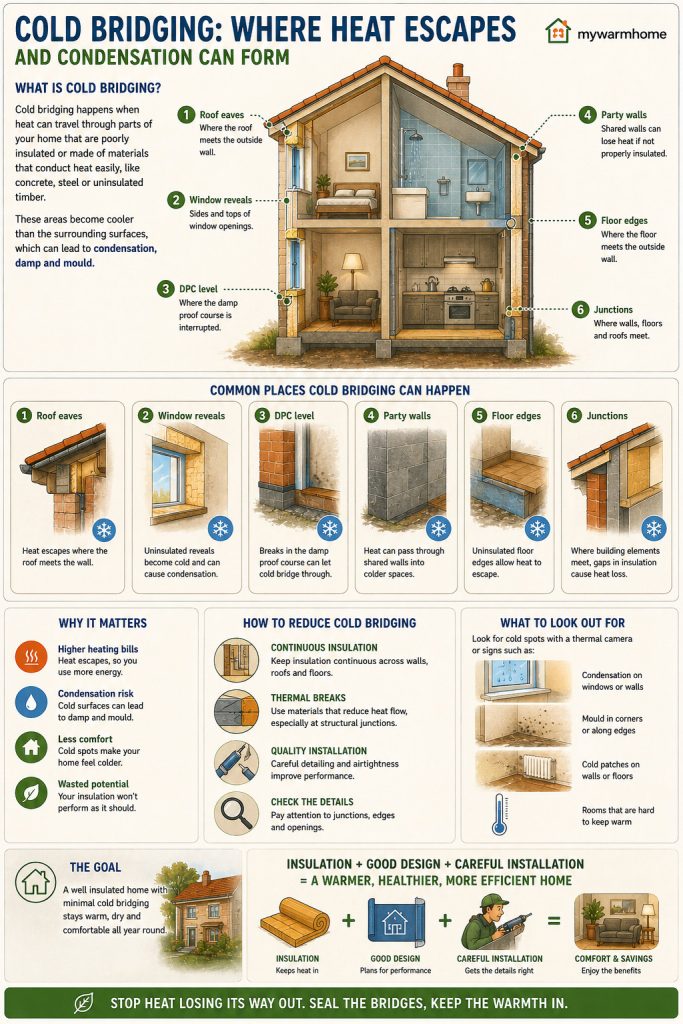
To reduce this, insulation should be applied as a continuous layer around the outside of the home, rather than in sections. This helps “wrap” the building evenly and prevents breaks in the insulation where heat could leak out. Particular care should be taken around openings like windows and doors, ensuring these areas are properly detailed and insulated to avoid cold patches forming internally.
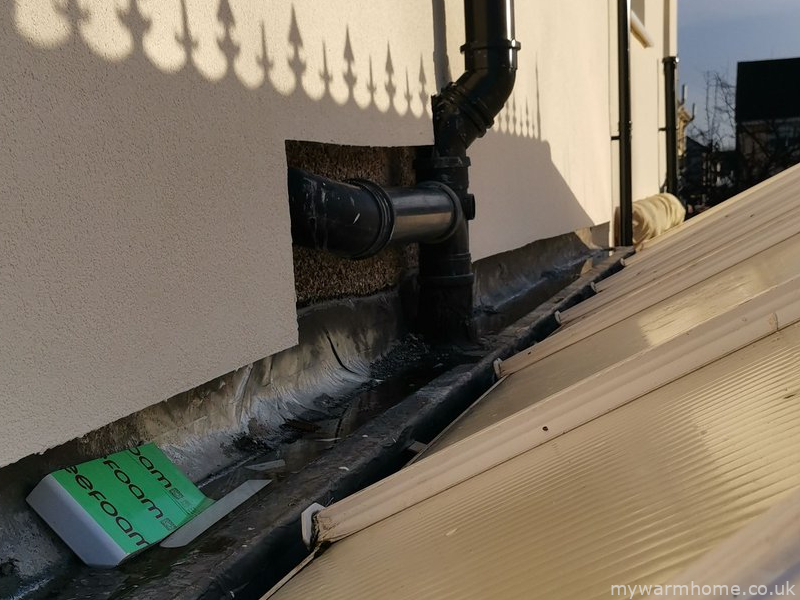
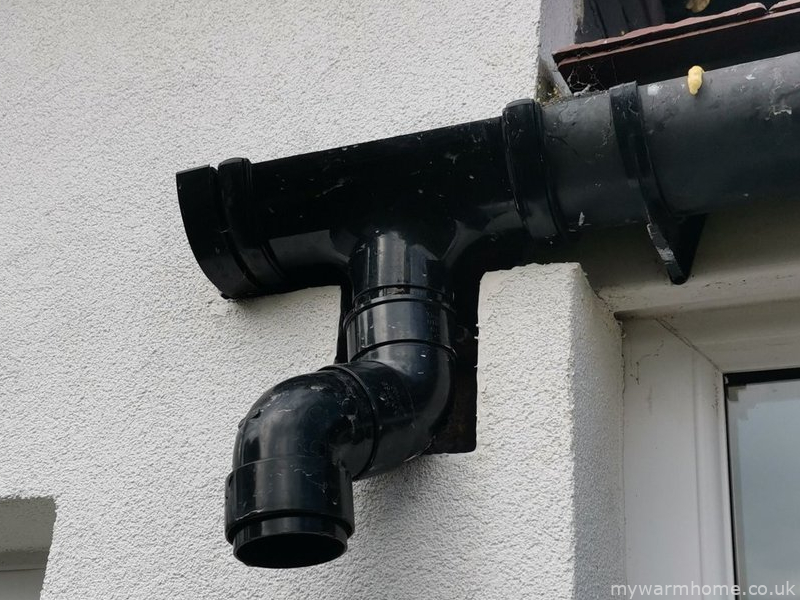
Where possible, the goal is to achieve full coverage of the external walls so there are no gaps or weak points. Any existing features attached to the walls, such as pipework or fixtures, should be carefully adjusted or extended so the insulation can sit neatly behind them.
By addressing these thermal bridges during installation, you not only improve energy efficiency but also reduce the risk of condensation and mould forming on colder internal surfaces, making the home more comfortable and healthier to live in.
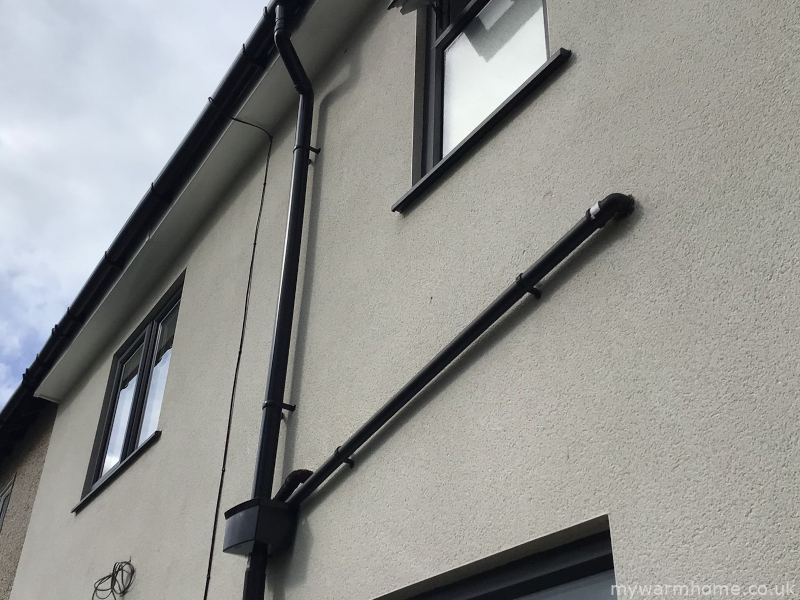
Types of External Wall Insulation and How They’re Installed.
External wall insulation (EWI) isn’t a one-size-fits-all solution. There are different systems and finishes available, but they all follow the same basic idea—fixing an insulating layer to the outside of the property, then protecting it with a durable, weatherproof finish such as render or cladding.
Common insulation materials include expanded polystyrene (EPS), mineral wool, and more advanced breathable boards.
The choice depends on the type of property and how it manages heat and moisture. Once the insulation boards are fixed to the wall (usually with adhesive and mechanical fixings), they are reinforced with a mesh layer and finished with render or another outer coating to protect against the elements and give the home a clean, updated appearance.
Insulation Approach, Getting the Design Right.
External wall insulation has come a long way over the years. It’s no longer just about “covering the walls to make the home warmer.” Today, there’s a much better understanding of how buildings handle heat, air, and moisture—and getting this right is essential.
Every property behaves differently. Factors like how it was built, its age, how it’s used, and its exposure to weather all play a part.
For example, a small 1970s flat with two occupants will perform very differently to a large early-1900s family home.
If the insulation system doesn’t take these differences into account, it can lead to problems such as trapped moisture, damp, or poor performance.
That’s why a proper assessment should always come first.
Once the property has been fully understood, the most suitable insulation system and finish can be selected.
Key Things to Consider Before Installing EWI.
A good design will take into account:
- Age of the property – when it was built and whether it has been upgraded over time.
- Neighbours and surroundings – Permissions may be required.
- Conservation restrictions – Listed buildings and restricions of what can and cannot be performed on our buildings.
- Type of property – flat, house, bungalow, etc.
- Wall construction – solid walls, cavity walls, timber frame, system-built, or solid brick.
- Existing insulation – such as cavity wall fill, internal wall insulation, or specialist plasters. If a cavity wall then look at best practices for advice on dew points.
- Access requirements – whether scaffolding is needed and how easy the site is to work on.
- Storage on site – Insulation materials should be kept dry before installation.
- Condition of services – including gutters and downpipes, which may need adjusting or replacing.
- Telecoms and fixtures – such as cables, satellite dishes, and phone lines that may need repositioning.
- Security systems – alarms and external sensors.
- Heating appliances – boiler flues, vents, and chimneys must be correctly extended or adapted.
- Damp-proof course (DPC) – its condition and height relative to the new insulation.
- Existing damp issues – these should always be addressed before installation.
- Ventilation – ensuring the home can still “breathe” properly after insulation.
- Windows and doors – their condition and how they integrate with the new insulation layer
Taking the time to get these details right ensures the insulation performs as intended—keeping the home warmer, reducing energy bills, and avoiding issues down the line.
External Wall Insulation (EWI) Board Types.
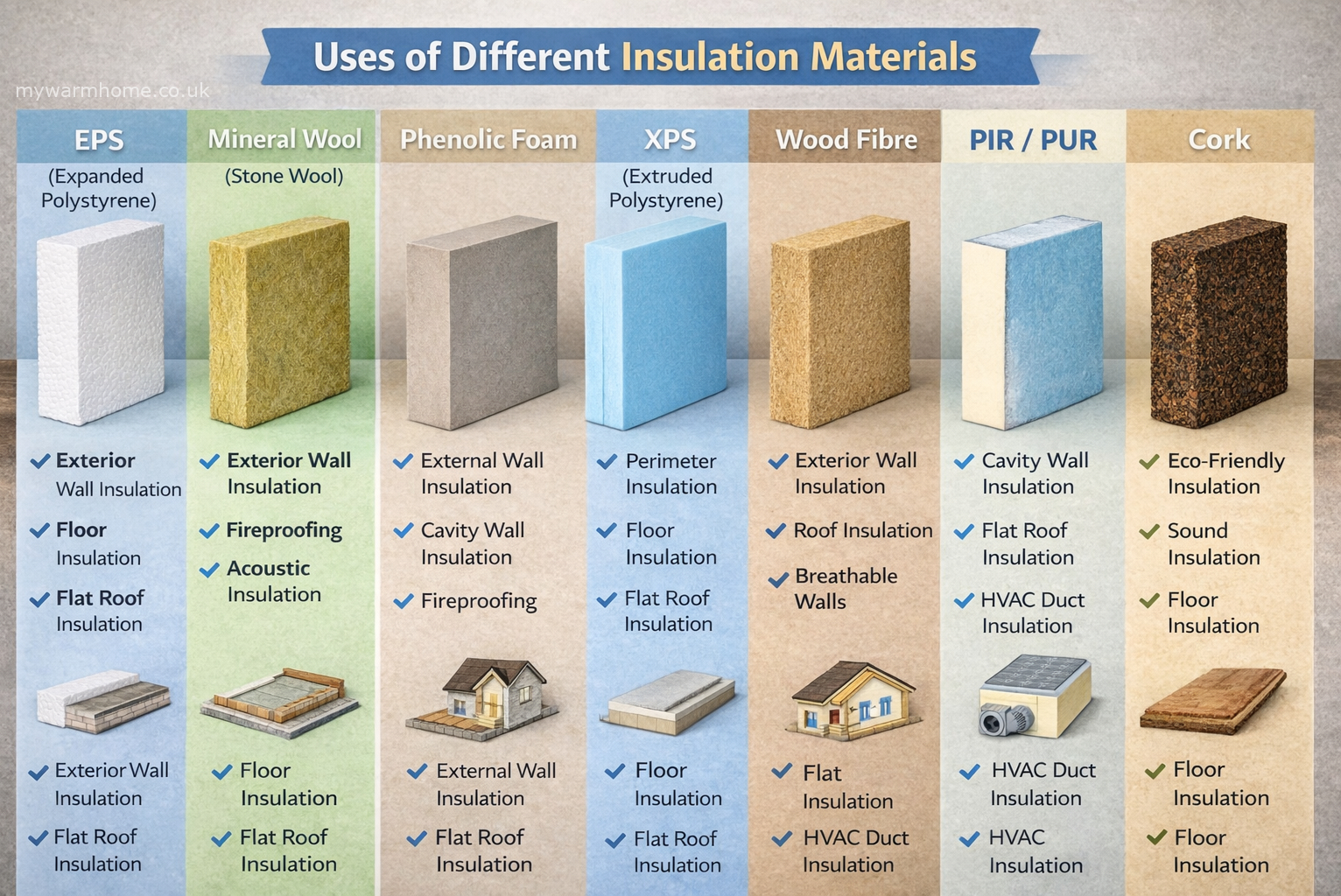
Choosing the right External Wall Insulation (EWI) system is critical to ensuring energy efficiency, moisture control, fire safety, and long-term performance. Different insulation boards suit different property types, wall constructions, and site constraints.
This guide explains the main EWI insulation types used in the UK, when to use them, and which buildings they are best suited for.
EPS (Expanded Polystyrene).
EPS insulation boards are the go-to choice for most UK retrofit projects due to their affordability, ease of installation, and solid thermal performance.
- Best for: Solid wall homes, post-war housing, and standard residential retrofits.
- Typical properties: 1930s–1980s houses, system-built homes.
- Why use it: Cost-effective, lightweight, widely approved.
Key consideration: EPS has lower fire resistance than mineral-based systems, so suitability depends on building height and regulations.
some systems include the following:
- EWI Pro – https://ewipro.com
- Weber – https://www.uk.weber
- Sto – https://www.sto.co.uk
Mineral Wool (Stone Wool)
Best for Fire Safety & Breathability.
Mineral wool boards provide A1 non-combustible fire performance, making them essential for many regulated projects.
- Best for: Flats, social housing.
- Typical properties: Council housing stock.
- Why use it: Maximum fire safety + excellent sound insulation.
- Bonus: Vapour permeable – helps prevent trapped moisture.
Key consideration: Higher cost and weight, but often required for compliance.
Leading manufacturers:
- Rockwool – https://www.rockwool.com/uk
- Knauf Insulation – https://www.knaufinsulation.co.uk
- Saint-Gobain Isover – https://www.isover.co.uk
Phenolic Foam – High Performance in Thin Builds.
Phenolic boards offer one of the best insulation values available, meaning you can achieve target U-values with less thickness.
- Best for: Properties with limited space (tight boundaries, narrow paths)
- 🏘️Typical properties: Urban terraces, properties close to pavements
- Why use it: Thinner system, high thermal efficiency
Key consideration: Higher upfront cost, but can avoid planning or space issues.
Manufacturers:
- Kingspan – https://www.kingspan.com
- Unilin Insulation – https://www.unilininsulation.com
XPS (Extruded Polystyrene) – For Damp & Ground-Level Areas.
XPS boards are designed to resist water, making them ideal where moisture is a concern.
- Best for: Plinths, below DPC, splash zones
- Typical use: Base of EWI systems, exposed areas
- Why use it: High moisture resistance and durability
Key consideration: Usually used as part of a system, not across the full wall.
Manufacturers:
- Dow – https://www.dow.com
- Jackon – https://www.jackon-insulation.com
Wood Fibre – Ideal for Heritage & Breathable Walls.
Wood fibre insulation is a natural, sustainable option that allows buildings to breathe.
- Best for: Older homes, solid wall heritage properties
- Typical properties: Victorian, Edwardian, listed buildings
- Why use it: Moisture regulation + low environmental impact
Key consideration: Requires experienced design and installation.
Manufacturers:
- Steico – https://www.steico.com
- Gutex – https://www.gutex.co.uk
PIR / PUR – High Thermal Performance Boards.
PIR and PUR boards offer strong insulation performance, similar to phenolic boards.
- Best for: Homes needing improved thermal performance without excessive thickness
- Typical properties: Standard housing, extensions, retrofits
- Why use it: High insulation value, widely available
Key consideration: Must be assessed as part of a full system for fire compliance.
Manufacturers:
- Celotex – https://www.celotex.co.uk
- Recticel – https://www.recticelinsulation.com
Aerogel – Ultra-Thin Insulation for Specialist Projects.
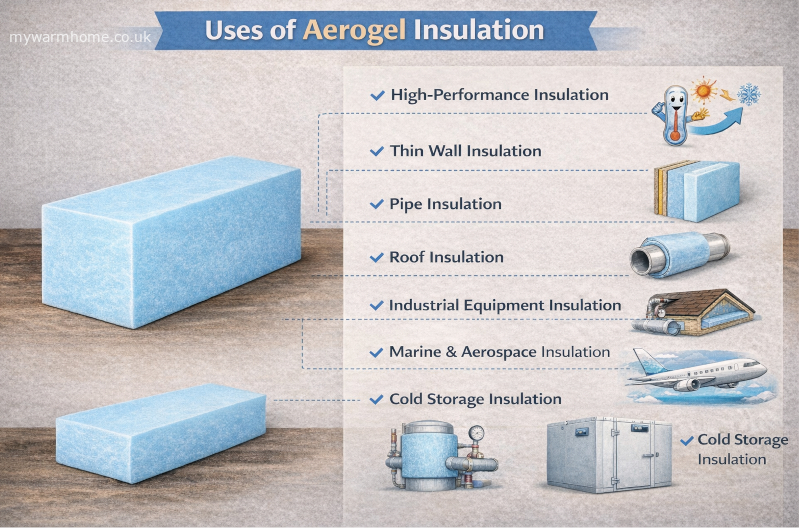
Aerogel is a cutting-edge insulation material used where space is extremely limited.
- Best for: Window reveals, tight boundaries, listed buildings
- Typical properties: Heritage or architecturally constrained projects
- Why use it: Maximum insulation in minimal thickness
Key consideration: Premium cost – used selectively rather than full façade coverage.
Suppliers and more information:
- Proctor – Proctor Group
- Youtube – youtube aerogel
Which EWI System Is Right for Your Home?
- Most homes (cost-effective): EPS
- Flats / fire-sensitive projects: Mineral wool
- Limited space: Phenolic or PIR
- Damp-prone areas: XPS (plinth only)
- Older / solid wall homes: Wood fibre
- Tight detailing: Aerogel
The insulation board is only one part of the system. Poor detailing around:
- windows
- ventilation
- damp management
How to insulate.
Now we know about r-values, U-values and thermal bridging it should be obvious that each insulation has its place.
Mineral wool.
Made from raw materials like stone or silica that are heated until molten, then spun into a fibrous matt.
Properties. Mineral wool is known for its thermal, fire, and acoustic properties. It’s a poor conductor of heat, which helps maintain a consistent temperature in buildings. It’s also resistant to fire and doesn’t release toxic gases when heated.
The primary and most widely used are.
Mineral wool.
Sheep’s wool.
Glass wool.
PIR (Polyisocyanurate) and phenolic foam.
- Excellent thermal and acoustic insulation.
- Easy to install.
- Relatively cheap.
- Breathable (can prevent dampness from damaging wooden timbers).
- Can sometimes irritate bare skin.
- Will compress if you put weight on it.
Sheep’s wool.
Sheep wool insulation is a natural, sustainable, and versatile material that can be used for thermal and sound insulation in buildings. Sheep wool is a natural insulator that can be used in walls, floors, lofts, roofs, and underlays. It’s crimped, which traps air in millions of tiny air pockets.
- Excellent thermal and acoustic insulation.
- Easy to install.
- Safe to touch.
- Eco-friendly.
- Breathable (can prevent dampness from damaging wooden timbers).
- Expensive.
Glass wool.
Glass wool insulation, also known as fibreglass insulation, is a common material used to insulate homes and commercial buildings. It’s made from glass fibres that are bonded together to create a wool-like texture. The glass fibres trap air pockets, which act as barriers to prevent heat loss.
- Fire-resistant.
- Insect repent.
- Eco-friendly (mostly made from recycled glass).
- Most glass wool irritates the skin (protective clothing must be worn when handled).
- Becomes less effective when wet.
PIR (Polyisocyanurate) and phenolic foam.
Polyisocyanurate (PIR) and phenolic foam are both types of plastic-based foam insulation boards used in construction:
PIR.
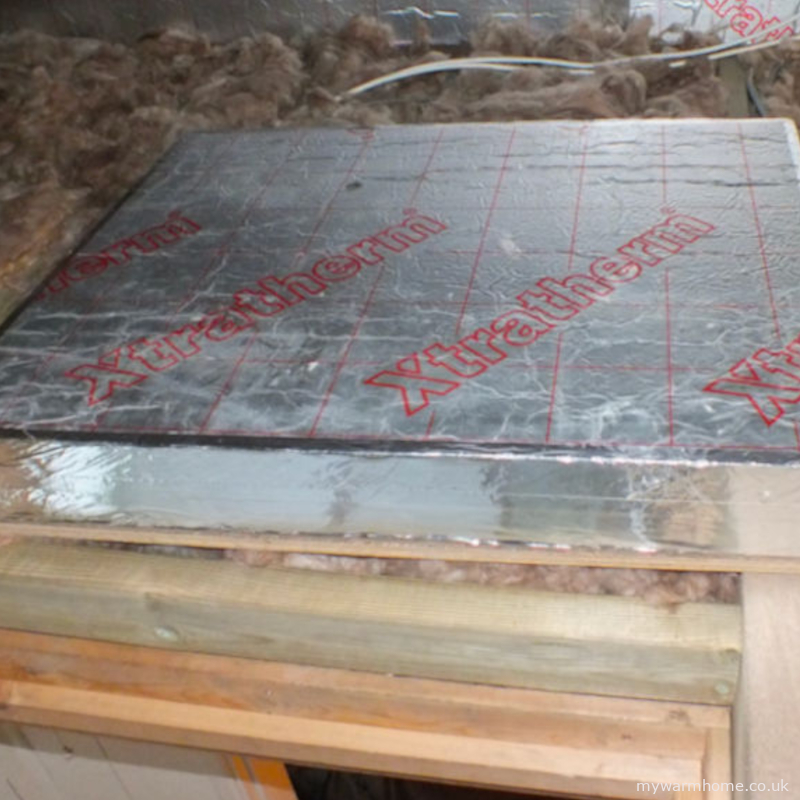
A rigid foam board made from a thermoset plastic that’s known for its high thermal resistance, low water absorption, and structural strength. PIR is often used for flat roofs because of its durability and compatibility with waterproofing methods.
Phenolic foam.
A popular choice for domestic floors that combines thermal efficiency with an economical price point. Phenolic foam may have slightly better thermal performance than PIR, but PIR is more economical.
- Fire-resistant
Can be cut to fit snugly between joists.
Higher R-value, so can be thinner to achieve building regulations.
- Takes longer to fit than rolled insulation.
- Comes in large sheets.
Good to know.
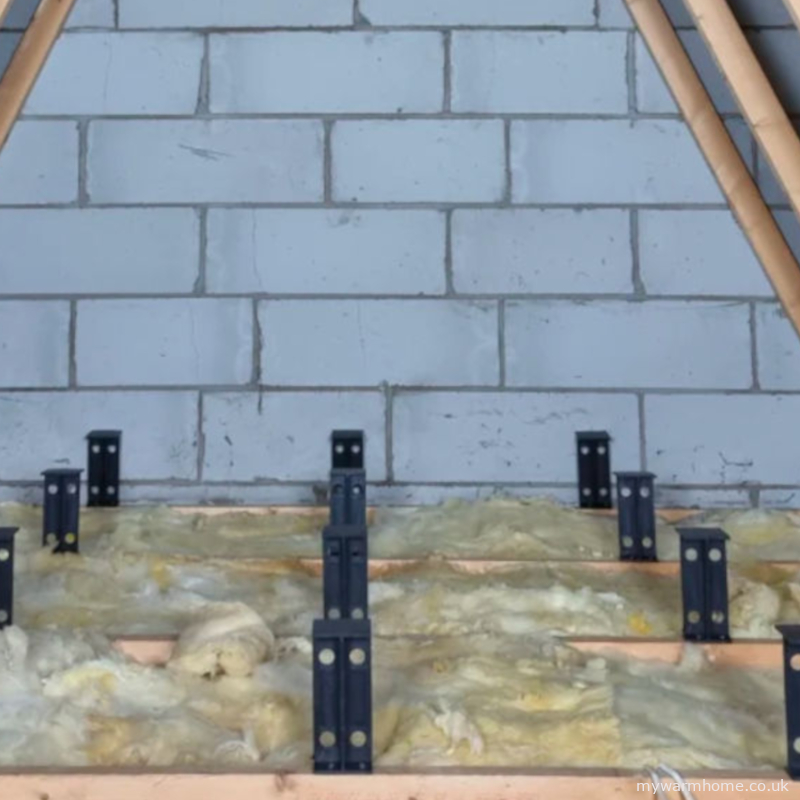
When insulating a loft at joist level, it’s important to consider both storage options and access control. Various hatches and ladder systems are available, and while some may look stylish, you should prioritize practicality and ease of use, especially as we age.
If you want to create a storage space, avoid compressing the insulation, as this reduces its effectiveness. There are products available that raise the loft floor to provide storage space and create access walkways to essential items like boilers, water tanks, and solar inverters. Pay special attention to the hatch area, which needs to be draught-proofed and insulated. This is one of the weakest points in the insulation system because hot air rises and can escape quickly through a poorly insulated hatch, defeating the purpose of insulating in the first place.
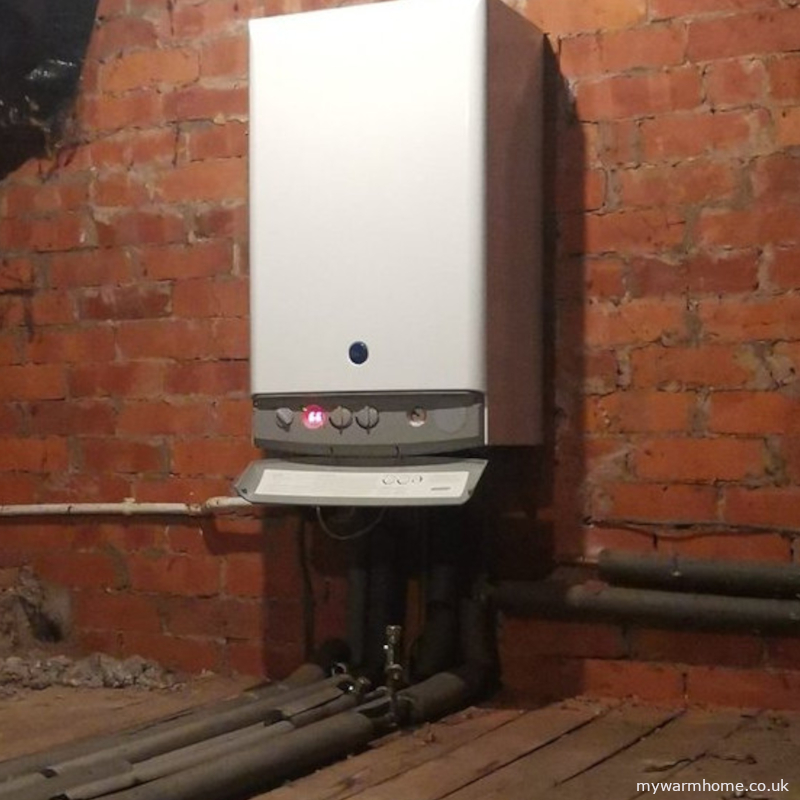
Gas and open flued appliances.
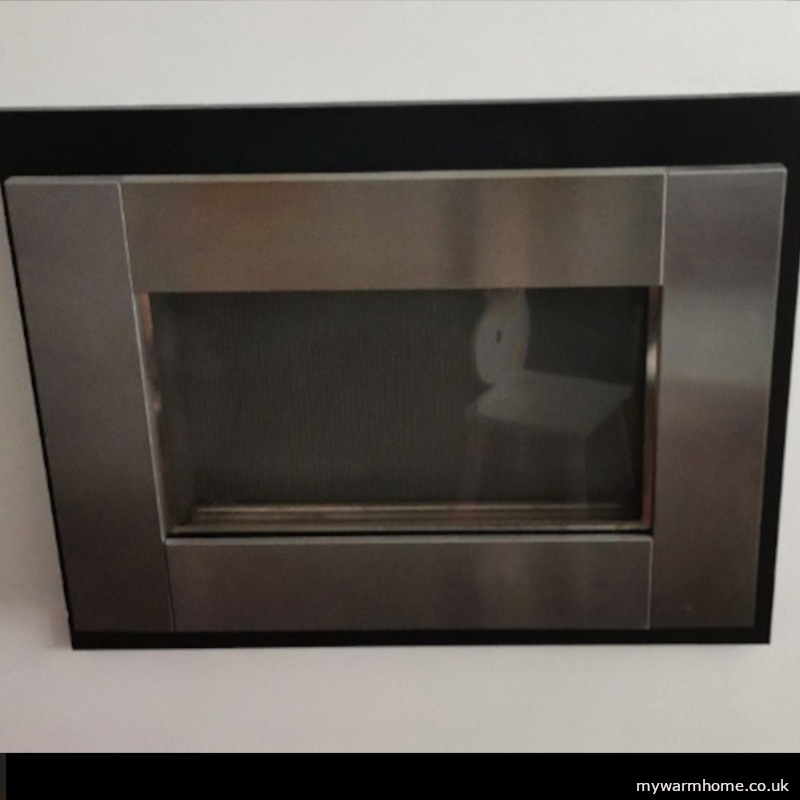
If the fabric of the property is being improved and open-flued gas appliances exist, then a gas spillage test should be carried out on each appliance by a suitably competent operative.
Rules exist that give an average unimproved property a certain amount of leakiness (adventitious air) to allow open-flued appliances to operate safely.
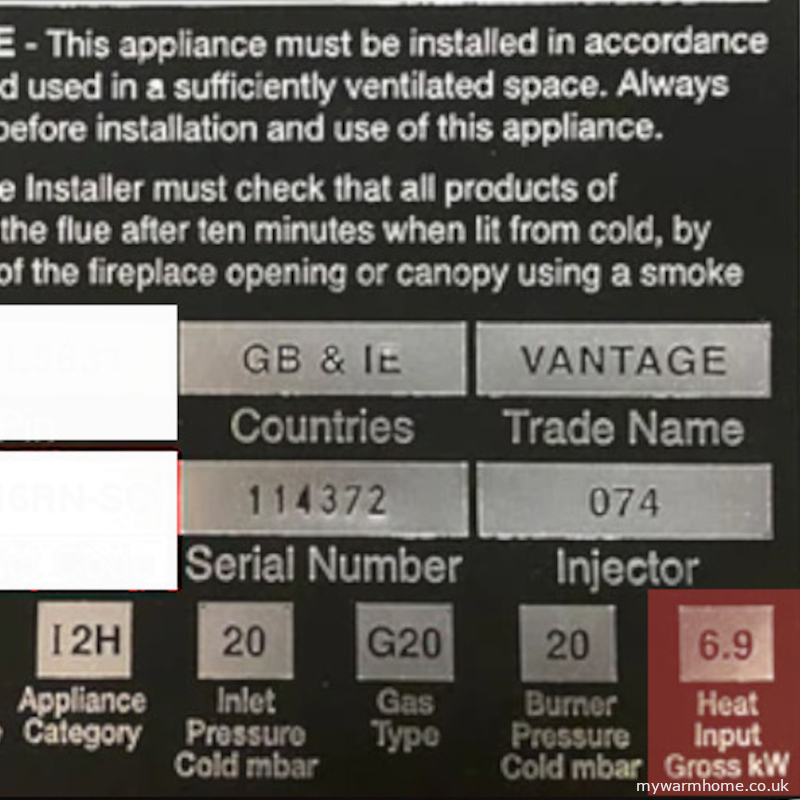
This all depends on how much fuel burns over a period of time, for example: 7.5kw/hr, 9kw/hr, 6.9kw/hr. You will see this on the data badge of the appliance (gas rating of an appliance here.). The more fuel used, the more leakiness is needed. Multifuel appliances are treated in roughly the same way but do not come under gas safe legislations. HETAS and building regulations govern multifuel installations and ventilation.
This is the reason combustion ventilation is sometimes needed. This allows the air to be replenished (with an open flued appliance we are burning the oxygen in the room that we use to breathe)
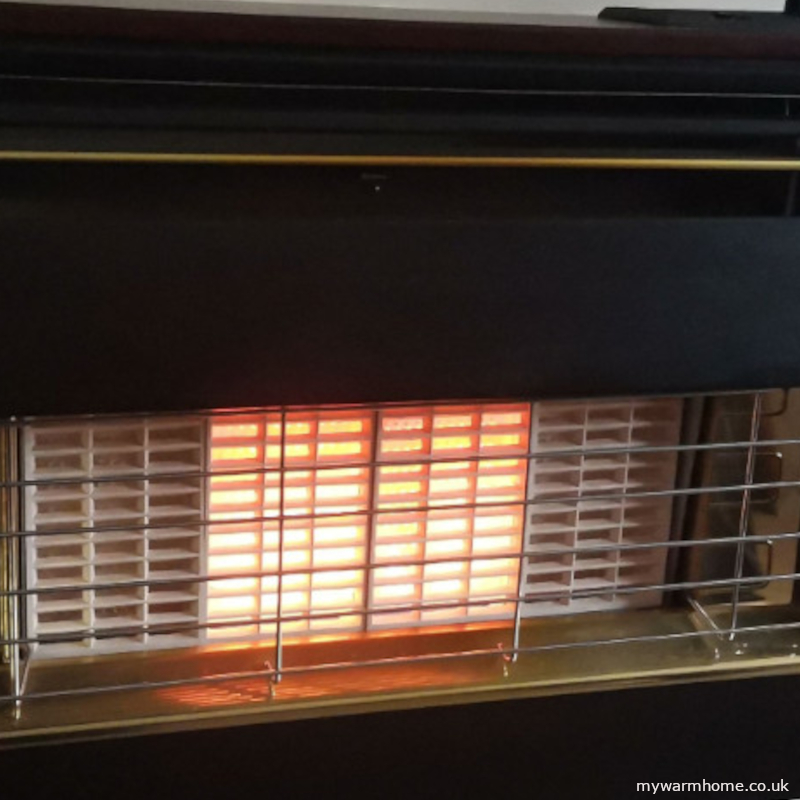
With the introduction of insulation, extraction ventilation should be installed as part of the process, we now have a different factor to add in with gas safety. Extraction fans either pulling or pushing air (PIV) can now effect the performance of the appliance.
Open flued gas appliances should be checked to prove they are not spilling products of combustion into the property. This is verified by performing a spillage test.
Part J states. “Extract fans lower the pressure in a building, which can cause the spillage of combustion products from open-flued appliances. This can occur even if the appliance and the fan are in different rooms”.
Any funded insulation work now includes ventilation upgrades as part of the current PAS, so extract ventilation will be installed. This should have been factored in as part of any ventilation work carried out. A competent person is required to perform spillage tests.
Part B, 8(1) of the Gas Safety (Installation and Use) Regulations 1998 states that no person can make any changes to a premises that contains a gas fitting or storage vessel if the changes would compromise the safety of the fitting or vessel.
This basically means if the fabric of the building (walls, floors, roofs) are being insulated then appliances need to be checked by a suitably competent and qualified person.
Below you will find links to UK regulations and other useful information. These links are to third party websites, and we cannot guarantee the validity or safety of the following sites. If you find any broken links or issues, we would love to know. Please read our disclaimer.
Energy saving trust guide.
Pas 2035
Pas 2030
Part A – Structure
Part B – Fire safety
Part C – Site preparation and resistance to contaminants and moisture
Part D – Toxic substances
Part E – Resistance to sound
Part F – Ventilation
Part G – Sanitation, hot water safety and water efficiency
Part H – Drainage and waste disposal
Part J – Combustion appliances and fuel storage systems
Part K – Protection from falling, collision and impact
Part L – Conservation of fuel and power
Part M – Access to and use of buildings
Part O – Overheating
Part P – Electrical safety
Part Q – Security in dwellings
Part R – Infrastructure for electronic communications
Part S – Infrastructure for charging electric vehicles
Part T – Toilet accommodation
Regulation 7 – Materials and workmanship
The Gas Safety (Installation and Use) Regulations, 1998
MCS (microgeneration certification scheme)
Electrical standards