
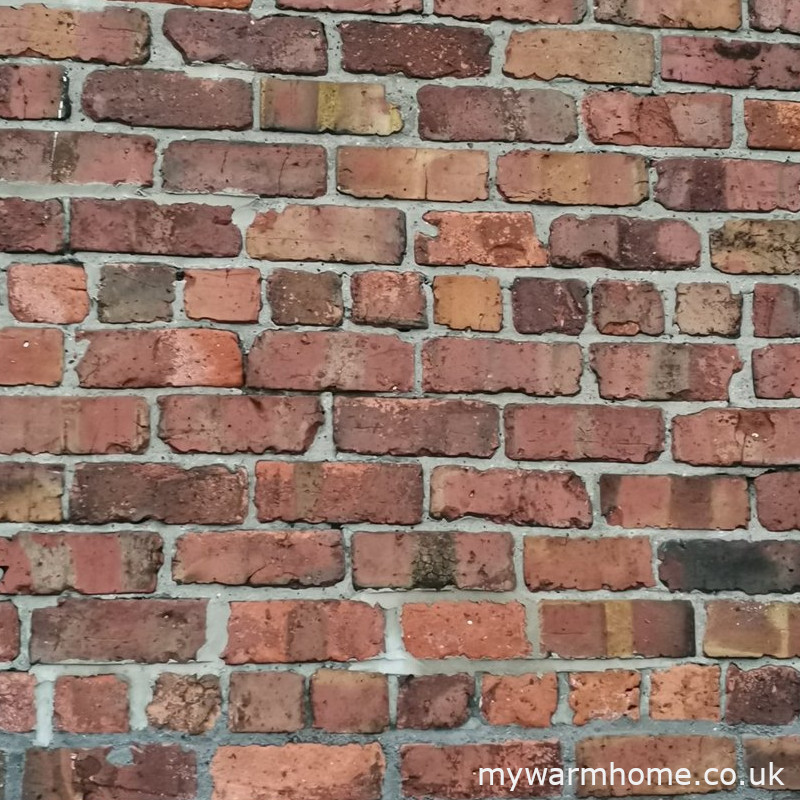
FREE CPD TASTER / DAMP, MOULD & MOISTURE
Look for the cause, not just the mould.
This introductory MyWarmHome CPD module looks at how moisture, temperature, ventilation, insulation continuity and everyday use of a home can combine to create damp and mould problems.
OPEN-BOOK LEARNING · APPROX. 30 MINUTES · KNOWLEDGE CHECK
Before you start
Mould is evidence that conditions have supported growth. It is not, by itself, a diagnosis of the cause. A good investigation asks where the moisture comes from, what the surface temperature is doing, how air moves through the home, whether there is a defect, and what has changed.
A useful question on site is: “When did this start, and what changed before it started?”
This is independent learning material. Employers, professional bodies and regulators may set their own requirements for what they accept as CPD.
01 / MOISTURE & RELATIVE HUMIDITY
The air already contains water.
People, cooking, bathing and drying clothes all add water vapour to indoor air. Relative humidity (RH) describes how much water vapour is present compared with the maximum the air could hold at that temperature. When air cools, its relative humidity rises even if no extra moisture has been added.
For this taster, use roughly 1–2 litres per person per day as an order-of-magnitude reminder for moisture released through breathing and perspiration. The real amount varies with activity, temperature and the person, so it is not a design constant.
02 / VENTILATION & WET ROOMS
Remove moisture close to where it is produced.
Extraction in bathrooms, kitchens and other wet rooms helps remove moisture and pollutants at source before they spread through the dwelling. But the presence of a fan does not prove that the ventilation is effective. Operation, airflow, ducting, maintenance and a route for replacement air all matter.
On site: don’t just ask “Is there a fan?” Ask “Is it actually moving the required air?”
03 / COLD SURFACES & INSULATION CONTINUITY
A small cold spot can change the whole diagnosis.
Condensation does not only happen on windows. If part of a wall or ceiling becomes sufficiently cold, the air immediately next to that surface can reach a much higher relative humidity than the air measured in the centre of the room. Missing, displaced or poorly detailed insulation can therefore create a local mould risk.
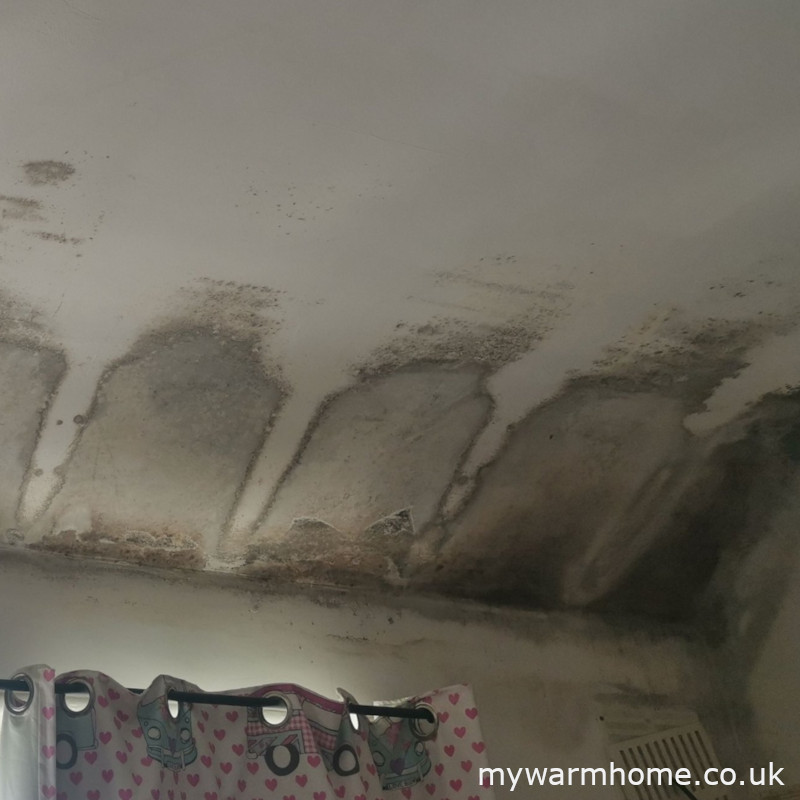
REAL-WORLD CASE
The mould appeared only after recent roof access for solar wiring. The diagnostic clue was not just the mould — it was the timeline.
04 / COATINGS, SEALERS & DRYING
Covering the stain is not the same as fixing the cause.
Repeated repainting may temporarily hide staining or mould, but if the wall is still getting wet or repeatedly reaching conditions that support growth, the symptom can return. An unsuitable impermeable coating can also reduce drying potential in some constructions. The correct response is to identify the moisture source and understand the wall build-up before specifying a treatment.
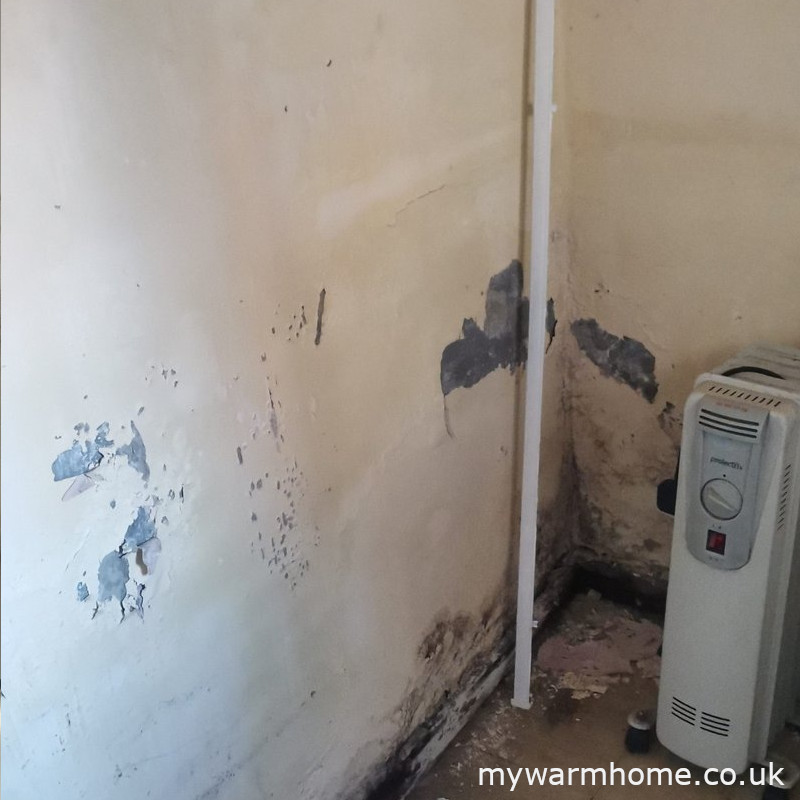
REAL-WORLD CASE
This wall had been painted several times to hide what was behind it. The staining returned each time. If the stain keeps coming back, the paint probably isn’t the problem — and it isn’t the cure either.
05 / AIR MOVEMENT & HIDDEN SURFACES
The conditions behind furniture can be different from the room.
A wardrobe against an external wall restricts air movement and can shield the wall from room heat. The surface behind it may stay colder, while moisture released by occupants remains in the air. That combination can create musty smells, condensation or mould even when a humidity reading taken elsewhere in the room looks acceptable.
The same principle applies to cold corners, bed headboards, cupboards and other places where air circulation is limited.
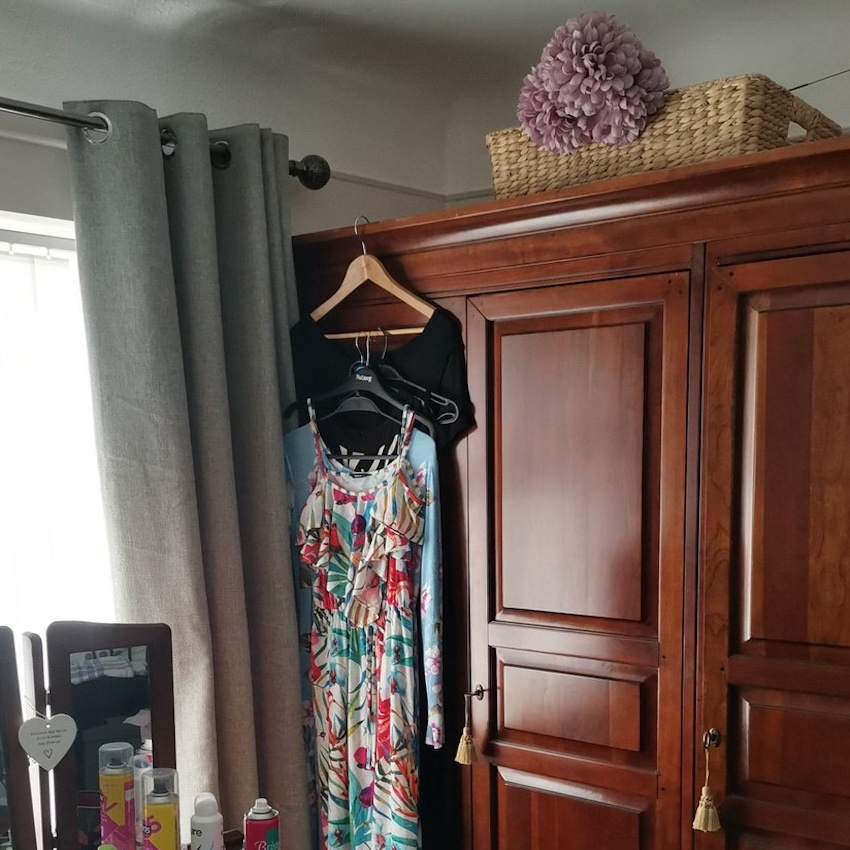
REAL-WORLD CASE
A large wardrobe was positioned against an external wall. Furniture can restrict both room heat and air movement, so the conditions behind it may be much colder and more humid than a reading taken in the open room.
Take the diagnosis with you
When you see mould, ask: Where is it? When did it start? What changed? Where is the moisture coming from? Is the surface unusually cold? How is air moving? Is there a defect or interrupted insulation?
Now complete the open-book knowledge check below.
Check your understanding
Open-book learning: some questions include a link to the relevant MyWarmHome guidance. Use it if you need to check your understanding before answering.
This assessment is being prepared. No completion is recorded until an assessment has been published and passed.