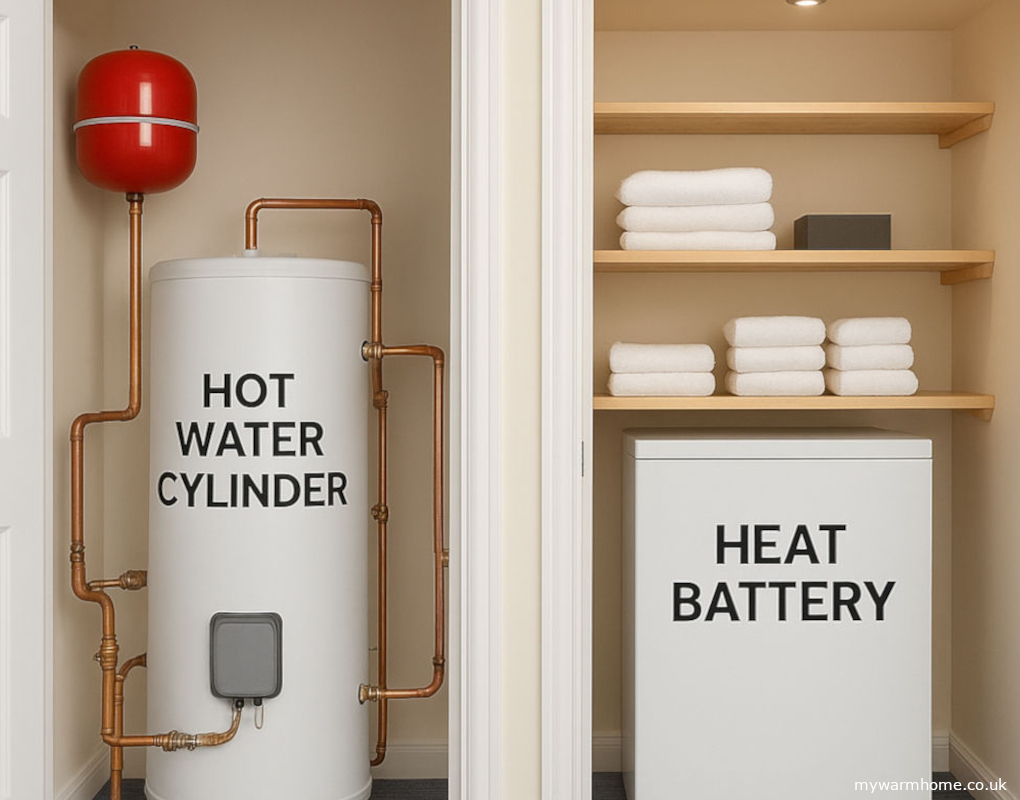
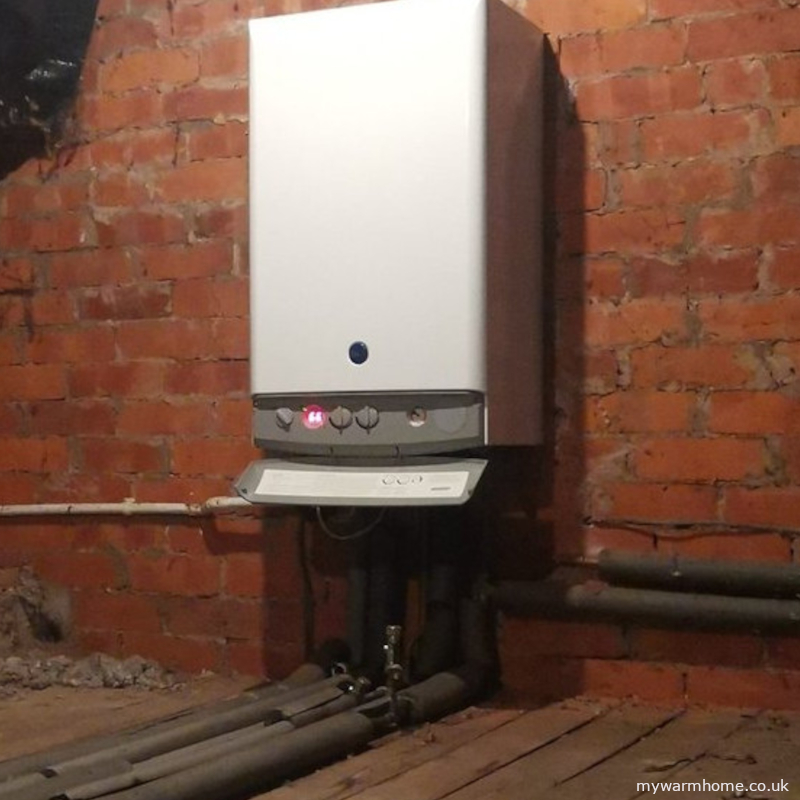
A heat battery is a device that stores heat energy and releases it when your home needs it.
As the UK moves towards cleaner and smarter ways to heat our homes, one technology is starting to make a name for itself: heat batteries.
You might have seen them mentioned alongside heat pumps in recent government home upgrade plans. But what exactly are they, and why are they becoming popular?
You’ve probably heard of old type electric storage heaters maybe you’ve even come across one before. They store heat inside metal cabinets using heavy bricks, using cheaper electricity at night when most people were asleep and demand was low.
Heat batteries work on a similar idea, but with modern materials and smarter design. They store energy as heat when electricity is cheaper or more available, and then release it later when you need hot water or heating. Below is a video from sunamp.Heating battery basics.
So what is a heat battery?.
A heat battery is a device that stores heat energy and releases it when your home needs it. Think of it as a modern alternative to a hot water cylinder, but smaller, faster, and far more efficient.
Instead of storing litres of hot water, a heat battery stores energy using materials like phase-change materials (PCMs) or ceramic blocks. These absorb and hold heat at high temperatures, then release it on demand to heat water or contribute to space heating.
How Does a Heat Battery Work?
A heat battery typically works in three simple steps:
Charge.
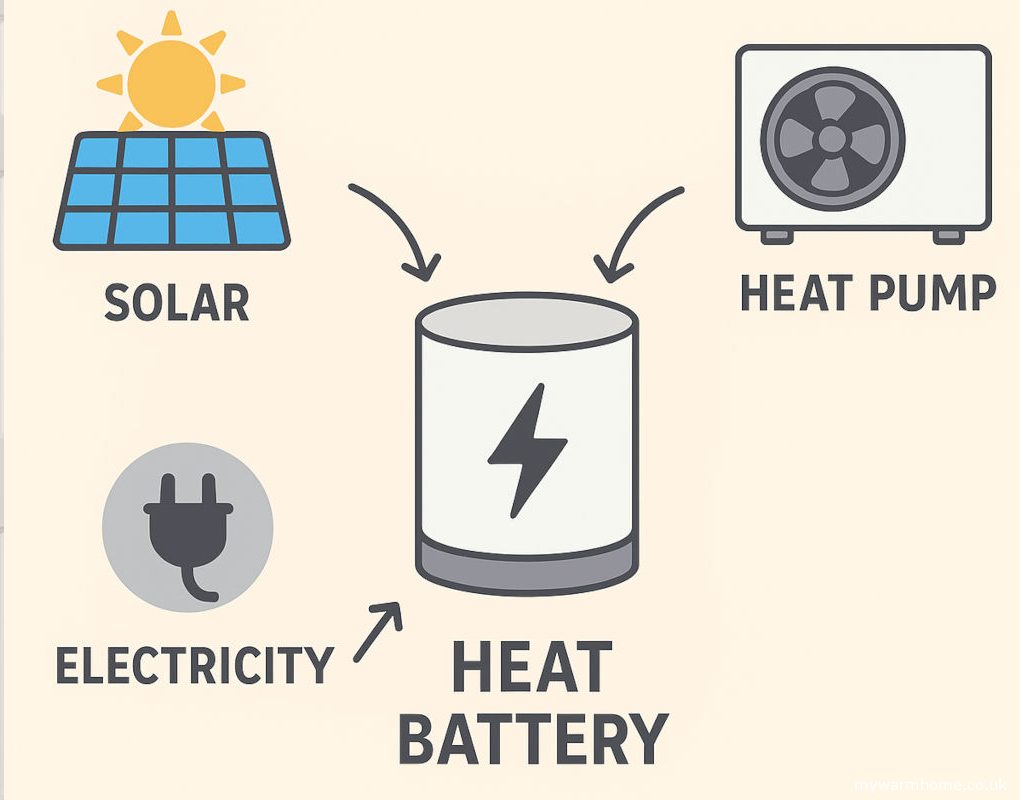
The battery is heated using electricity from your heat pump, solar PV, or the grid — often at off-peak times when energy is cheaper and cleaner.
Store.
The system holds that heat with minimal loss, often for many hours. Phase-change batteries “lock in” heat as they melt and solidify, similar to how ice packs work — just at much higher temperatures.
Delivery.
When you open a tap or your heating system calls for hot water, the battery releases stored heat instantly. You get quick, consistent hot water without waiting for a tank to warm up.
Why Are Heat Batteries Becoming Popular?
Smaller Footprint.
A heat battery can be up to 5–10 times smaller than a traditional hot-water cylinder. Great for flats, small homes, or anywhere space is tight.
Faster Recovery
They recharge quickly, making them ideal for busy households needing lots of hot water.
Works well With Heat Pumps.
Heat pumps run best at steady, low-demand times. Heat batteries let you store heat produced overnight or when your heat pump is running efficiently.
Perfect with Solar Panels.
Solar PV can charge the battery during the day, giving you almost-free hot water in the evening.
Lower Bills with Smart Charging.
Pairing a heat battery with:
off-peak tariffs
smart meters
solar generation can significantly cut running costs.
What Can a Heat Battery Replace?
In many homes, a heat battery can replace:
Traditional hot water cylinder
An immersion heater
In some setups, parts of a boiler system
They are particularly useful in heat-pump-only homes or homes switching to low-carbon heating.
Are They Eligible for Grants?
The government has announced plans to support heat batteries through the Boiler Upgrade Scheme with a £2,500 grant, but homeowners should check current Ofgem guidance because availability depends on eligible products, standards and scheme rules being in place..
Should You Install One?
A heat battery is ideal if:
You have (or plan to install) a heat pump
You want to save space
You’re looking to manage energy costs using solar PV or off-peak tariffs
Your home has high hot-water demand
You want a future-proofed, low-maintenance system
You need to improve an EPC rating on a property using old storage types.
They’re less suited to very large households with extreme hot-water usage — a large cylinder may still be a better fit in those cases.
Final Thoughts.
Heat batteries are one of the most exciting upgrades currently available for UK homes. They’re compact, efficient, low carbon, and cost-effective — and with the new grant support, they’re more accessible than ever.
A Publicly Available Specification (PAS) is a document that defines good practice standards for a product, service, or process. PAS 2035/2030 are linked frameworks that outline best practices for retrofitting homes in the UK to enhance energy efficiency. While PAS 2030 focuses on the quality of the installation processes, PAS 2035 ensures that the retrofit is appropriate for the building as a whole. Current PAS documents can be downloaded here. It’s a crucial component of the UK government’s strategy to boost building efficiency and reduce carbon emissions. Adopting a “whole house” approach, PAS 2035 considers the home’s environment, occupancy, and the homeowner’s objectives, ensuring that retrofit projects address key aspects such as insulation, ventilation, occupancy, and building fabric to support long-term sustainability. Although not a regulation, PAS 2035 is a publicly available specification (PAS), developed to address shortcomings of previous schemes following the Each Home Counts Review.
PAS 2035 compliance is mandatory for all publicly funded projects, including those supported by the Energy Company Obligation (ECO), and Warm Home Fund. We also have a route called licence plus which is run by Trustmark which does not need coordination as part of its process!. This is mainly aimed at self funding retrofit but using installers that are roughly following the current PAS process. Whichever mechanism is to be used, the property occupier should request details of which route the process follows pre-install.
PAS 2035 has its strengths, but also notable limitations. If everyone in the supply chain, assessors, coordinators, designers, and installers adheres strictly to the process, the framework should work effectively. However, lapses in monitoring and inspection can lead to issues. Unfortunately, “technical monitoring” for most UK schemes is minimal, and no longer performed by Ofgem, meaning that failings can go unnoticed, leaving property occupiers unaware of potential problems. Hopefully this will change with future consultations.
The retrofit process involves a range of participants, including canvassers, lead generators, social marketeers, assessors, designers, coordinators, installers, and a limited number of technical monitoring agents. This complexity, along with regulations, updates to rules and red tape, can create confusion and drive up costs.
The standard will transition from PAS 2035:2019 to PAS 2035:2023 in March 2025.
Protecting the Property Occupier?
PAS 2035 outlines several requirements for both pre- and post-installation stages. One of its most valuable aspects is the involvement of a retrofit coordinator throughout the process. The coordinator’s primary role is to safeguard the interests of the property and its occupants, ensuring the retrofit is carried out effectively and sustainably. In an ideal scenario, the retrofit coordinator would operate independently, free from any conflicts of interest. However, this level of impartiality is often difficult to achieve in practice.
By understanding the processes outlined below, you’ll hopefully gain the knowledge needed to ask informed questions and engage with some confidence at various stages of your retrofit journey.
Successful retrofit process.
Social housing and councils may have their own ways of engagement, with separate routes for ECO funding. Within this sector, retrofit is usually done en-mass and with consultation with tenants and housing officers. The below is assuming you are not a social housing or council tenant, but the PAS should still be followed within these organisations to protect the property and the occupiers.
It will all start with a knock on the door, a social media campaign, a referral, or housing provider intervention (landlord). You may be offered funded insulation or heating upgrades, sometimes windows and doors. You may fill a form in from an advertised link you have followed, or you may enquire to see if you qualify from a canvasser.
This information is typically passed on to the installation companies (lead generation) or the installation companies are involved in the marketing campaign directly.
It’s always exciting to get something for free! However, while promises may seem grand, it’s important to remember that you are entering into a works contract with the installation company. To ensure you get what was offered, make sure everything aligns with current regulations, OFGEM guidance, and the latest PAS standards.
In practice.
If the property / occupants have met the requirements of a funded scheme, then the installation or funding company will arrange for a retrofit coordinator to instruct a visit from a retrofit assessor. The coordinator is the first in the process as this is the stage that the property classification is usually identified (traditional, non-traditional etc.)
The assessor should try to get a picture of what the typical energy use entails and also what is expected by improving the property. Lots of photographs will be taken as an EPR (energy performance report) will be produced at the end. This is basically a reference EPC (energy performance certificate) but does not get published on the central register. (when EEM work is completed, a new EPC should be produced, ideally the original assessor as they will have the original data)
Some quick guidance on what the assessment entails and why!
First things are age and condition. This is to allow a retrofit coordinator to classify the property and create a plan that allows a fabric first approach that works with the natural balance of the property and highlights all potential issues.
Existing Ventilation in wet rooms photographed and noted. This is because all insulation packages require moisture to be controlled post installation. Some insulation situations require upgrades due to the design and current regulations.
Existing background ventilation photographed and noted. This is because all insulation packages require the replenishment of air post installation. Some insulation situations require upgrades due to the design and current regulations. Installers may use a pulse or blower test may be performed to validate if upgrades to background ventilation are necessary.
Fuel burning appliances noted. This is especially relevant with open flued appliances like gas, wood/coal burning fires etc. Ventilation requirements for combustion may need to be installed or verified adequate.
Whole footprint of property measured, including all windows/glazed doors. This allows to distinguish what is a “heat loss area” in more detail, and also potential solar gains.
Plenty of images of outside. This is to show the condition of building elements, including damp course and drainage services (gutters, downpipes, soil pipes).
Access to all rooms are required as is the loft space, basements and visual inspections of all external walls and areas. All ventilation present will be recorded and door undercut measurements should be taken. The assessment can take longer if more than one installation is being carried out, i.e. wall insulation, loft, and heating.
A report is then generated to give a rating of the properties’ energy performance from “A (very good) to a (G) very poor”. Information is then made available to the retrofit coordinator. All data is uploaded to the *Trustmark data warehouse, which forms a property plan and can be accessed by involved parties.
The coordinator will then look at all the data to see if improvements need any special design attention and intervention due to condition, age of property and location. If all looks OK then a ventilation strategy will be put in place depending on installation requirements. Some other documents are required, like a medium term improvement plan, which will create future scenario’s for improvements.
A retrofit designer will need to be consulted to design the proposed installation measure(s) if deemed necessary. We can take designers of certain measures as being members of a trade body. For example, a Gas Safe engineer installing a gas boiler, a SWIP trained installer performing IWI to a traditional non-heritage building, MCS accredited installer for solar and heat pumps.
A professional member of a Chartered Institute will be required, especially on buildings with heritage values or interacting insulation systems (wall and floor insulation being installed together, for example). It is up to the retrofit coordinator to validate that the designers and installers are all suitably qualified.
* The TrustMark Data Warehouse was created to address several recommendations in the Each Home Counts review commissioned by the Government in 2015.
The retrofit plan is executed. This is what the installers are expected to perform to meet the current PAS. Each measure (installation or improvement) will have its own route and requirements, and brief information be found on each section within this site. The plan will provide steps for the current and potentially future improvements. A fabric first approach is always used, this means insulation before any heating works need to be carried out. Soft touches should also be part of the fabric first approach like heating controls, draught proofing and low energy lighting.
The occupants should be informed of all work. It should be the co-ordinator and installers who contact the occupiers to inform them of the process that the retrofit project will follow. Dates, times, and conditions required will need to be discussed and agreed upon. This may include removal of furniture to prevent damage or the arrangement of alternative living arrangements throughout the works (especially on internal wall insulation). It may include preinstall remedial works to the property structure or minor repairs like broken windows, failing of rainwater removal (poor guttering) and wall pointing.
Get all this information in writing or in an email to reference at a later date if required. Make notes of Installers contact details, coordinators, and assessors names and numbers. This can be invaluable if you need to contact anyone involved in the process. You can do research on installers, co-ordinators, assessors and designers here as they all need to be Trustmark registered.
The Installation.
Once agreed and a plan has been discussed, the installation will begin. If an insulation measure is being installed, then validation is required that either the current ventilation is sufficient or insufficient. The assessment would have highlighted any shortfalls, and the installers may ask to perform an air tightness test. This can be carried out using a pulse test, this may be performed to allow installers a way of emitting undercuts and background ventilation from the installation, but controlled ventilation is always a good way to control moisture. The ventilation should always be installed or upgraded first, or at least core vents and wiring set in place if wall insulation being installed. The *retrofit coordinator should make a site visit if the measure is deemed high risk which includes IWI, EWI, UFI, FRI, PHI and RIR. (*this will be a mandatory requirement from early 2025) The next stage will be the installation phase of the main improvements.
*Due to time and location factors, the retrofit co-ordinator may employ a remote coordinator to feedback information after or during site visit.
The Handover.
Depending on the complexity of the installation, the duration can range from a single day to several weeks. This timeline should have been discussed and documented during the early planning stages. Before signing off on the work completed by the installation company, ensure you are fully satisfied that all agreed tasks have been completed to your expectations. Additionally, verify that any damages have been repaired or compensated. Make sure you have received all necessary handover documents, including warranties, guarantees, compliance certificates, insurance policies, gas certificates, and electrical certificates. Some certificates and warranties may come via post or email after the installation, if this is the case then ask for written clarification that they will be provided. All these documents are part of the works and may be needed if selling the property or for insurance purposes.
Insurance Backed.
To be PAS 2030 certified, installers must have an Insurance Backed Guarantee provider to ensure their customers are protected. They must also have adequate insurance coverage, including liability insurance, to protect homeowners.
What is an insurance backed guarantee? Installers will provide their own written workmanship guarantee (this is very important to get a copy of in case of any poor installations). This will outline a guarantee period, during which the installer will return and fix any faults resulting from faulty workmanship. The insurance backed guarantee only comes into effect if the original installation company ceases trading through lets say bankruptcy!. Ask for details of the company providing the guarantee, and then do your research.
All Insulation installed under PAS.
Each insulation installation will follow the same route as regards with ventilation on PAS. This should be explained by the retrofit coordinator and the installers. The basics are that background ventilation (usually trickle vents) will be provided unless an air permeability test is performed and validates the need to omit from the installation. Wet room ventilation is always required, but can vary with different insulation situations. (see below) If PIV (positive input ventilation) is being installed, then request details of why this choice is being taken, installers or retrofit coordinator will be able to guide you. (PIV will need maintenance, and it is placed in your loft space).
Some insulation situations like the property not being 100% insulated (bathrooms and kitchens being omitted due to fixture removal difficulty) then the extract ventilation may need to be a dMEV system to mitigate risks of condensation.
Pre-installation building inspection (PIBI)
The Retrofit Installer should undertake a pre-installation inspection using a competent person, this means a person or persons who have relevant industry qualifications. The inspection shall be undertaken at a level of detail sufficient to confirm that the specified energy efficient measure can be safely and effectively installed at the designated location. Particular attention shall be given to potential moisture build up as a result of the installation and taking into account the fire safety of the dwelling and the functionality and/or safety of installed services (gas, electricity, water, telecommunications, etc.)
Technical Monitoring.
Technical monitoring is a form of auditing that highlights a set of given questions on compliance. This is not performed by the installation company, but they may have their own regime of quality control. The funders (energy companies) will use these reports to highlight and hopefully rectify failing. Sadly, this shows that even with all the rules and hierarchy within the process of PAS, failing still arise. More on technical monitoring here.
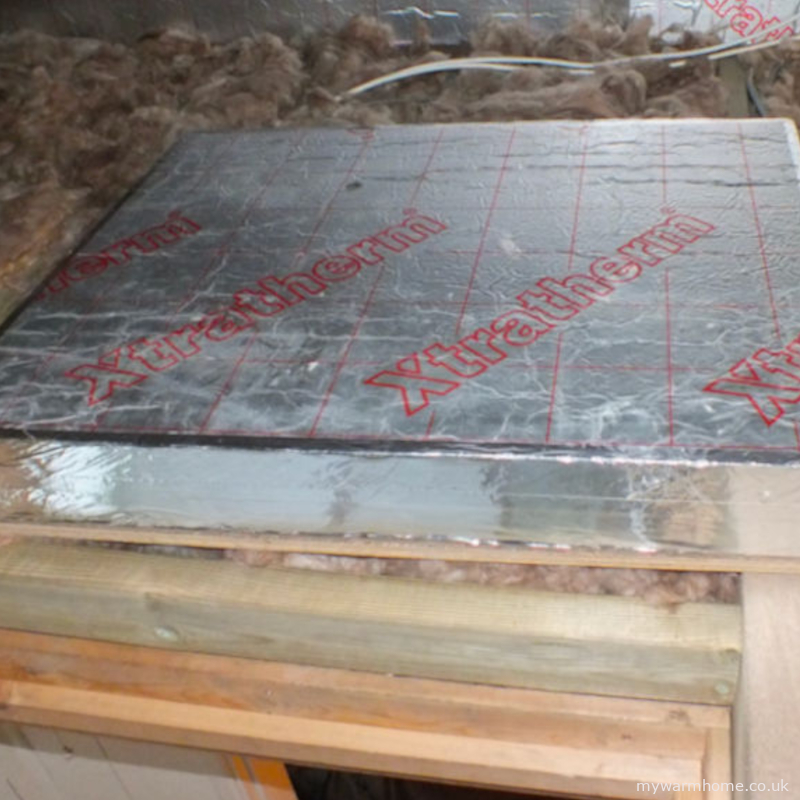
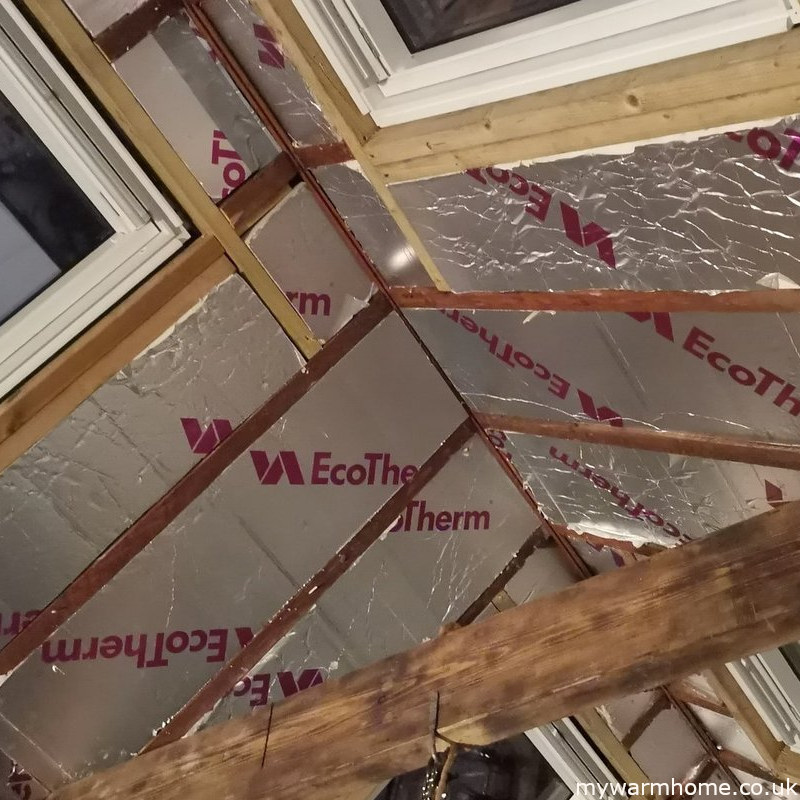
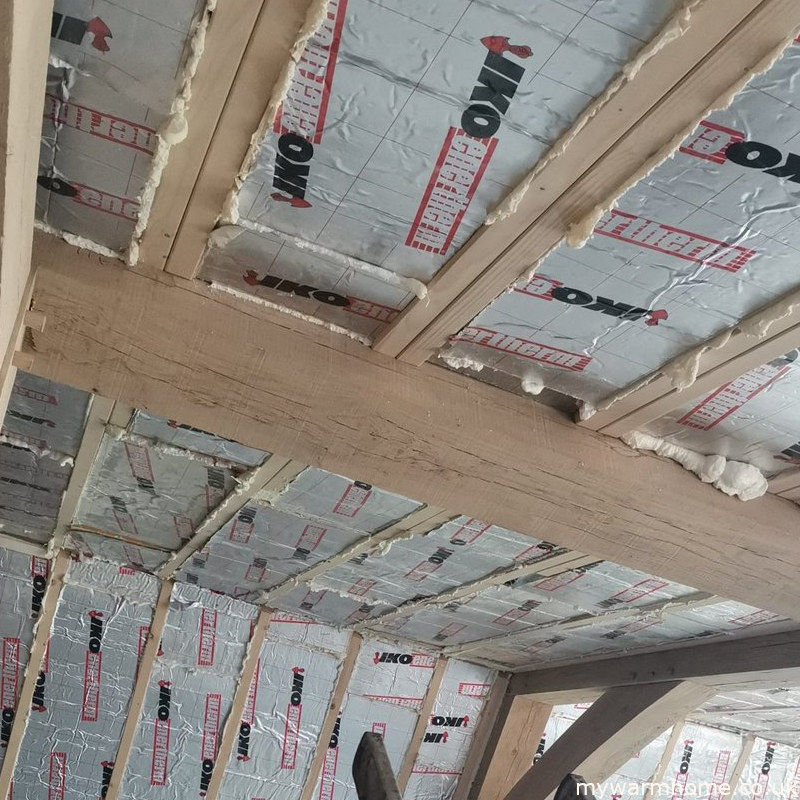
PIR insulation is a type of rigid foam insulation made from polyisocyanurate, a thermoset plastic. It is produced as foam and typically sandwiched between two facings, such as aluminium foil.
Properties.
High R-Value. PIR has a high thermal resistance (R-value), which makes it very effective as an insulator.
Moisture Resistance. It has good moisture resistance, which helps prevent mould and mildew.
Cell structure. Usually sold as closed.(can be manufactured closed cell)
Lightweight and Easy to Handle. It is lightweight, making it easy to handle and install..
Applications. Roof, wall, and floor insulation.
Phenolic Foam Insulation.
Description. Phenolic foam insulation is made from phenol-formaldehyde resin, a thermosetting plastic. It is produced as a rigid foam and often faced with materials such as foil or glass tissue.
Properties.
Very High R-Value.Phenolic foam has an excellent thermal performance, with an R-value typically higher than PIR.
Durability. It is durable and retains its insulating properties over time.
Applications. Used in a variety of applications, including roof, wall, and floor insulation. (and submarines!)
Comparison and use cases.
Thermal Performance. Both PIR and phenolic foam have high thermal resistance, but phenolic foam generally has a slightly higher R-value Moisture Resistance. Both types offer good moisture resistance, though phenolic foam’s closed-cell structure gives it an edge in preventing water absorption. Cost. PIR is typically less expensive than phenolic foam, which can be a consideration for large projects. Applications. Ideal for high-performance insulation requirements, including in walls, between rafters, and floors.
In Summary.
Both PIR and phenolic foam are excellent choices for rigid insulation, each with its own strengths. The choice between them will depend on specific project requirements such as thermal performance, fire resistance, moisture resistance, and budget.
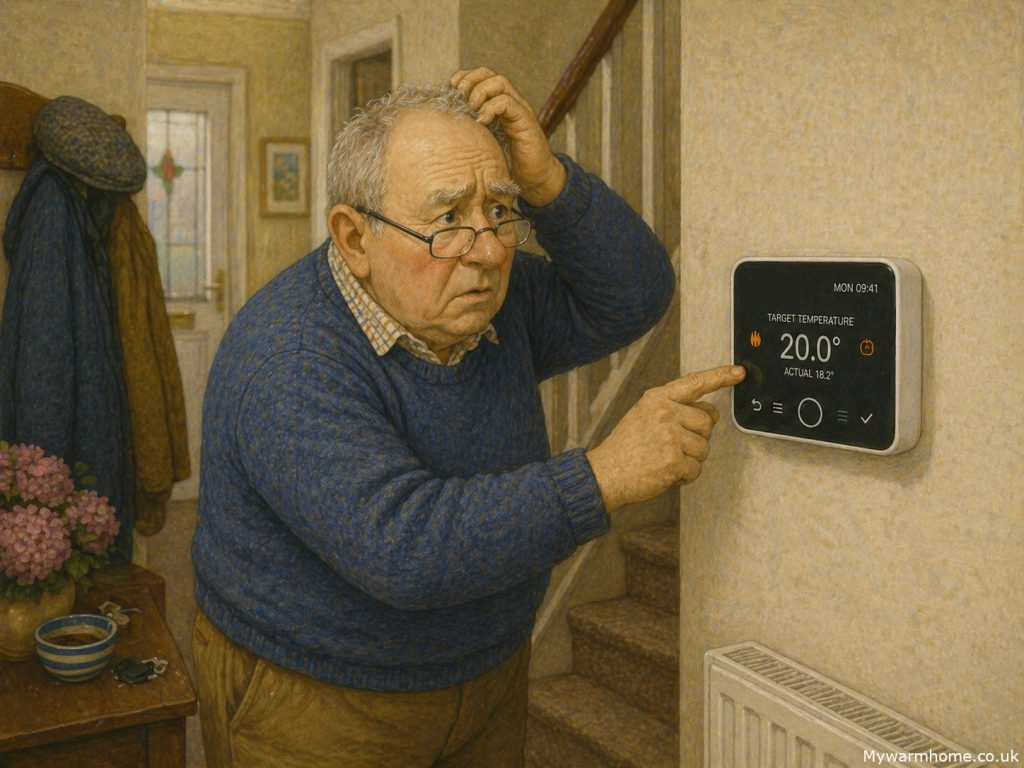
For someone used to a simple dial thermostat, navigating icons, settings, and scheduling interfaces can feel unnecessarily complex.
Controls for modern heating systems are often designed with flexibility in mind—but that flexibility can come at the cost of usability, particularly for older homeowners. Many systems now rely on layered menus, small touchscreens, or app-based controls that assume a level of digital confidence that not everyone has. For someone used to a simple dial thermostat, navigating icons, settings, and scheduling interfaces can feel unnecessarily complex. Even basic adjustments like increasing the temperature can become frustrating if they’re buried behind multiple steps.
There’s also a strong reliance on smartphones and apps, which doesn’t always reflect reality. A significant number of older people either don’t use smartphones at all or use them in a very limited way. Small screen sizes, poor contrast, and fiddly controls can make apps difficult to read and operate—especially for those with reduced eyesight or dexterity. On top of that, concepts like Wi-Fi connectivity, accounts, and software updates can create barriers that simply don’t exist with traditional controls. When heating becomes dependent on an app, it can leave some users feeling locked out of their own system.
Technology awareness plays a big role too. Many modern interfaces assume familiarity with common digital behaviours, swiping, tapping icons, navigating menus, but these aren’t universal skills. For older users, there can be a lack of confidence in “trying things,” especially when there’s a fear of pressing the wrong button and causing a problem. This often leads to systems being left on default settings, or worse, used incorrectly, impacting both comfort and efficiency.
Always ask installers what controls will be fitted. Ask for a easy to manage and NON app connected if technology will cause a problem. Don’t settle for “thats the only one we can fit!”
So what’s available? Encouragingly, there are still more accessible options. Some manufacturers offer simplified thermostats with large buttons, clear displays, and minimal menus, focusing only on core functions like temperature up/down and on/off. Others provide wired controls that stay in a fixed location, avoiding the need for apps altogether. There are also programmable thermostats with physical buttons and high-contrast screens, designed specifically with readability in mind. In more advanced systems, it’s sometimes possible to pair a smart setup with a basic user interface for day-to-day use, leaving the more complex controls to installers or family members if needed.
Ultimately, good design should work for the person using it, not the other way around. When specifying heating controls, it’s just as important to consider usability as it is efficiency. A system that’s easy to understand and operate will always perform better in real life than one packed with features that never get used.
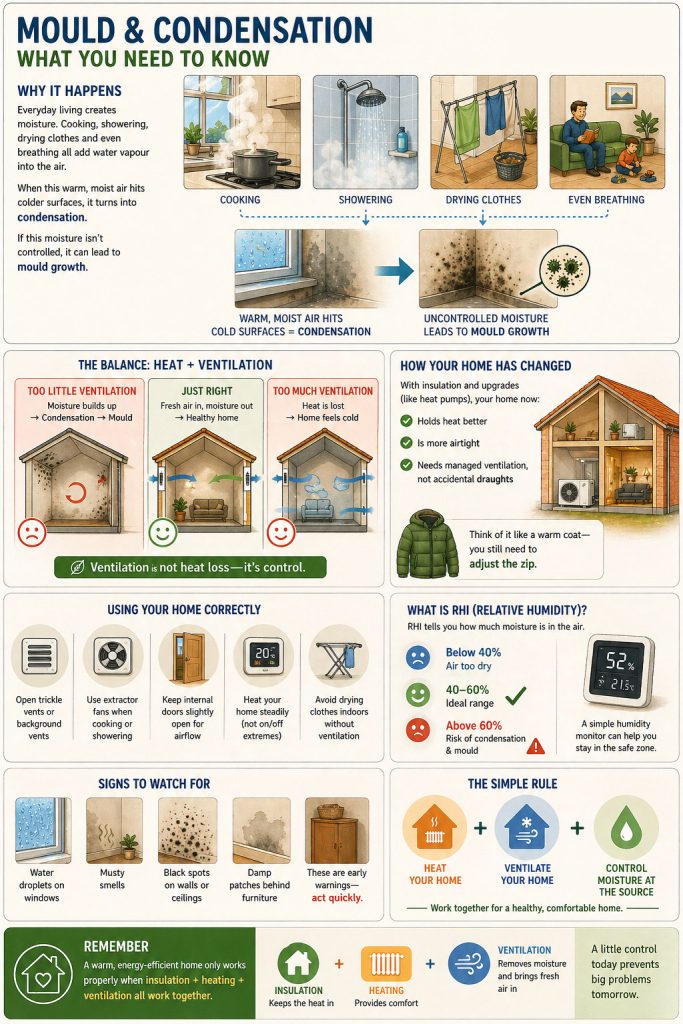
A warm, energy-efficient home only works properly when: insulation + heating + ventilation all work together.
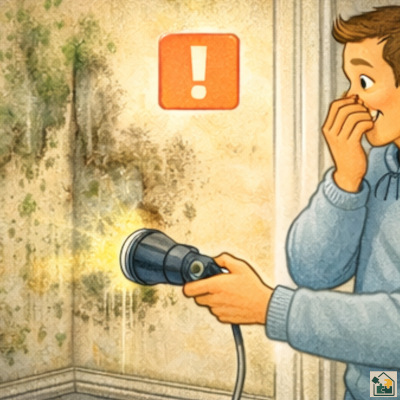
Cooking, showering, drying clothes and even breathing all add water vapour into the air. When this warm, moist air hits colder surfaces, it turns into condensation.
If this moisture isn’t controlled, it can lead to mould growth.
The Balance!
Too little ventilation = Moisture builds up → Condensation → Mould.
Too much ventilation = Heat is lost → Home feels cold.
Just right, Fresh air in = moisture out → Healthy home.
Ventilation is not heat loss, it’s control.
How retrofit changes our home..
With insulation and heating upgrades, your home now:
Holds heat better.
Is more airtight.
Needs managed and controlled ventilation, not accidental draughts.
Think of it like wearing a warm coat, you still need to adjust the zip if you gret too warm..
USING YOUR HOME CORRECTLY
✔ Open trickle vents or background vents. ✔ Use extractor fans when cooking or showering. ✔ Keep internal doors slightly open for airflow. ✔ Heat your home steadily (not on/off extremes). ✔ Avoid drying clothes indoors without ventilation.
Understanding what goes on behind the scenes!
Interstitial condensation is the formation of liquid water inside the hidden, internal layers of a building’s structure (walls, roofs, or floors) rather than on the visible surface. It occurs when warm, moist air penetrates the building envelope and reaches a cold surface (dew point) within insulation, brickwork, or behind cladding, often causing structural damage, rot, and reduced insulation performance. This is extremely important when internal wall insulation is installed as any failures in design will cause weak points, This allows moisture to venture behind and out of sight. This is why ventilation and attention to design and detail is paramount.
What is Relative Humidity (RH)?
RH tells you how much moisture is in the air. Take a look at the video below to show you what 100% humidity is like.
Below 40% → Air too dry.
40–60% → Ideal range .
Above 60% → Risk of condensation & mould .
A simple humidity monitor can help you stay in the safe zone.
Signs to watch out for.
Water droplets on windows.
Musty smells.
Black spots on walls or ceilings.
Damp patches behind furniture.
What is the Dew Point?
The dew point is the temperature to which air must cool down to become fully saturated with water vapor and start producing dew, fog, or condensation. A higher dew point means more moisture in the air, making it feel stickier and more uncomfortable outside.
Dew point and Relative Humidity (RH) are linked because they both measure moisture in the air, but they do so in different ways: dew point measures the actual amount of moisture, while RH measures how “full” the air is with moisture compared to its capacity at a specific temperature.
REMEMBER. A warm, energy-efficient home only works properly when: insulation + heating + ventilation all work together.
Fabric First Approach, What It Is and Why It Matters!
The fabric first approach is built on a simple principle: reduce heat loss from the building before upgrading heating systems or adding renewables.
“Fabric” is just another term for walls, roof, floors and windows.
Instead of installing a high-tech heating system in a leaky home, fabric first aims to fix the building first, then optimise how it’s heated.
Why Fabric First Became the Gold Standard.
For years, fabric first has been the backbone of UK retrofit policy (including PAS 2035), and for good reason.
1. It Reduces Energy Demand at Source.
By improving insulation and airtightness, the home simply needs less heat to stay comfortable.
Lower energy bills.
Less reliance on heating systems.
Reduced carbon emissions.
This is fundamental—you can’t efficiently heat a home that constantly loses heat.
2. It Improves Comfort and Health
Fabric improvements don’t just save energy, they change how a home feels.
Warmer surfaces (no cold walls).
Fewer draughts.
Reduced risk of damp and mould.
More stable indoor temperatures.
These benefits are well documented, including improved physical and mental wellbeing.
3. It Futureproofs the Home.
A well-insulated building works better with any heating system.
Heat pumps perform more efficiently.
Smaller systems can be used.
Lower running costs long-term.
In other words, fabric first makes every future upgrade more effective.
4. It Supports a “Whole House” Approach
Fabric first encourages thinking about the home as a system:
Insulation.
Airtightness.
Ventilation.
Heating.
All designed together, not as bolt-on measures.
So Why Is It No Longer the “Only” Answer?
Despite its benefits, fabric first is no longer seen as the universal gold standard, especially when viewed through the lens of net zero.
This shift is strongly influenced by research such as the “Every Home Counts” review (which highlighted quality, whole-house thinking, and unintended consequences) and more recent academic work like “Fabric first: is it still the right approach?”.
The Key Challenges.
1. Net Zero Has Changed the Priority.
Fabric first was developed when all heating was fossil fuel-based.
Today, we can decarbonise heat directly using technologies like heat pumps.
Research shows that:
In some homes, switching to low-carbon heating alone can achieve major carbon reductions.
Fabric upgrades, while beneficial, are not always essential for decarbonisation.
2. Time and Scale Constraints.
Deep fabric retrofit (e.g. solid wall insulation, floors, airtightness upgrades):
Is expensive.
Is disruptive.
Requires skilled labour.
At current rates, rolling this out across all UK homes would take decades.
This creates a real issue: If you wait for “perfect fabric,” you may delay urgent carbon reduction.
3. Diminishing Returns.
Many homes have already had:
Loft insulation.
Cavity wall insulation.
What’s left is:
Harder.
More expensive.
More invasive.
The cost-benefit balance becomes less attractive at scale.
Balancing a central heating system properly is what separates a working” system from an efficient, comfortable, and compliant one
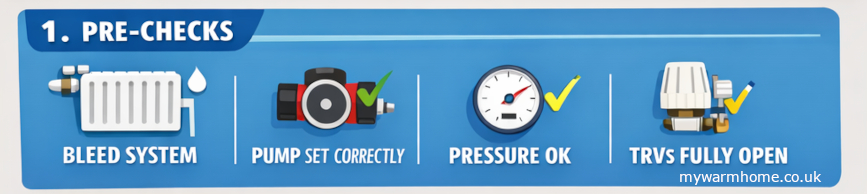
1. Pre-checks are critical.
Before touching lockshield valves:
System fully bled (no air)
Correct system pressure.
Pump operational and correctly set.
All TRVs fully open.
Room thermostat calling for heat.
Boiler at normal operating temperature (flow ~70°C typical).
If these aren’t right, balancing will be inaccurate.
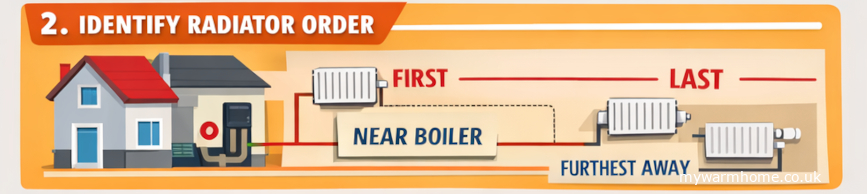
2. Identify radiator order
You need to know flow sequence:
First radiators = closest to boiler
Last radiators = furthest away
This matters because closer radiators naturally take more flow.
3. Fully open all lockshield valves
Remove caps (if still on!).
Open all lockshields fully (anti-clockwise).
4. Measuring temperatures.
Measuring temperatures when balancing radiators can feel a bit daunting at first, but a digital thermometer is inexpensive and easy to use. Most are simple point-and-click devices, allowing you to quickly take readings from the flow and return pipes.
For greater accuracy, clamp thermometers can be used, although they tend to be more expensive.
The flow and return pipes can be installed either way, but typically the TRV is fitted on the flow side. If you’re unsure, it’s worth checking while the system is heating up one side will warm up faster, helping you identify the flow
While heat naturally rises, a large amount is also lost through poorly insulated external walls,
External wall insulation plays a crucial role in reducing how quickly heat escapes from our homes. While heat naturally rises, a large amount is also lost through poorly insulated external walls, especially in older properties. In fact, without adequate wall insulation, a significant proportion of a home’s heat can be lost through the building fabric itself, making it harder and more expensive to keep warm.
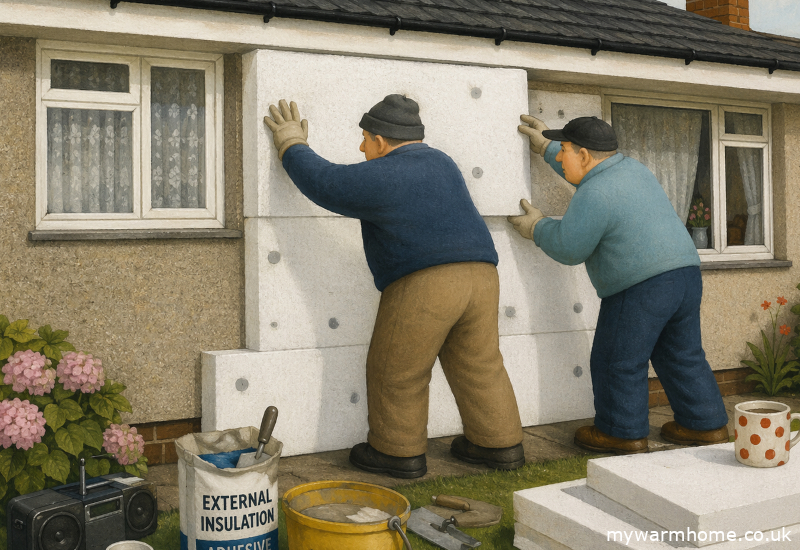
By installing external wall insulation (EWI), we effectively wrap the home in a thermal layer, helping to retain heat inside for longer. When designed and installed correctly, this can dramatically improve energy efficiency, enhance comfort, and reduce heating bills.
Standards and materials have evolved considerably over the years. Back in the mid-1980s, minimal insulation levels were common, with basic materials considered sufficient at the time. Today, expectations are much higher.
Modern external wall insulation systems use advanced, more environmentally conscious materials and are installed to far more demanding performance standards, ensuring homes are better protected against heat loss while also supporting long-term sustainability Have a look at the installer page for some handy questions to ask.
Health and safety.
You may need specialist advice from trades people and professionals regarding things like, High amperage cables. Solar installations, overground electrical supplies to property. Nesting. Bees, wasps, bats. Vermin. Rats, mice, squirrels Asbestos. Vermiculite, flues, drainage, roofing. Your installers should pick up most of the above items on the initial pre-installation survey.
As a general rule, high-amperage cables should always be positioned outside the insulation, rather than beneath it. Special care must be taken if there are any nesting bats, as well as bees or wasp nests. If vermin around or under property, installing insulation can create a warm environment that attracts them. Making sure any vermin problem is erradicated will allow the insulation to remain sealed.
EWI insulation.
Correct background ventilation. *All rooms with the installation of trickle vents or wall vents if required Correct door undercuts. *Undercuts to internal doors allow the free movement of air around the property.
*Testing of the background ventilation pre-installation may allow the installed measure(s) to move forward without the need for door undercuts or trickle vents installed.
Correct extract ventilation in wet rooms. Kitchens, bathrooms,
WC’s, and utility rooms are all classed as wet rooms.
If extraction exists, then checks need to be carried out by referencing the manufacture’s data or performing an anemometer (testing apparatus) test to confirm extraction rates are being met.
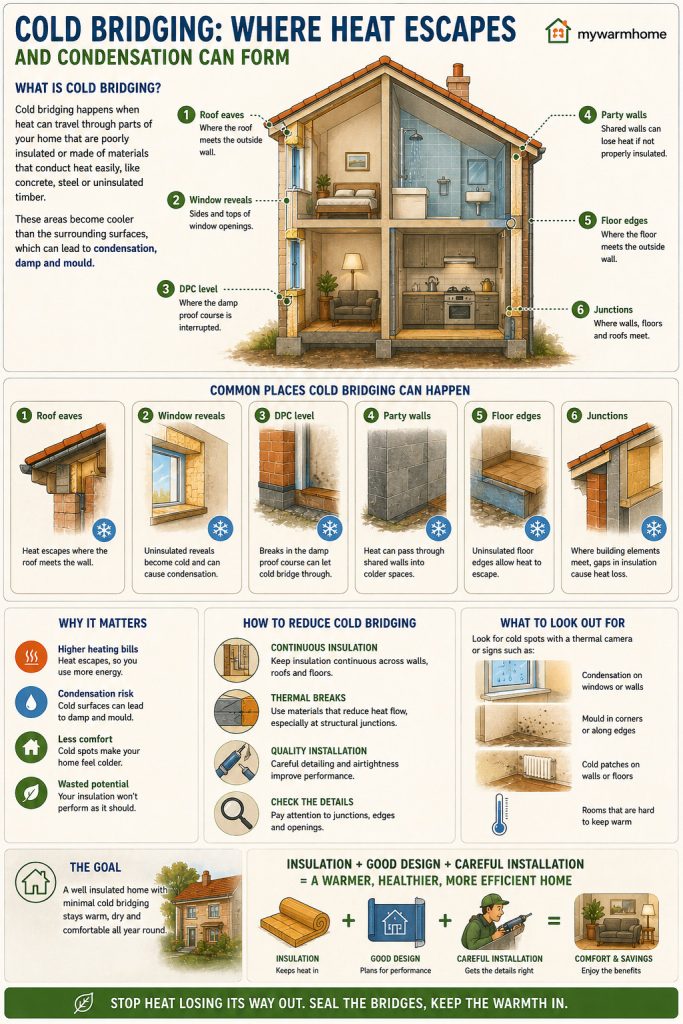
Mitigation of cold spots/thermal bridges.
External wall insulation also helps deal with cold spots, often referred to as thermal bridges. These are areas where heat can escape more easily, typically around features like window reveals, door frames, corners, and where different building elements meet.
To reduce this, insulation should be applied as a continuous layer around the outside of the home, rather than in sections. This helps “wrap” the building evenly and prevents breaks in the insulation where heat could leak out. Particular care should be taken around openings like windows and doors, ensuring these areas are properly detailed and insulated to avoid cold patches forming internally.
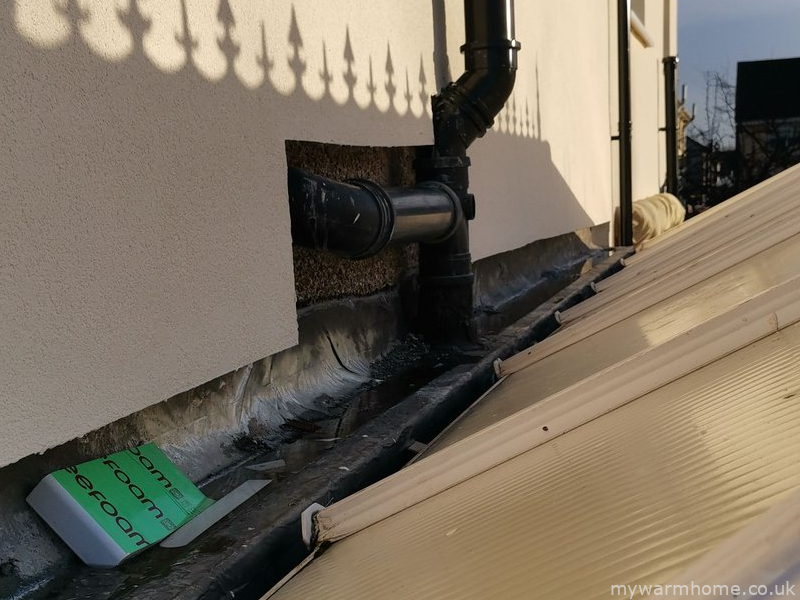
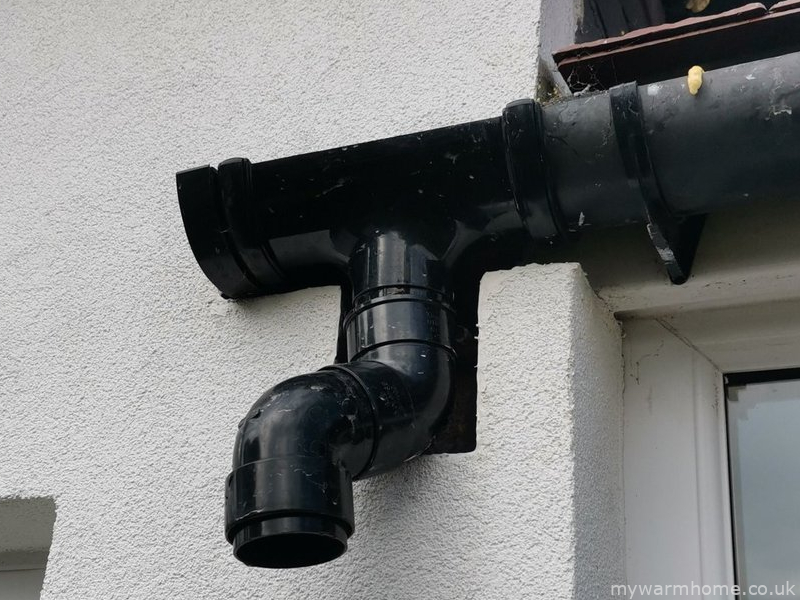
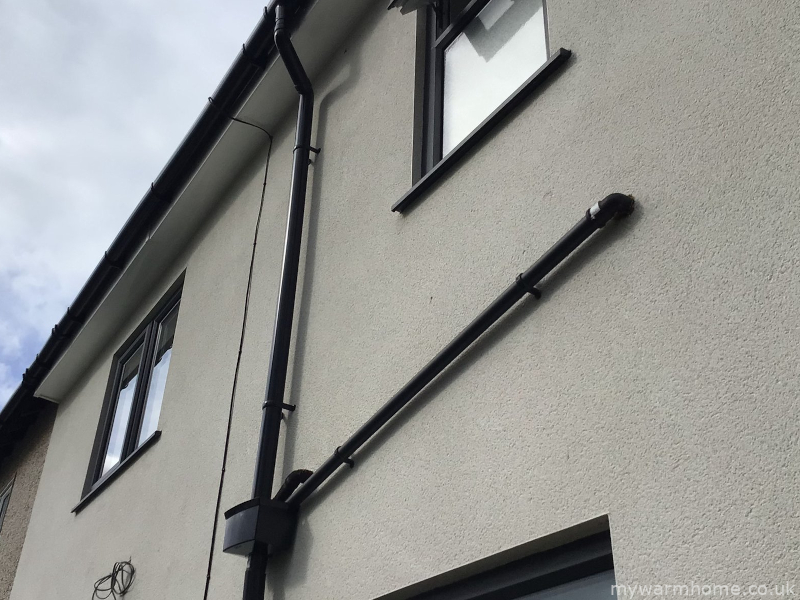
Where possible, the goal is to achieve full coverage of the external walls so there are no gaps or weak points. Any existing features attached to the walls, such as pipework or fixtures, should be carefully adjusted or extended so the insulation can sit neatly behind them.
By addressing these thermal bridges during installation, you not only improve energy efficiency but also reduce the risk of condensation and mould forming on colder internal surfaces, making the home more comfortable and healthier to live in.
Poor DetailingPoor DetailingGood Detailing
Types of External Wall Insulation and How They’re Installed.
External wall insulation (EWI) isn’t a one-size-fits-all solution. There are different systems and finishes available, but they all follow the same basic idea—fixing an insulating layer to the outside of the property, then protecting it with a durable, weatherproof finish such as render or cladding.
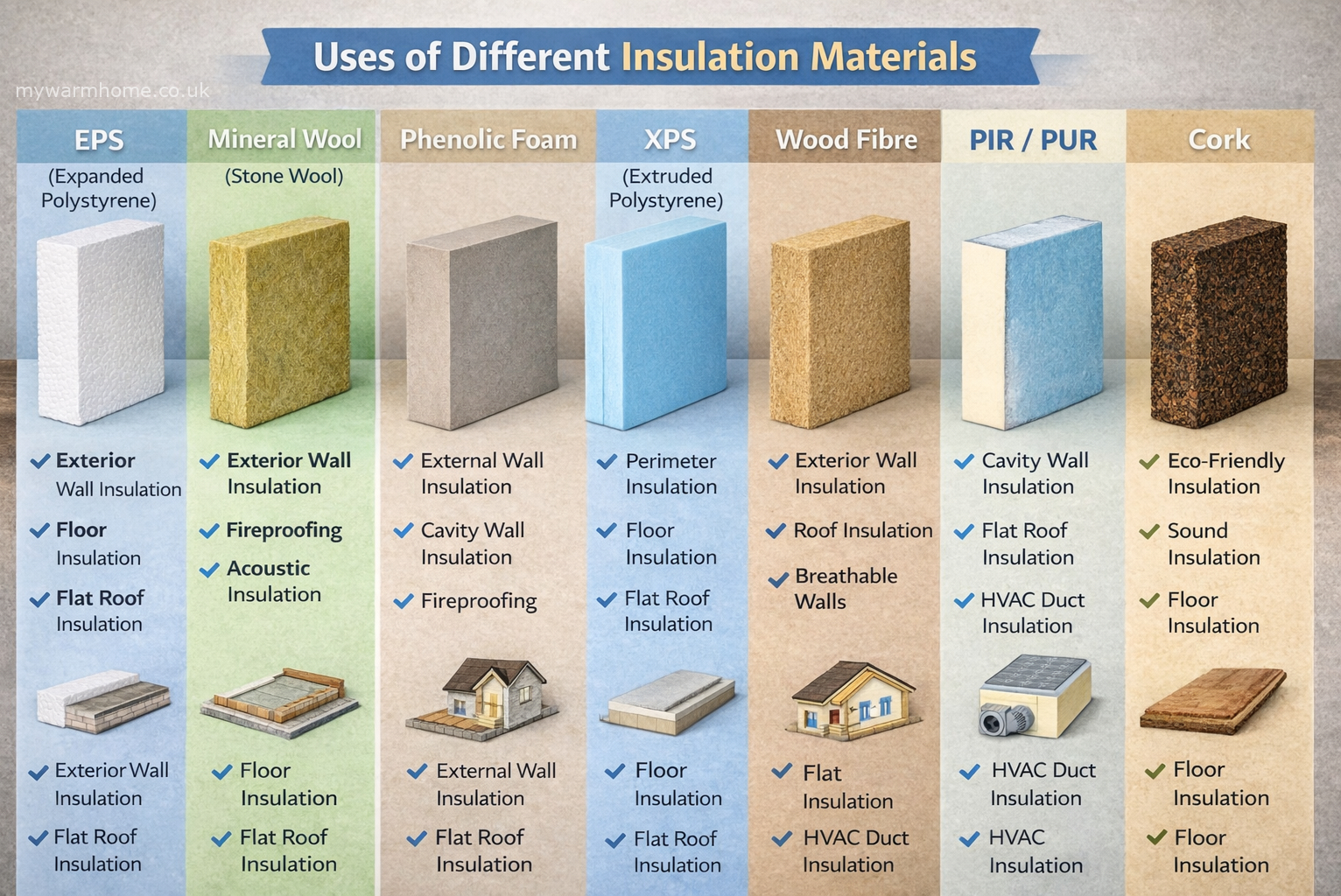
Common insulation materials include expanded polystyrene (EPS), mineral wool, and more advanced breathable boards. The choice depends on the type of property and how it manages heat and moisture. Once the insulation boards are fixed to the wall (usually with adhesive and mechanical fixings), they are reinforced with a mesh layer and finished with render or another outer coating to protect against the elements and give the home a clean, updated appearance.
Insulation Approach, Getting the Design Right.
External wall insulation has come a long way over the years. It’s no longer just about “covering the walls to make the home warmer.” Today, there’s a much better understanding of how buildings handle heat, air, and moisture—and getting this right is essential.
Every property behaves differently. Factors like how it was built, its age, how it’s used, and its exposure to weather all play a part. For example, a small 1970s flat with two occupants will perform very differently to a large early-1900s family home. If the insulation system doesn’t take these differences into account, it can lead to problems such as trapped moisture, damp, or poor performance.
That’s why a proper assessment should always come first. Once the property has been fully understood, the most suitable insulation system and finish can be selected.
Key Things to Consider Before Installing EWI.
A good design will take into account:
Age of the property – when it was built and whether it has been upgraded over time.
Neighbours and surroundings – Permissions may be required.
Conservation restrictions – Listed buildings and restricions of what can and cannot be performed on our buildings.
Type of property – flat, house, bungalow, etc.
Wall construction – solid walls, cavity walls, timber frame, system-built, or solid brick.
Existing insulation – such as cavity wall fill, internal wall insulation, or specialist plasters. If a cavity wall then look at best practices for advice on dew points.
Access requirements – whether scaffolding is needed and how easy the site is to work on.
Storage on site – Insulation materials should be kept dry before installation.
Condition of services – including gutters and downpipes, which may need adjusting or replacing.
Telecoms and fixtures – such as cables, satellite dishes, and phone lines that may need repositioning.
Security systems – alarms and external sensors.
Heating appliances – boiler flues, vents, and chimneys must be correctly extended or adapted.
Damp-proof course (DPC) – its condition and height relative to the new insulation.
Existing damp issues – these should always be addressed before installation.
Ventilation – ensuring the home can still “breathe” properly after insulation.
Windows and doors – their condition and how they integrate with the new insulation layer
Taking the time to get these details right ensures the insulation performs as intended—keeping the home warmer, reducing energy bills, and avoiding issues down the line.
External Wall Insulation (EWI) Board Types.
Choosing the right External Wall Insulation (EWI) system is critical to ensuring energy efficiency, moisture control, fire safety, and long-term performance. Different insulation boards suit different property types, wall constructions, and site constraints.
This guide explains the main EWI insulation types used in the UK, when to use them, and which buildings they are best suited for.
EPS (Expanded Polystyrene).
EPS insulation boards are the go-to choice for most UK retrofit projects due to their affordability, ease of installation, and solid thermal performance.
Best for: Solid wall homes, post-war housing, and standard residential retrofits.
Typical properties: 1930s–1980s houses, system-built homes.
Why use it: Cost-effective, lightweight, widely approved.
Key consideration: EPS has lower fire resistance than mineral-based systems, so suitability depends on building height and regulations.
Made from raw materials like stone or silica that are heated until molten, then spun into a fibrous matt. Properties. Mineral wool is known for its thermal, fire, and acoustic properties. It’s a poor conductor of heat, which helps maintain a consistent temperature in buildings. It’s also resistant to fire and doesn’t release toxic gases when heated.
The primary and most widely used are.
Mineral wool. Sheep’s wool. Glass wool. PIR (Polyisocyanurate) and phenolic foam.
Excellent thermal and acoustic insulation.
Easy to install.
Relatively cheap.
Breathable (can prevent dampness from damaging wooden timbers).
Can sometimes irritate bare skin.
Will compress if you put weight on it.
Sheep’s wool.
Sheep wool insulation is a natural, sustainable, and versatile material that can be used for thermal and sound insulation in buildings. Sheep wool is a natural insulator that can be used in walls, floors, lofts, roofs, and underlays. It’s crimped, which traps air in millions of tiny air pockets.
Excellent thermal and acoustic insulation.
Easy to install.
Safe to touch.
Eco-friendly.
Breathable (can prevent dampness from damaging wooden timbers).
Expensive.
Glass wool.
Glass wool insulation, also known as fibreglass insulation, is a common material used to insulate homes and commercial buildings. It’s made from glass fibres that are bonded together to create a wool-like texture. The glass fibres trap air pockets, which act as barriers to prevent heat loss.
Fire-resistant.
Insect repent.
Eco-friendly (mostly made from recycled glass).
Most glass wool irritates the skin (protective clothing must be worn when handled).
Becomes less effective when wet.
PIR (Polyisocyanurate) and phenolic foam.
Polyisocyanurate (PIR) and phenolic foam are both types of plastic-based foam insulation boards used in construction: PIR. A rigid foam board made from a thermoset plastic that’s known for its high thermal resistance, low water absorption, and structural strength. PIR is often used for flat roofs because of its durability and compatibility with waterproofing methods. Phenolic foam. A popular choice for domestic floors that combines thermal efficiency with an economical price point. Phenolic foam may have slightly better thermal performance than PIR, but PIR is more economical.
Fire-resistant Can be cut to fit snugly between joists. Higher R-value, so can be thinner to achieve building regulations.
Takes longer to fit than rolled insulation.
Comes in large sheets.
Good to know.
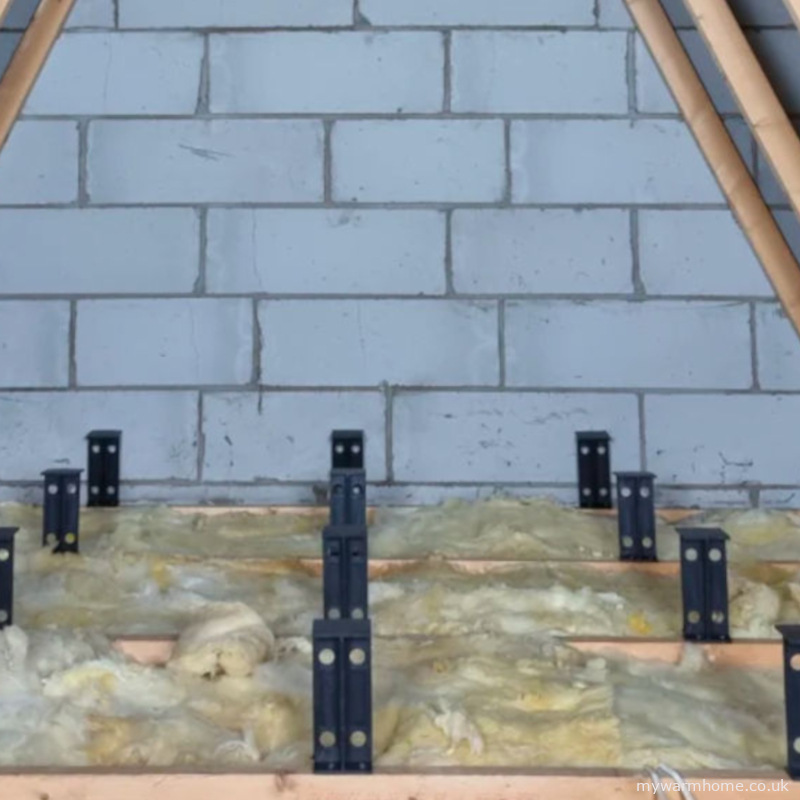
When insulating a loft at joist level, it’s important to consider both storage options and access control. Various hatches and ladder systems are available, and while some may look stylish, you should prioritize practicality and ease of use, especially as we age. If you want to create a storage space, avoid compressing the insulation, as this reduces its effectiveness. There are products available that raise the loft floor to provide storage space and create access walkways to essential items like boilers, water tanks, and solar inverters. Pay special attention to the hatch area, which needs to be draught-proofed and insulated. This is one of the weakest points in the insulation system because hot air rises and can escape quickly through a poorly insulated hatch, defeating the purpose of insulating in the first place.
Boarded Service AreaLoft Hatch PIRLoft Legs
Gas and open flued appliances.
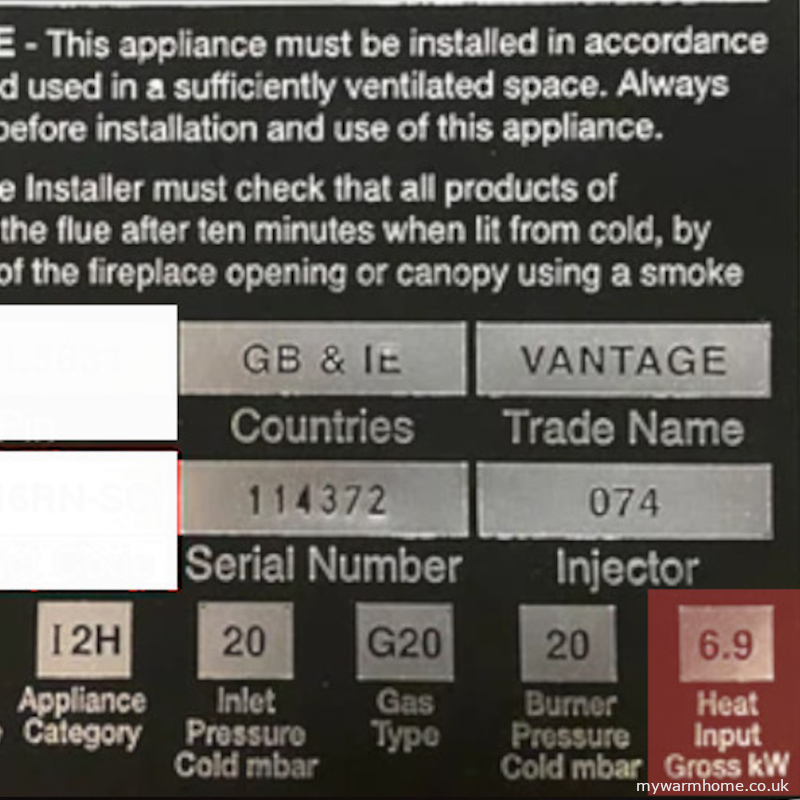
If the fabric of the property is being improved and open-flued gas appliances exist, then a gas spillage test should be carried out on each appliance by a suitably competent operative. Rules exist that give an average unimproved property a certain amount of leakiness (adventitious air) to allow open-flued appliances to operate safely. This all depends on how much fuel burns over a period of time, for example: 7.5kw/hr, 9kw/hr, 6.9kw/hr. You will see this on the data badge of the appliance (gas rating of an appliance here.). The more fuel used, the more leakiness is needed. Multifuel appliances are treated in roughly the same way but do not come under gas safe legislations. HETAS and building regulations govern multifuel installations and ventilation.
This is the reason combustion ventilation is sometimes needed. This allows the air to be replenished (with an open flued appliance we are burning the oxygen in the room that we use to breathe)
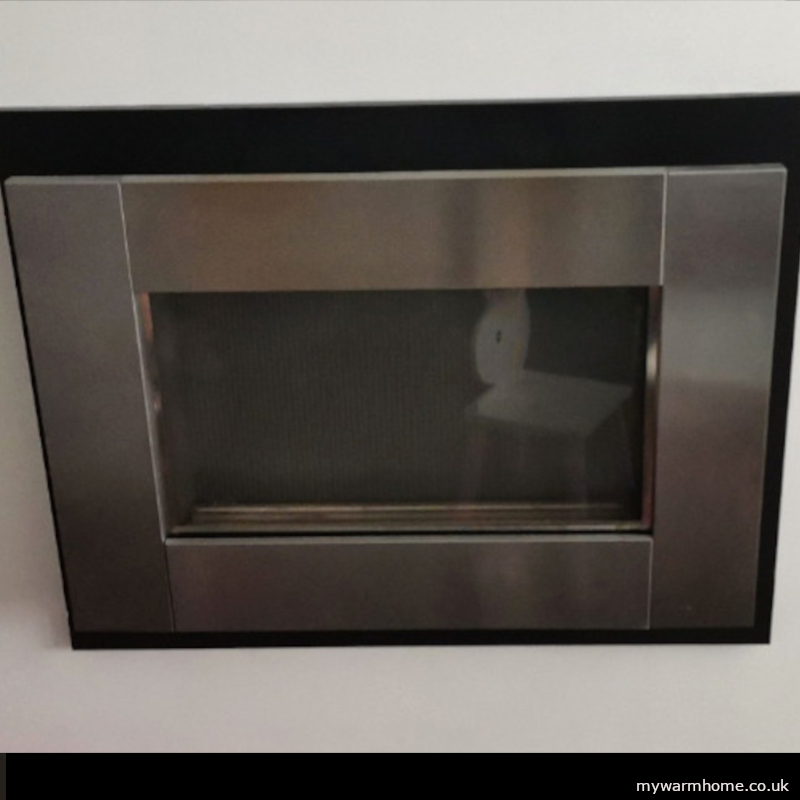
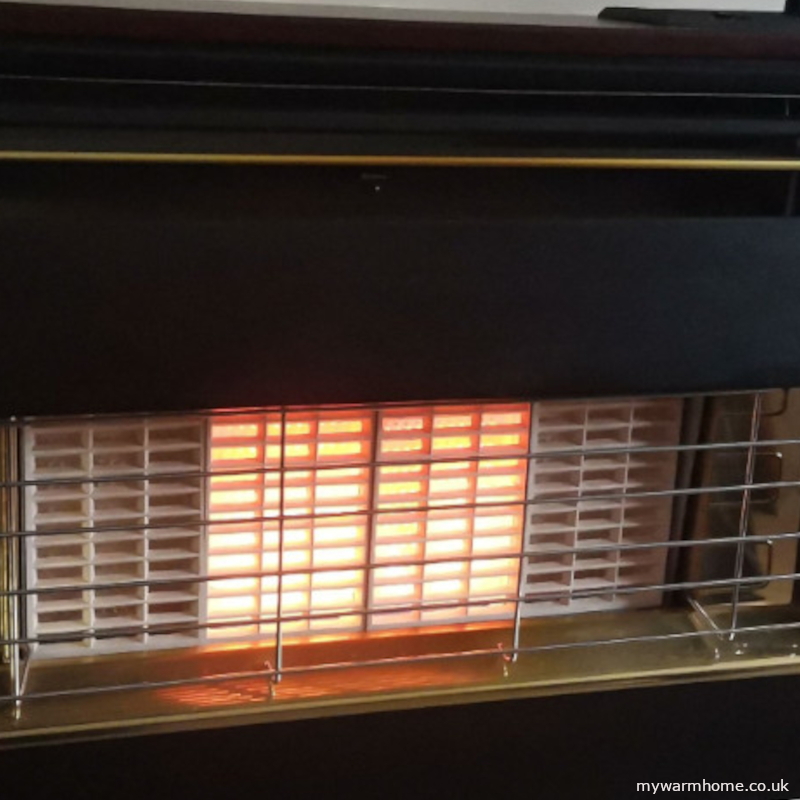
Data BadgeFlueless FireOpen Flue Fire
With the introduction of insulation, extraction ventilation should be installed as part of the process, we now have a different factor to add in with gas safety. Extraction fans either pulling or pushing air (PIV) can now effect the performance of the appliance.
Open flued gas appliances should be checked to prove they are not spilling products of combustion into the property. This is verified by performing a spillage test.
Part J states. “Extract fans lower the pressure in a building, which can cause the spillage of combustion products from open-flued appliances. This can occur even if the appliance and the fan are in different rooms”. Any funded insulation work now includes ventilation upgrades as part of the current PAS, so extract ventilation will be installed. This should have been factored in as part of any ventilation work carried out. A competent person is required to perform spillage tests.
Part B, 8(1) of the Gas Safety (Installation and Use) Regulations 1998 states that no person can make any changes to a premises that contains a gas fitting or storage vessel if the changes would compromise the safety of the fitting or vessel. This basically means if the fabric of the building (walls, floors, roofs) are being insulated then appliances need to be checked by a suitably competent and qualified person.
Below you will find links to UK regulations and other useful information. These links are to third party websites, and we cannot guarantee the validity or safety of the following sites. If you find any broken links or issues, we would love to know. Please read our disclaimer.
True affordability is not achieved by cutting corners or reducing upfront costs alone,
Designing any heating or renewable system—whether it’s a heat pump, electric storage, gas boiler, unvented system, underfloor heating, radiator configuration, must begin with a single guiding principle: efficiency comes first.
True affordability is not achieved by cutting corners or reducing upfront costs alone, but by designing systems that perform at their highest potential. When efficiency leads the design, it naturally shapes long-term affordability—lower energy use, reduced running costs, and greater overall value.
In essence, affordability should never dictate efficiency; rather, efficiency should define affordability.
The Science.
We’re human—and often stubborn. It’s natural to trust what we can see and what we believe, even when the science tells a deeper story.
But when it comes to our homes and keeping them warm, the science is vast and uncompromising. Facilities like the Energy House in Salford constantly test and thermally model real-world conditions, while manufacturers subject materials to extremes of heat and cold to understand exactly how they retain or lose energy.
Before any legitimate product reaches the market, it undergoes rigorous testing and must achieve strict certification standards—whether UK or European. Only then is it assigned performance values, allowing it to be accurately modelled within properties and used to meet UK regulations.
In short, what may seem simple on the surface is backed by an immense depth of science, testing, and proven performance.
Sizing For Our Homes.
When a new heating system or existing one is being specified or upgraded there are many factors to take into consideration. When I first started as a heating engineer it would be standard to go to a plumbers merchand and order a combi and 5 radiators as a standard heatpack which is no way to size for a property. Lets look at some examples of how we would size a property for heating. We will discus hot water requirements later.
Electric storage heaters can be hard to correctly size as they use stored cheaper overnight energy to heat properties during the day, things like work patterns, occupation and social factors like pre payment meters can all play a part.
For the next section we are looking at primary heating using gas or heat pumps.
Heat Loss.
Are we robbing Peter to pay Paul—or neither? It’s a great expression, especially when you think of it in heating terms: are we unintentionally drawing warmth from our neighbours, if we even have any?
Understanding heat loss starts with the basics—identifying losses through walls and floors, considering the size of the property, and defining the level of heat demand required through radiators etc. Once we understand our heat loss not only do we understand our radiator positions (underfloor obvious) but also the optimum balance of energy use to comfort levels.
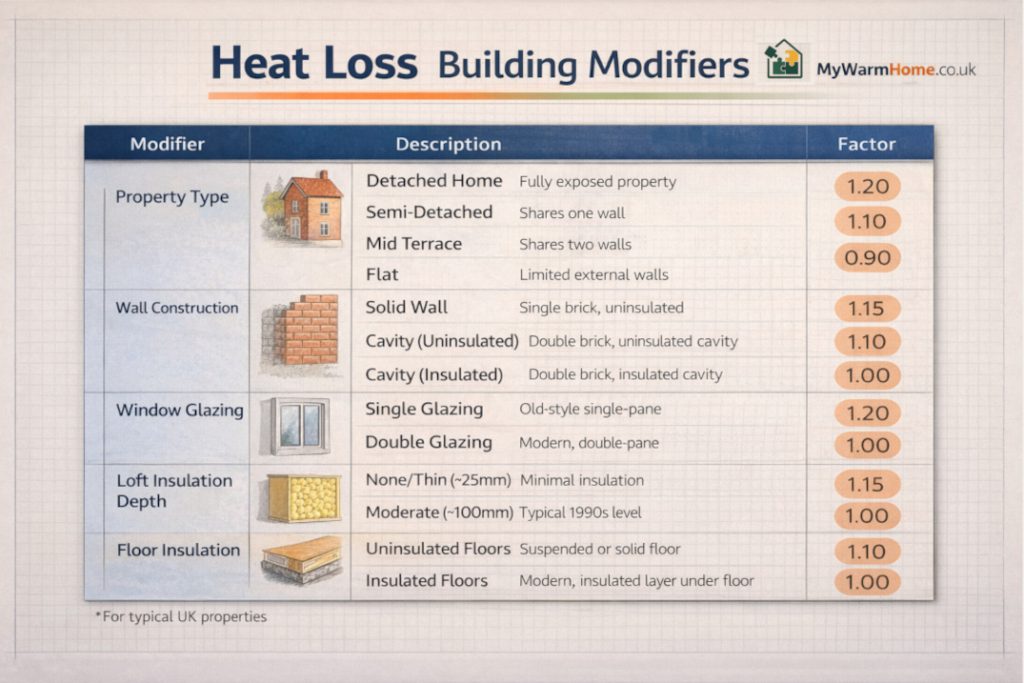
We calculate our heating requirement by looking at room sizes, then adjusting it based on how well our homes holds heat. Older homes, poor insulation, and exposed walls increase heat loss — while insulation and neighbouring properties reduce it.
Q = Heat required (Watts) This is the size of heating you need.
V = Room Volume (m³) Length × Width × Height.
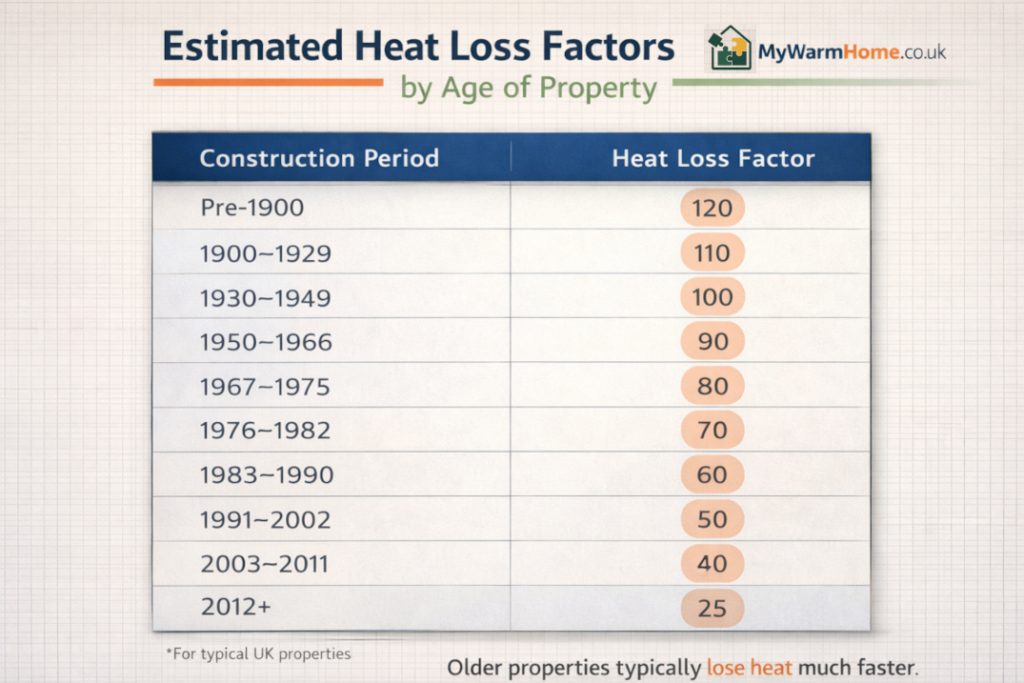
F = Base Heat Loss Factor (from property age) Older homes lose more heat.
M = Modifiers (construction, insulation, exposure, etc.) Adjusts for real-world conditions.
Heat Loss & Heating Design Tool
Indoor temp
Outdoor temp
System type
We need to determine the required heat output in watts, as modern radiators and heating systems are rated this way (traditionally it was in BTUs). To do this, measure the room’s length, width, and height—giving you three figures. Multiply these together to get the volume. Then apply a heat loss factor, followed by a final adjustment or modifier (see below).
So now you know a rough heating output required for our room we now need to understand Delta T (ΔT)
What ΔT Means
ΔT (Delta T) = the temperature difference between:
Average radiator water temperature
Room temperature
Radiators are rated for heat output at a standard ΔT, typically:
ΔT50 → Water 70°C, Room 20°C → ΔT = 50°C
ΔT60 → Water 75°C, Room 15°C → ΔT = 60°C
ΔT30 → Water 35°C, Room 20°C → ΔT = 30°C (common for heat pumps)
Radiator outputs are listed for ΔT50 (standard UK value) If you run a heat pump at 35–45°C, ΔT drops → radiator output drops → room may feel cold
Radiator
Output @ ΔT50
Output @ ΔT30
K2 600×1000
1800W
~1050W
UK Radiator Selector Tool (we have used stelrad radiators for this)
A Publicly Available Specification (PAS) is a document that defines good practice standards for a product, service, or process.
PAS 2035/2030 are linked frameworks that outline best practices for retrofitting homes in the UK to enhance energy efficiency. While PAS 2030 focuses on the quality of the installation processes, PAS 2035 ensures that the retrofit is appropriate for the building as a whole. Current PAS documents can be downloaded here.
It’s a crucial component of the UK government’s strategy to boost building efficiency and reduce carbon emissions. Adopting a “whole house” approach, PAS 2035 considers the home’s environment, occupancy, and the homeowner’s objectives, ensuring that retrofit projects address key aspects such as insulation, ventilation, occupancy, and building fabric to support long-term sustainability.
Although not a regulation, PAS 2035 is a publicly available specification (PAS), developed to address shortcomings of previous schemes following the Each Home Counts Review.
PAS 2035 compliance is mandatory for all publicly funded projects, including those supported by the Energy Company Obligation (ECO), and Warm Home Fund. We also have a route called licence plus which is run by Trustmark which does not need coordination as part of its process!. This is mainly aimed at self funding retrofit but using installers that are roughly following the current PAS process. Whichever mechanism is to be used, the property occupier should request details of which route the process follows pre-install.
PAS 2035 has its strengths, but also notable limitations. If everyone in the supply chain, assessors, coordinators, designers, and installers adheres strictly to the process, the framework should work effectively. However, lapses in monitoring and inspection can lead to issues. Unfortunately, “technical monitoring” for most UK schemes is minimal, and no longer performed by Ofgem, meaning that failings can go unnoticed, leaving property occupiers unaware of potential problems. Hopefully this will change with future consultations.
The retrofit process involves a range of participants, including canvassers, lead generators, social marketeers, assessors, designers, coordinators, installers, and a limited number of technical monitoring agents. This complexity, along with regulations, updates to rules and red tape, can create confusion and drive up costs.
The standard will transition from PAS 2035:2019 to PAS 2035:2023 in March 2025.
Protecting the Property Occupier!
PAS 2035 outlines several requirements for both pre and post installation stages. One of its most valuable aspects is the involvement of a retrofit coordinator throughout the process.
The coordinator’s primary role is to safeguard the interests of the property and its occupants, ensuring the retrofit is carried out effectively and sustainably. In an ideal scenario, the retrofit coordinator would operate independently, free from any conflicts of interest and most importantly in my opinion has performed in the retrofit assessment area. However, this level of impartiality is often difficult to achieve in practice.
By understanding the processes outlined below, you’ll hopefully gain the knowledge needed to ask informed questions and engage with some confidence at various stages of your retrofit journey.
In practice.
If the property / occupants have met the requirements of a funded scheme, then the installation or funding company will arrange for a retrofit coordinator to instruct a visit from a retrofit assessor. The coordinator is the first in the process as this is the stage that the property classification is usually identified (traditional, non-traditional etc.)
The assessor should try to get a picture of what the typical energy use entails and also what is expected by improving the property. Lots of photographs will be taken as an EPR (energy performance report) will be produced at the end. This is basically a reference EPC (energy performance certificate) but does not get published on the central register. (when EEM work is completed, a new EPC should be produced, ideally the original assessor as they will have the original data)
Some quick guidance on what the assessment entails and why!
First things are age and condition. This is to allow a retrofit coordinator to classify the property and create a plan that allows a fabric first approach that works with the natural balance of the property and highlights all potential issues.
Existing Ventilation in wet rooms photographed and noted. This is because all insulation packages require moisture to be controlled post installation. Some insulation situations require upgrades due to the design and current regulations.
Existing background ventilation photographed and noted. This is because all insulation packages require the replenishment of air post installation. Some insulation situations require upgrades due to the design and current regulations. Installers may use a pulse or blower test may be performed to validate if upgrades to background ventilation are necessary.
Fuel burning appliances noted. This is especially relevant with open flued appliances like gas, wood/coal burning fires etc. Ventilation requirements for combustion may need to be installed or verified adequate, especially after extraction units have been added or improved.
Whole footprint of property measured, including all windows/glazed doors. This allows to distinguish what is a “heat loss area” in more detail, and also potential solar gains.
Plenty of images of outside. This is to show the condition of building elements, including damp course and drainage services (gutters, downpipes, soil pipes).
Access to all rooms are required as is the loft space, basements and visual inspections of all external walls and areas. All ventilation present will be recorded and door undercut measurements should be taken. The assessment can take longer if more than one installation is being carried out, i.e. wall insulation, loft, and heating.
A report is then generated to give a rating of the properties’ energy performance from “A (very good) to a (G) very poor”. Information is then made available to the retrofit coordinator. All data is uploaded to the *Trustmark data warehouse, which forms a property plan and can be accessed by involved parties.
The coordinator will then look at all the data to see if improvements need any special design attention and intervention due to condition, age of property and location. If all looks OK then a ventilation strategy will be put in place depending on installation requirements. Some other documents are required, like a medium term improvement plan, which will create future scenario’s for improvements.
A retrofit designer will need to be consulted to design the proposed installation measure(s) if deemed necessary. We can take designers of certain measures as being members of a trade body. For example, a Gas Safe engineer installing a gas boiler, a SWIP trained installer performing IWI to a traditional non-heritage building, MCS accredited installer for solar and heat pumps.
A professional member of a Chartered Institute will be required, especially on buildings with heritage values or interacting insulation systems (wall and floor insulation being installed together, for example). It is up to the retrofit coordinator to validate that the designers and installers are all suitably qualified.
* The TrustMark Data Warehouse was created to address several recommendations in the Each Home Counts review commissioned by the Government in 2015.
The retrofit plan is executed.
This is what the installers are expected to perform to meet the current PAS. Each measure (installation or improvement) will have its own route and requirements, and brief information be found on each section within this site. The plan will provide steps for the current and potentially future improvements. A fabric first approach should always be used, this means insulation before any heating works need to be carried out. Soft touches should also be part of the fabric first approach like heating controls, draught proofing and low energy lighting.
The occupants should be informed of all work. It should be the co-ordinator and installers who contact the occupiers to inform them of the process that the retrofit project will follow. Dates, times, and conditions required will need to be discussed and agreed upon. This may include removal of furniture to prevent damage or the arrangement of alternative living arrangements throughout the works (especially on internal wall insulation). It may include preinstall remedial works to the property structure or minor repairs like broken windows, failing of rainwater removal (poor guttering) and wall pointing.
Get all this information in writing or in an email to reference at a later date if required. Make notes of Installers contact details, coordinators, and assessors names and numbers. This can be invaluable if you need to contact anyone involved in the process. You can do research on installers, co-ordinators, assessors and designers here as they all need to be Trustmark registered.
The Installation.
Once agreed and a plan has been discussed, the installation will begin. If an insulation measure is being installed, then validation is required that either the current ventilation is sufficient or insufficient. The assessment would have highlighted any shortfalls, and the installers may ask to perform an air tightness test. This can be carried out using a pulse test, this may be performed to allow installers a way of emitting undercuts and background ventilation from the installation, but controlled ventilation is always a good way to manage moisture. The ventilation should always be installed or upgraded first, or at least core vents and wiring set in place if wall insulation being installed.
The *retrofit coordinator should make a site visit if the measure is deemed high risk which includes IWI, EWI, UFI, FRI, PHI and RIR. (*this will be a mandatory requirement from early 2025) The next stage will be the installation phase of the main improvements.
*Due to time and location factors, the retrofit co-ordinator may employ a remote coordinator to feedback information after or during site visit.
The Handover.
Depending on the complexity of the installation, the duration can range from a single day to several weeks. This timeline should have been discussed and documented during the early planning stages. Before signing off on the work completed by the installation company, ensure you are fully satisfied that all agreed tasks have been completed to your expectations. Additionally, verify that any damages have been repaired or compensated. Make sure you have received all necessary handover documents, including warranties, guarantees, compliance certificates, insurance policies, gas certificates, and electrical certificates. Some certificates and warranties may come via post or email after the installation, if this is the case then ask for written clarification that they will be provided. All these documents are part of the works and may be needed if selling the property or for insurance purposes.
Insurance Backed.
To be PAS 2030 certified, installers must have an Insurance Backed Guarantee provider to ensure their customers are protected. They must also have adequate insurance coverage, including liability insurance, to protect homeowners.
What is an insurance backed guarantee? Installers will provide their own written workmanship guarantee (this is very important to get a copy of in case of any poor installations). This will outline a guarantee period, during which the installer will return and fix any faults resulting from faulty workmanship. The insurance backed guarantee only comes into effect if the original installation company ceases trading through lets say bankruptcy!. Ask for details of the company providing the guarantee, and then do your research.
All Insulation installed under PAS.
Each insulation installation will follow the same route as regards with ventilation on PAS. This should be explained by the retrofit coordinator and the installers. The basics are that background ventilation (usually trickle vents) will be provided unless an air permeability test is performed and validates the need to omit from the installation. Wet room ventilation is always required, but can vary with different insulation situations. (see below) If PIV (positive input ventilation) is being installed, then request details of why this choice is being taken, installers or retrofit coordinator will be able to guide you. (PIV will need maintenance, and it is placed in your loft space).
Some insulation situations like the property not being 100% insulated (bathrooms and kitchens being omitted due to fixture removal difficulty) then the extract ventilation may need to be a dMEV system to mitigate risks of condensation.
Pre-installation building inspection (PIBI)
The Retrofit Installer should undertake a pre-installation inspection using a competent person, this means a person or persons who have relevant industry qualifications. The inspection shall be undertaken at a level of detail sufficient to confirm that the specified energy efficient measure can be safely and effectively installed at the designated location. Particular attention shall be given to potential moisture build up as a result of the installation and taking into account the fire safety of the dwelling and the functionality and/or safety of installed services (gas, electricity, water, telecommunications, etc.)
Technical Monitoring.
Technical monitoring is a form of auditing that highlights a set of given questions on compliance. This is not performed by the installation company, but they may have their own regime of quality control. The funders (energy companies) will use these reports to highlight and hopefully rectify failing. Sadly, this shows that even with all the rules and hierarchy within the process of PAS, failing still arise. More on technical monitoring here.